Natural Resources Canada
Federal department responsible for forests, energy, minerals and the Canadian Forest Service wildfire programs.
Visit OrganizationResources from this organization
A case-study of wildland fire management knowledge exchange: the barriers and facilitators in the development and integration of the Canadian Forest Fire Danger Rating System in Ontario, Canada
Among the most successful examples of Knowledge Exchange (KE) between researchers and practitioners in Canadian wildland fire management is the development and integration of the Canadian Forest Fire Danger Rating System (CFFDRS) into operational use. Our aim was to identify key factors for this success. Through a case study, we investigated historical KE of two CFFDRS components in Ontario, Canada. We held semistructured interviews with principal Canadian Forest Service researchers and Ontario fire management practitioners active in development and implementation of CFFDRS from the late 1960s to 2010s. The importance of both formal and informal facilitators to support KE was emphasised.
A perspective and survey on the implementation and uptake of tools to support decision-making in Canadian wildland fire management
The level of implementation and uptake of specific tools used to support wildland fire management decision-making has received little attention in Canada. Our aim is to aid the fire research-to-practice discourse in Canada by describing key terms and concepts for characterizing implementation, uptake, and capacity. We also designed and conducted a survey to assess the implementation and uptake of some of the available tools used by Canadian provincial and territorial fire management agencies. We assessed nine tools and found distinct differences in their implementation and uptake, with differing results at national versus provincial and territorial scale. The Canadian Fire Weather Index and Fire Behaviour Prediction Systems had the highest level of both implementation and uptake nationally. The other tools have substantially lower but varying degrees of implementation and uptake across the country. The results encourage further investigation into the factors affecting implementation and uptake of fire management tools, both nationally and in provinces and territories.
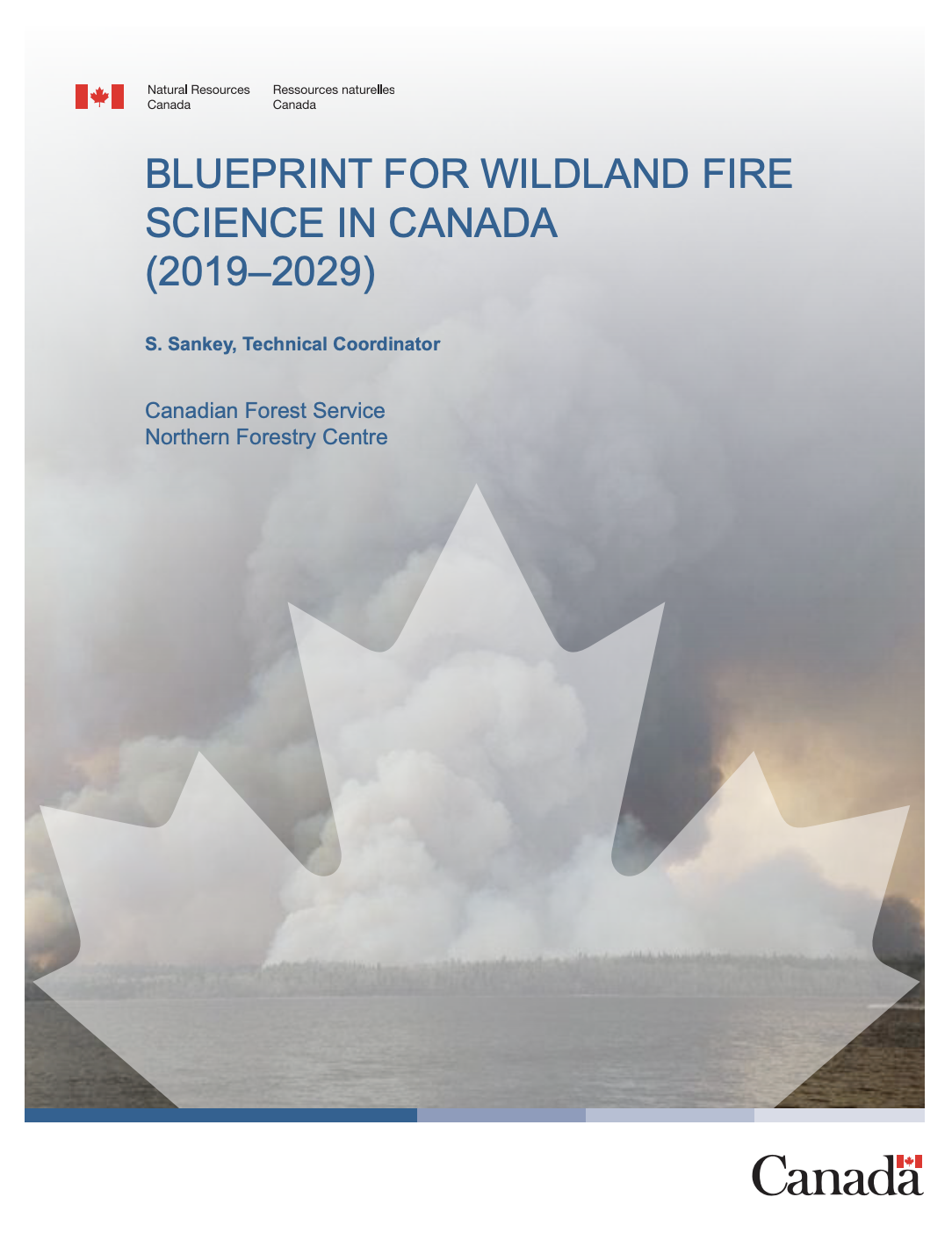
Blueprint for wildland fire science in Canada (2019-2029)
The capacity of wildland fire science and technology in Canada is not keeping pace with the growing complexity of wildland fire. Fire seasons are becoming longer, fire events are becoming more severe, and experts predict that the area burned on an annual basis could double by the end of this century. However, wildfire research programs have declined, existing academic wildland fire science programs are limited, and a large cohort of experts has begun to retire. This research gap puts future public safety and security at risk. National wildland fire research capacity, which includes human resources, financial investments, and other supports for science, must be increased to inform the ways fire events are managed, communities are built, and preparations for emergencies are made. The Blueprint for Wildland Fire Science in Canada (2019–2029) presents a business case to increase investment in wildland fire science. Developed by a pan-Canadian team of experts, the Blueprint makes a number of recommendations to enhance the capacity of research over the coming decade.
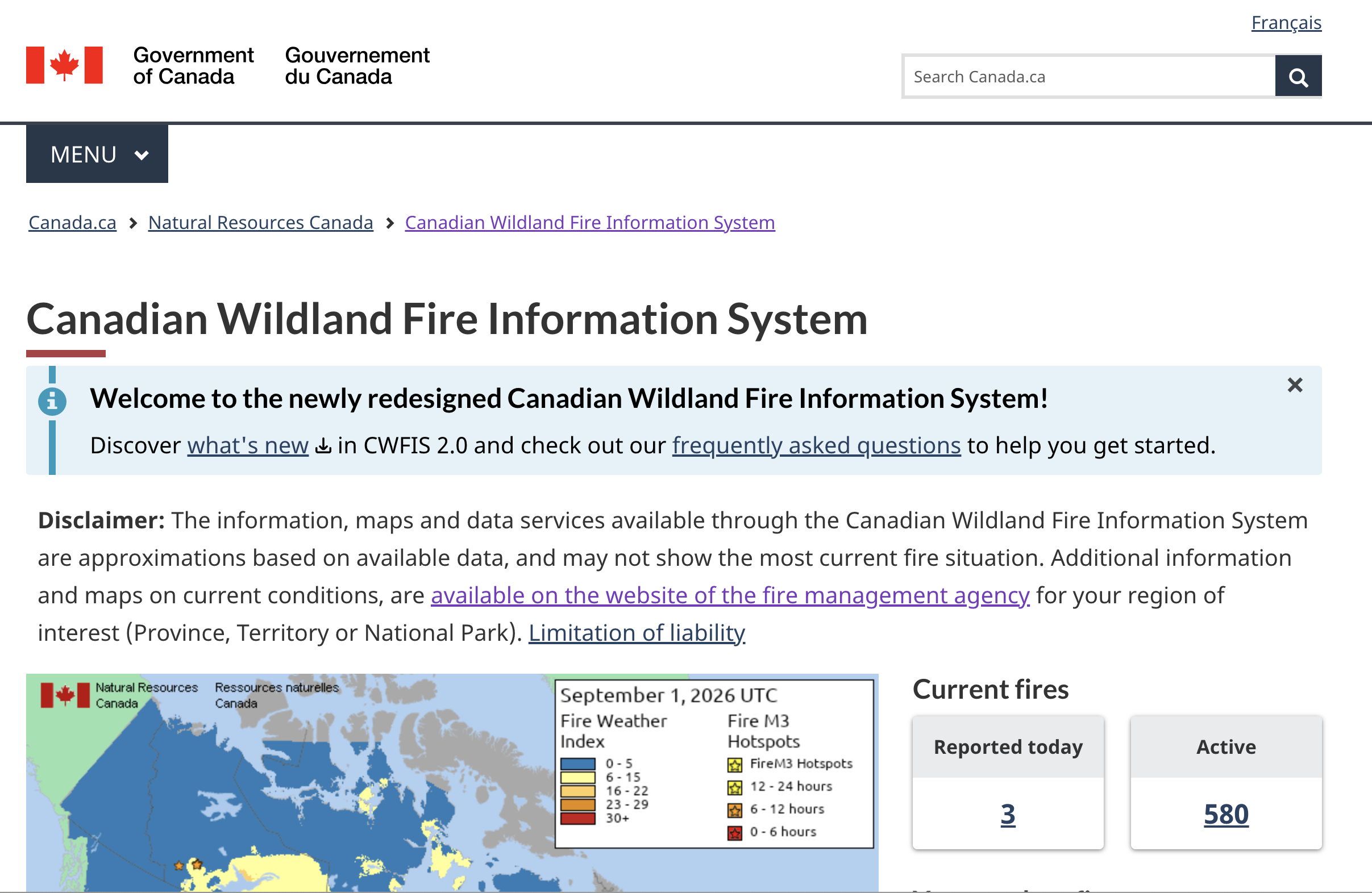
Canadian Wildland Fire Information System
The newly redesigned Canadian Wildland Fire Information System monitors fire danger conditions and fire occurrences nationwide. Current and forecast fire weather and fire behaviour maps are produced using weather data from across Canada. Wildland fires are detected by satellites and reported fire locations are collected from fire management agencies.
Climate Change Adaptation Guidebook for Forest-Based Communities
This guidebook was developed to empower residents of small forest-based communities to develop a Community Climate Change Adaptation plan. It describes a flexible step-by-step process, explains key concepts, and includes links to resources and examples from across Canada. Using this guidebook will help you understand which climate changes are likely to happen in your region, how those changes could affect the places and things valued by residents and stakeholders, and how your community can realistically deal with these changes. There is no need to hire an outside facilitator as part of this process—no one understands small communities better than the people who live there. Preparing a Community Climate Change Adaptation plan will not necessarily prevent climate change from impacting your community, but having science-based, realistic plans in place is the best and most cost-effective way for small communities to prepare.
Considerations for Categorizing and Visualizing Numerical Information: A Case Study of Fire Occurrence Prediction Models in the Province of Ontario, Canada
Wildland fire management decision-makers need to quickly understand large amounts of quantitative information under stressful conditions. Categorization and visualization “schemes” have long been used to help, but how they are done affects the speed and accuracy of interpretation. Using traditional fire management schemes can unduly restrict the design of new products. Our design process for Ontario’s fine-scale, spatially explicit, daily fire occurrence prediction (FOP) models led us to develop guidance for designing new schemes. We show selected historical fire management schemes and describe our method. It includes specifying goals and requirements, exploring design options and making trade-offs. The design options include gradient continuity, hue selection, range completeness and scale linearity. We apply our method to a case study on designing the scheme for Ontario’s FOP models. We arrived at a smooth, nonlinear scale that accommodates data spanning many orders of magnitude. The colouring draws attention according to levels of concern, reveals meaningful spatial patterns and accommodates some colour vision deficiencies. Our method seems simple now but reconciles complex considerations and is useful for mapping many other datasets. Our method improved the clarity and ease of interpretation of several information products used by fire management decision-makers.
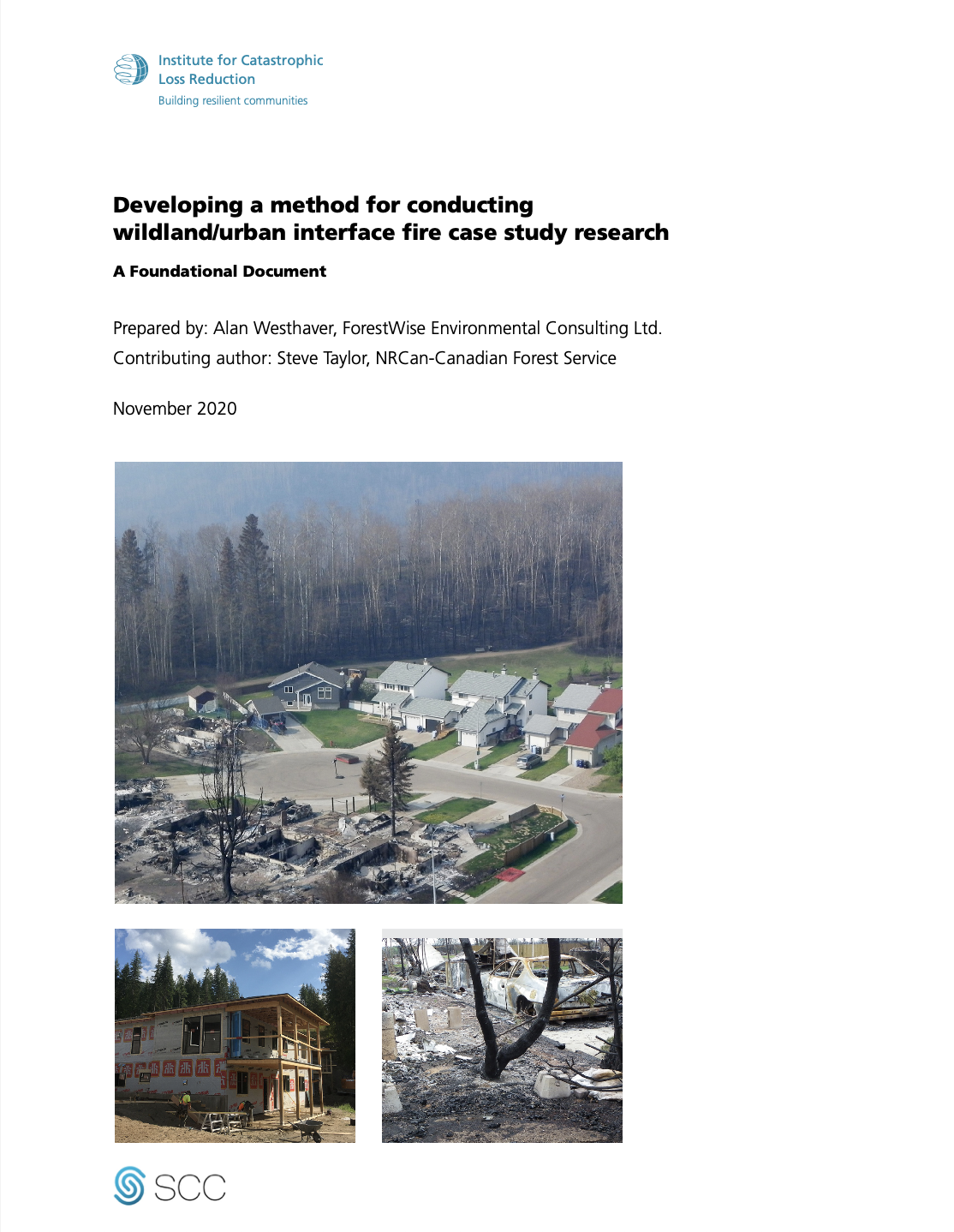
Developing a method for conducting wildland/urban interface fire case study research: A Foundational Document
This Foundational Document is a first step toward creating a comprehensive methodology (i.e., best practices) for WUI fire exposure and impact case studies in Canada. Such studies are vital to address outstanding knowledge deficiencies and improve mitigation measures that reduce structural vulnerability, ignition and loss. This document is not a prescriptive plan, but rather a backgrounder exploring what a comprehensive methodology might look like. It addresses scientific, operational and administrative aspects of implementing WUI fire case study research and provides a focal point for further discussion.
Drivers and Impacts of the Record-Breaking 2023 Wildfire Season in Canada
The 2023 wildfire season in Canada was unprecedented in its scale and intensity, spanning from mid-April to late October and across much of the forested regions of Canada. Here, we summarize the main causes and impacts of this exceptional season. The record-breaking total area burned (~15 Mha) can be attributed to several environmental factors that converged early in the season: early snowmelt, multiannual drought conditions in western Canada, and the rapid transition to drought in eastern Canada. Anthropogenic climate change enabled sustained extreme fire weather conditions, as the mean May–October temperature over Canada in 2023 was 2.2 °C warmer than the 1991–2020 average. The impacts were profound with more than 200 communities evacuated, millions exposed to hazardous air quality from smoke, and unmatched demands on fire-fighting resources. The 2023 wildfire season in Canada not only set new records, but highlights the increasing challenges posed by wildfires in Canada.
Fifty years of wildland fire science in Canada
We celebrate the 50th anniversary of the Canadian Journal of Forest Research by reflecting on the considerable progress accomplished in select areas of Canadian wildland fire science over the past half century. Specifically, we discuss key developments and contributions in the creation of the Canadian Forest Fire Danger Rating System; the relationships between wildland fire and weather, climate, and climate change; fire ecology; operational decision support; and wildland fire management. We also discuss the evolution of wildland fire management in Banff National Park as a case study. We conclude by discussing some possible directions in future Canadian wildland fire research including the further evaluation of fire severity measurements and effects; the efficacy of fuel management treatments; climate change effects and mitigation; further refinement of models pertaining to fire risk analysis, fire behaviour, and fire weather; and the integration of forest management and ecological restoration with wildland fire risk reduction. Throughout the paper, we reference many contributions published in the Canadian Journal of Forest Research, which has been at the forefront of international wildland fire science.
Fire deficit increases wildfire risk for many communities in the Canadian boreal forest
Paper investigating if decades of aggressive fire suppression in the boreal biome of Canada has reduced the proportion of recently burned forests (RBF; <30 years) near human communities, and thereby inadvertently increased the risk of wildfire.
Fire-regime changes in Canada over the last half century
Contemporary fire regimes of Canadian forests have been well documented based on forest fire records between the late 1950s to 1990s. Due to known limitations of fire datasets, an analysis of changes in fire-regime characteristics could not be easily undertaken. This paper presents fire-regime trends nationally and within two zonation systems, the homogeneous fire-regime zones and ecozones, for two time periods, 1959–2015 and 1980–2015. Nationally, trends in both area burned and number of large fires (≥200 ha) have increased significantly since 1959, which might be due to increases in lightning-caused fires. Human-caused fires, in contrast, have shown a decline. Results suggest that large fires have been getting larger over the last 57 years and that the fire season has been starting approximately one week earlier and ending one week later. At the regional level, trends in fire regimes are variable across the country, with fewer significant trends. Area burned, number of large fires, and lightning-caused fires are increasing in most of western Canada, whereas human-caused fires are either stable or declining throughout the country. Overall, Canadian forests appear to have been engaged in a trajectory towards more active fire regimes over the last half century.
Guide sur l’adaptation aux changements climatiques pour les collectivités forestières
Ce guide a été élaboré pour donner aux habitants des petites collectivités forestières les moyens d’élaborer un plan communautaire d’adaptation aux changements climatiques. Il décrit un processus flexible, étape par étape, explique les concepts clés et comprend des liens vers des ressources et des exemples tirés de diverses régions du Canada. L’utilisation de ce guide vous aidera à comprendre quels changements climatiques sont susceptibles de se produire dans votre région, comment ces changements pourraient affecter les lieux et les éléments auxquels les habitants et les parties prenantes sont attachés, et comment votre communauté peut faire face à ces changements de manière réaliste. Il n’est pas nécessaire d’engager un animateur externe dans le cadre de ce processus : personne ne comprend mieux les petites communautés que les gens qui y vivent. L'élaboration d'un plan communautaire d'adaptation aux changements climatiques n'empêchera pas nécessairement les changements climatiques d'avoir des répercussions sur votre collectivité, mais la mise en place de plans réalistes et fondés sur des données scientifiques est le moyen le plus efficace et le plus rentable pour les petites collectivités de s’y préparer.
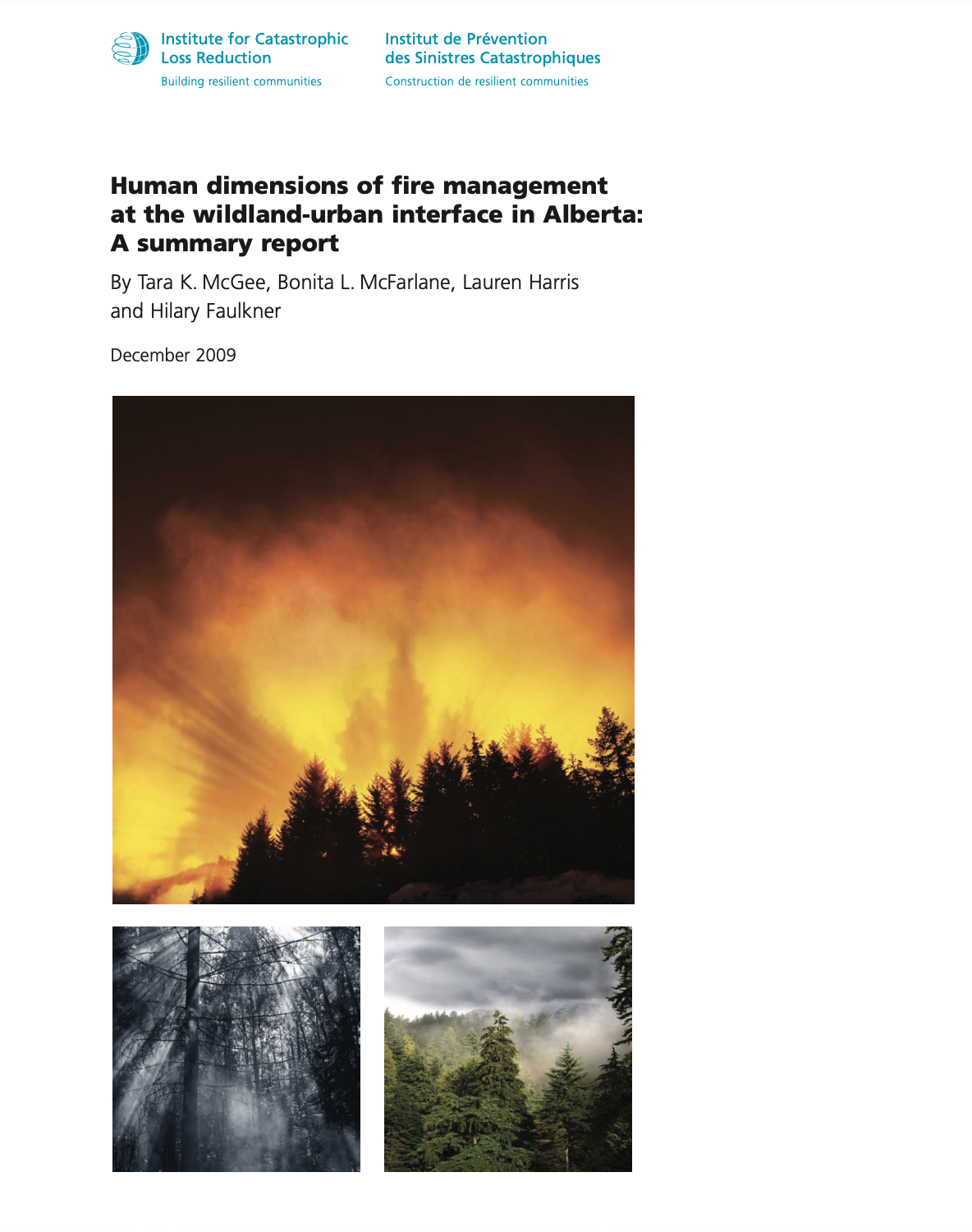
Human dimensions of fire management at the wildland-urban interface in Alberta: A summary report
This report presents the results of two studies that were undertaken to examine wildfire risk mitigation at the wildland-urban interface in Alberta, Canada. One study examined homeowner adoption of mitigation measures and factors that influence adoption in six communities. The second study examined adoption of wildfire risk management programs by 18 municipal governments in Alberta. Implications for policies and programs are discussed.
Impacts of wildland fire effects on resources and assets through expert elicitation to support fire response decisions
A modelling framework to spatially score the impacts from wildland fire effects on specific resources and assets was developed for and applied to the province of Ontario, Canada. This impact model represents the potential ‘loss’, which can be used in the different decision-making methods common in fire response operations (e.g. risk assessment, decision analysis and expertise-based). Resources and assets considered include point features such as buildings, linear features such as transmission lines, and areal features such as forest management areas. Three categories of fire impacts were included: social, economic and emergency response. Category-specific scores were determined through expert elicitation and then adjusted to account for fire intensity. Expert elicitation was shown to compare favourably with other methods in terms of the complexity, time, set-up cost and operational use. When compared with historical fire data from Ontario, it was found that impact model scores were associated with the objective to suppress or monitor fires. The model framework provides a consistent pre-fire impact assessment to support individual fire response decisions. The impact assessment can also represent the total impact for areas of Ontario that do not have prescriptive response in a formal fire response plan.
Integrating fire-smart fuels management with bioenergy benefits remote and Indigenous communities in Canada
The global urgency of more damaging wildfires calls for proactive solutions. Integrating fire-smart fuels management with bioenergy could reduce wildfire risk while providing feedstock for bioenergy. We explore this strategy in off-grid communities in Canada who are heavily dependent on diesel for their energy needs, many of which are home to Indigenous peoples. Combining national remote sensing data and community-based information, we identify 33 diesel-dependent communities at high wildfire risk due to a large accumulation of undisturbed flammable forest. We demonstrate that 30 of these 33 communities could theoretically meet their annual energy needs by harvesting less than 1% of the surrounding biomass, which with thoughtful planning could constitute effective fuel treatments. Given the growing wildfire risk and the need for energy security in Indigenous communities, Indigenous leadership, and collaboration with wildland fire agencies, are essential for developing integrated fuel management strategies and identifying synergies with the bioenergy sector.
Make Better Wildland Fire Management Decisions using Behavioural Science
One of the primary responsibilities of a wildland fire manager is to make decisions under difficult circumstances. Sound decision-making can be the difference between success and catastrophe. Wildland fire decision-makers are managing greater complexity with fewer years of experience. Conditions in the fire environment are more extreme but managers often have less expertise to draw on. How can decisions be improved under these conditions?Behavioural science is an emerging discipline that draws on psychology and economics to study how people act under uncertainty. Its findings are transforming how professionals make high consequence decisions in comparable fields. In this paper, we introduce how behavioural science can help wildland fire managers build expertise and improve decisions.
Mapping wildfire hazard, vulnerability, and risk to Canadian communities
This study presents a standardized method for a nationwide wildfire risk assessment, focusing on buildings and populations. Our findings demonstrate the nuanced understanding of wildfire risk when considering the interaction between fire hazard and physical vulnerability. Approximately 32.3% and 6.3% of the land are classified as High and Very high fire risk, respectively. We estimate that 111,519 units (5.8%) of directly exposed buildings are classified as High fire risk, and 10,622 units (0.6%) as Very high fire risk. Moreover, we found that approximately 283,200 people reside in areas at High fire risk, while 30,500 people live in areas classified as Very high fire risk. Indigenous on-reserve communities are particularly vulnerable to wildfire impact. We estimate that 18.9% of people living in Indigenous reserves reside in areas at higher risk of fire, compared to only 2.4% for the non-reserve population. The present study offers critical information for the development of a national wildfire risk management policy and provides new insights that support the implementation of effective measures for wildfire risk reduction.
Measuring Initial Attack Suppression Effectiveness through Burn Probability
Most wildfires in North America are quickly extinguished during initial attack (IA), the first phase of suppression. While rates of success are high, it is not clear how much IA suppression reduces annual fire risk across landscapes. This study introduces a method of estimating IA effectiveness by pairing burn probability (BP) analysis with containment probability calculations. The method was demonstrated on a study area in Kootenay National Park, Canada by comparing burn probabilities with and without modeled IA suppression. Overall, IA reduced mean study area BP by 78% as compared to a no-suppression scenario, but the primary finding was marked spatial heterogeneity. IA was most effective in recently burned areas (86% reduction), whereas mature, contiguous fuels moderated its influence (50%). Suppression was least effective in the designated wildfire exclusion zone, suggesting supplementary management approaches may be appropriate. Managers can adopt these methods to anticipate, quantify, and compare fine-scale policy outcomes.
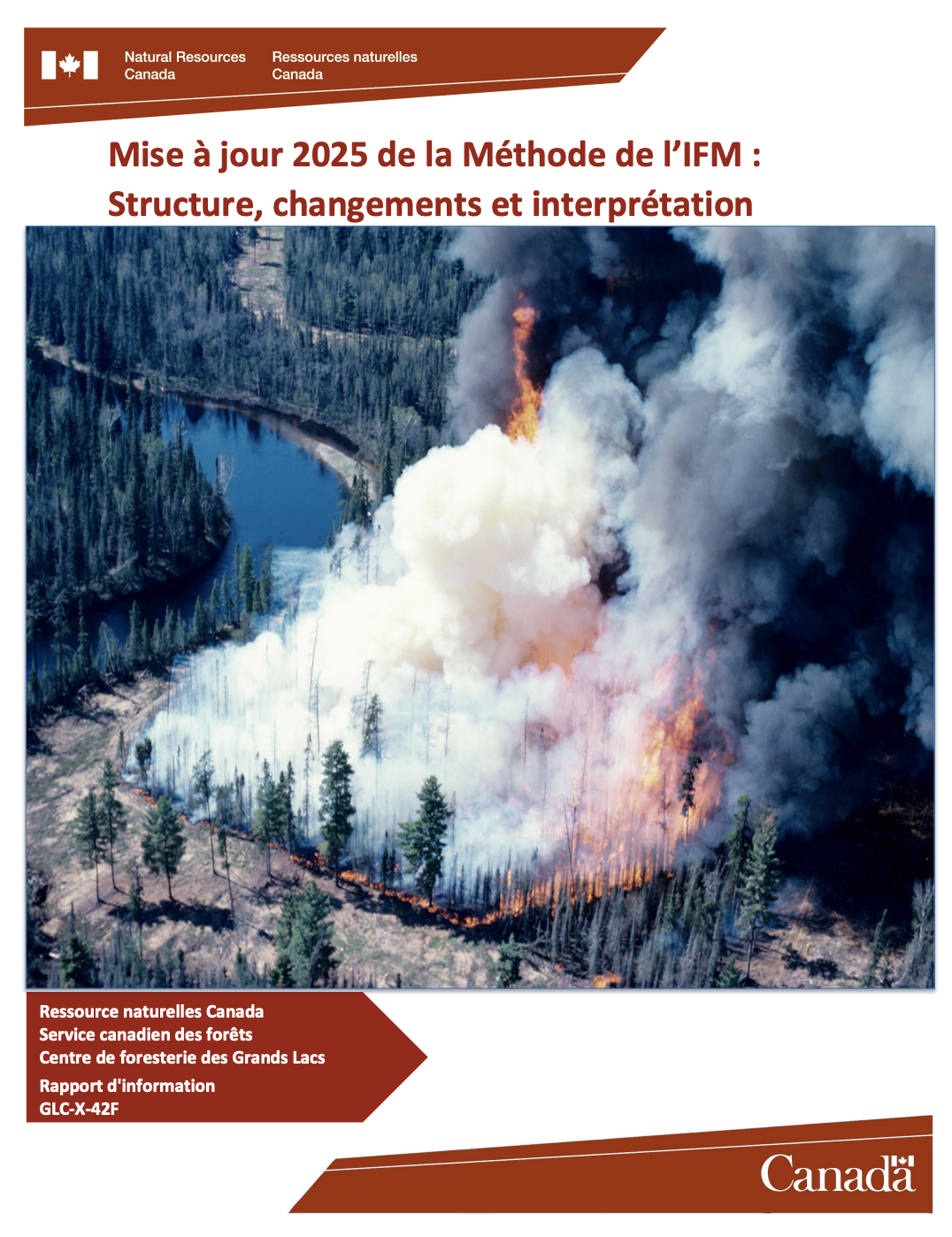
Mise à jour 2025 de la Méthode de l’IFM : Structure, changements et interprétation
La mise à jour de l'IFM2025 s'inscrit dans le cadre d'une initiative plus large visant à moderniser la méthode canadienne d'évaluation des dangers d'incendie de forêt (MCEDIF). Une amélioration de la méthodologie de calcul permet l'utilisation de données à plus haute résolution dans un cadre cohérent et scientifiquement solide, tout en conservant la simplicité de la méthode IFM actuelle (IFM1987). Ce document informe les utilisateurs expérimentés, en particulier les organismes opérationnels, des modifications apportées à l'IFM2025. Il guide les utilisateurs dans l'interprétation et l'utilisation des résultats générés par le système mis à jour dans leur planification opérationnelle. Les améliorations de l'IFM2025 fournissent un outil plus précis et plus flexible pour l'évaluation quotidienne des risques d'incendie, améliorant ainsi l'efficacité des stratégies de gestion des incendies.
Mulch fuels in boreal forests: structure, moisture, and initial fire behaviour observations
Vegetation management (or fuel management) is one important component of wildfire risk mitigation outlined by the FireSmart program in Canada. Treating fuels can alter how they react to fire. Fuel treatments, such as mulching, generate stand and surface characteristics that are significantly different from the standard fuel types described within the Canadian Fire Behaviour Prediction System. These differences pose challenges for forestry and fire management practitioners. In addition to FireSmart treatments, mulching is a widespread activity in utility corridors such as electrical transmission and oil and gas development. The objective of this Forest Management Note is to highlight some of the results from recent mulch research conducted in Alberta and British Columbia that can be applied and used by forestry and fire management practitioners.
NRCan’s Draft Policy on Ethics for Research Involving Indigenous Peoples and Territories
NRCan is trialing the Draft Policy on Ethics for Research Involving Indigenous Peoples and Territories for a one-year period. The intent of the Policy is to enable NRCan employees to build reciprocal relationships with Indigenous partners and facilitate positive outcomes for Indigenous communities through science, research, knowledge co-creation and exchange. The objectives of the Policy are to: - Facilitate the growth of knowledge about Canada’s natural resources for the well-being of all Canadians - Enable employees to build respectful and meaningful relationships with Indigenous partners - Enable employees to establish mutually beneficial research collaborations with Indigenous partners - Build respect for and safeguard the integrity of Indigenous Data that is shared with employees - Establish research ethics protocols for employees to reduce risk of harming Indigenous individuals and communities
Opportunities and limitations of thinning to increase resistance and resilience of trees and forests to global change
We reviewed recent literature to identify the positive and negative effects of thinning on both stand- and tree-level resistance and resilience to four stressors that are expected to increase in frequency and/or severity due to global change: (1) drought, (2) fire, (3) insects and pathogens, and (4) wind. While our review suggests that thinning should not be promoted as a tool that will universally increase the resistance and resilience of forests, current evidence suggests that thinning could still be an effective tool to reduce forest vulnerability to several stressors, creating a window of opportunity to implement longer term adaptive management strategies such as assisted migration. We highlight knowledge gaps that should be targeted by future research to assess the potential contribution of thinning to adaptive forest management.
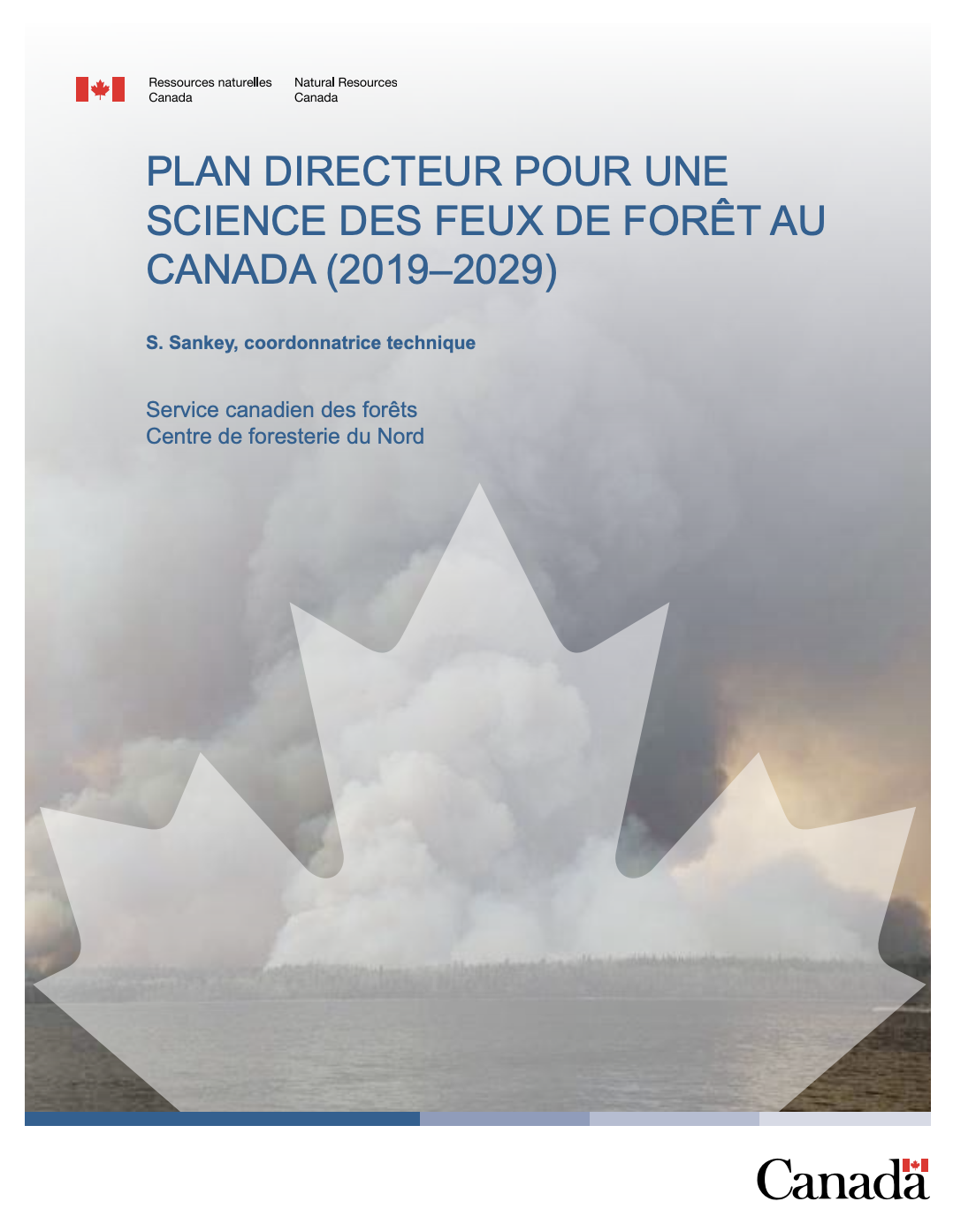
Plan directeur pour une science des feux de forêt au Canada (2019-2029)
La capacité canadienne en matière de science et de technologie sur les feux de forêt n’évolue pas au même rythme que la complexité croissante des enjeux qui y sont reliés. Les saisons des feux sont de plus en plus longues, les incendies sont de plus en plus intenses, et les experts prédisent que la superficie brûlée annuellement pourrait doubler d’ici la fin du siècle. Cependant, les programmes de recherche sur les feux de forêts ont été réduits, les programmes universitaires de science des feux de forêt sont présentement limités, et un grand nombre d’experts ont commencé à prendre leur retraite. Ces lacunes en matière de recherche met en péril la sécurité publique dans le future. Il faut augmenter la capacité nationale de recherche sur les feux de forêt, qui englobe les ressources humaines, les investissements financiers et d’autres mesures de soutien pour la science, afin d’orienter la façon de gérer les feux de forêt, de bâtir les collectivités et de se préparer aux urgences. Le Plan directeur pour une science des feux de forêt au Canada (2019–2029) présente une vision en vue d’accroître les investissements dans la science des feux de forêt. Préparé par une équipe pancanadienne d’experts, le Plan directeur fait plusieurs recommandations visant à renforcer la capacité de recherche au cours de la prochaine décennie.
Prescribed fire promotes regeneration in a mature eastern white pine forest
Although evidence indicates that fire exclusion may result in substantial short- and long-term changes to forest stand structure and composition, the long-term effects on eastern white pine (Pinus strobus L.) stands remain largely unknown. We investigated the response of trees and understory vegetation after prescribed burning in a mature white pine stand in northern Ontario, Canada. Overall, the results highlight fire severity as a driving influence on the successional trajectory of white pine stands. The findings support low to moderate prescribed burning of mature white pine-dominated forests as an effective means to retain a white pine component within areas of the Great Lakes-St. Lawrence forest region.
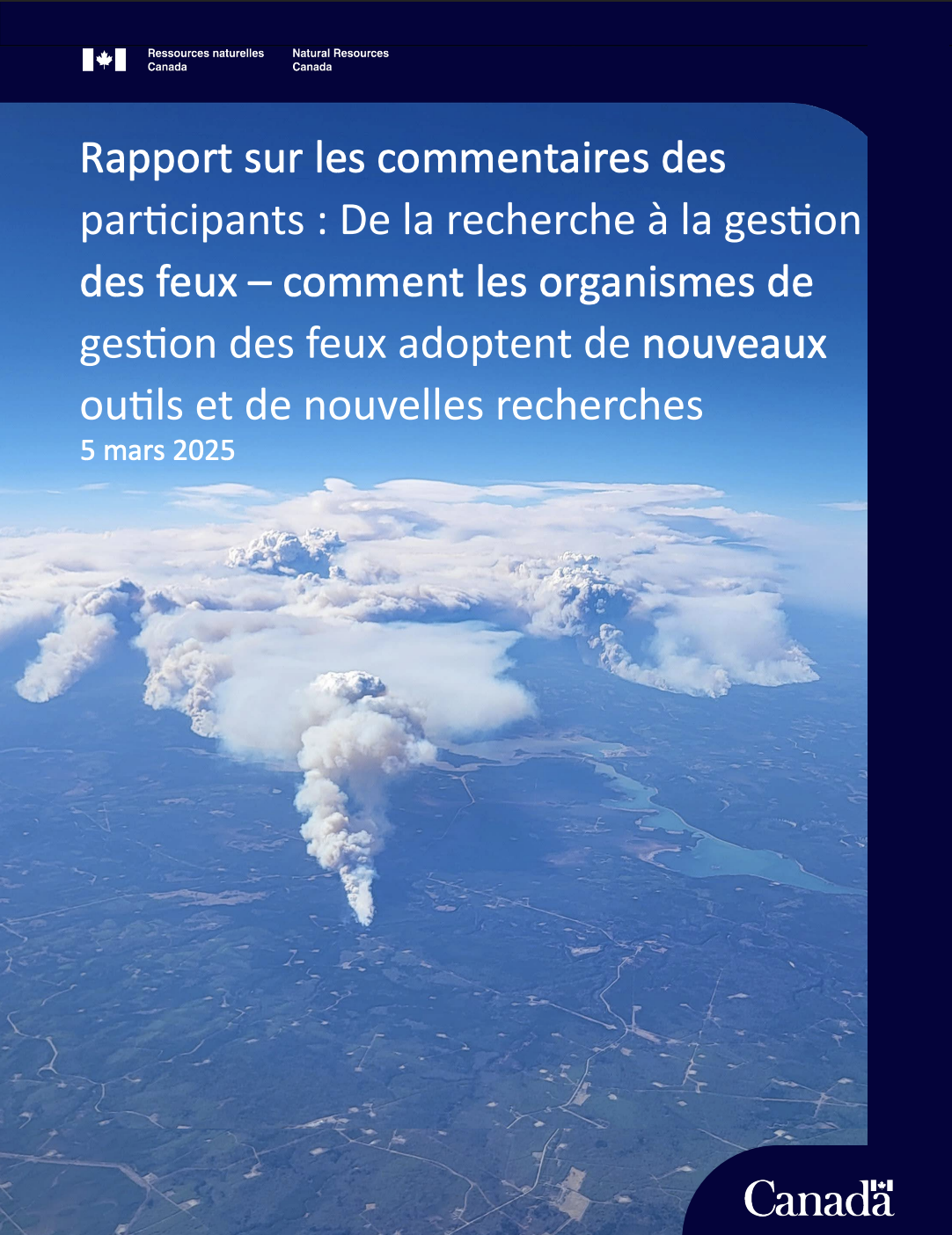
Quoi avons-nous entendu Rapport : De la recherche à la gestion des incendies – Comment les organismes de gestion des incendies adoptent de nouveaux outils et recherches
Combler l’écart entre la recherche et les opérations de lutte contre les incendies demeure un défi constant pour les agences de gestion des feux à travers le Canada. Bien que les avantages potentiels des plus récents résultats de recherche et des outils émergents soient largement reconnus, leur mise en pratique et l’adoption collective de ces innovations continuent de se heurter à des obstacles importants. Au cours de l’hiver 2024-2025, le Service canadien des forêts a entrepris une initiative d’engagement à l’échelle nationale auprès des agences provinciales et territoriales de gestion des incendies. En collaboration avec Hill and Knowlton, une série de séances régionales virtuelles ainsi qu’un atelier national en présentiel ont été organisés. Ces rencontres ont permis d’approfondir les échanges avec le personnel des agences afin de mieux comprendre les obstacles, les défis et les opportunités liés à l’intégration des résultats de recherche dans le contexte opérationnel de la gestion des incendies. Le présent rapport offre un aperçu globa des principaux défis identifiés et présente des recommandations concrètes, à court et long terme, formulées par les participants et les participantes pour favoriser une meilleure adoption de la recherche et des outils au sein des opérations de gestion des incendies au Canada.
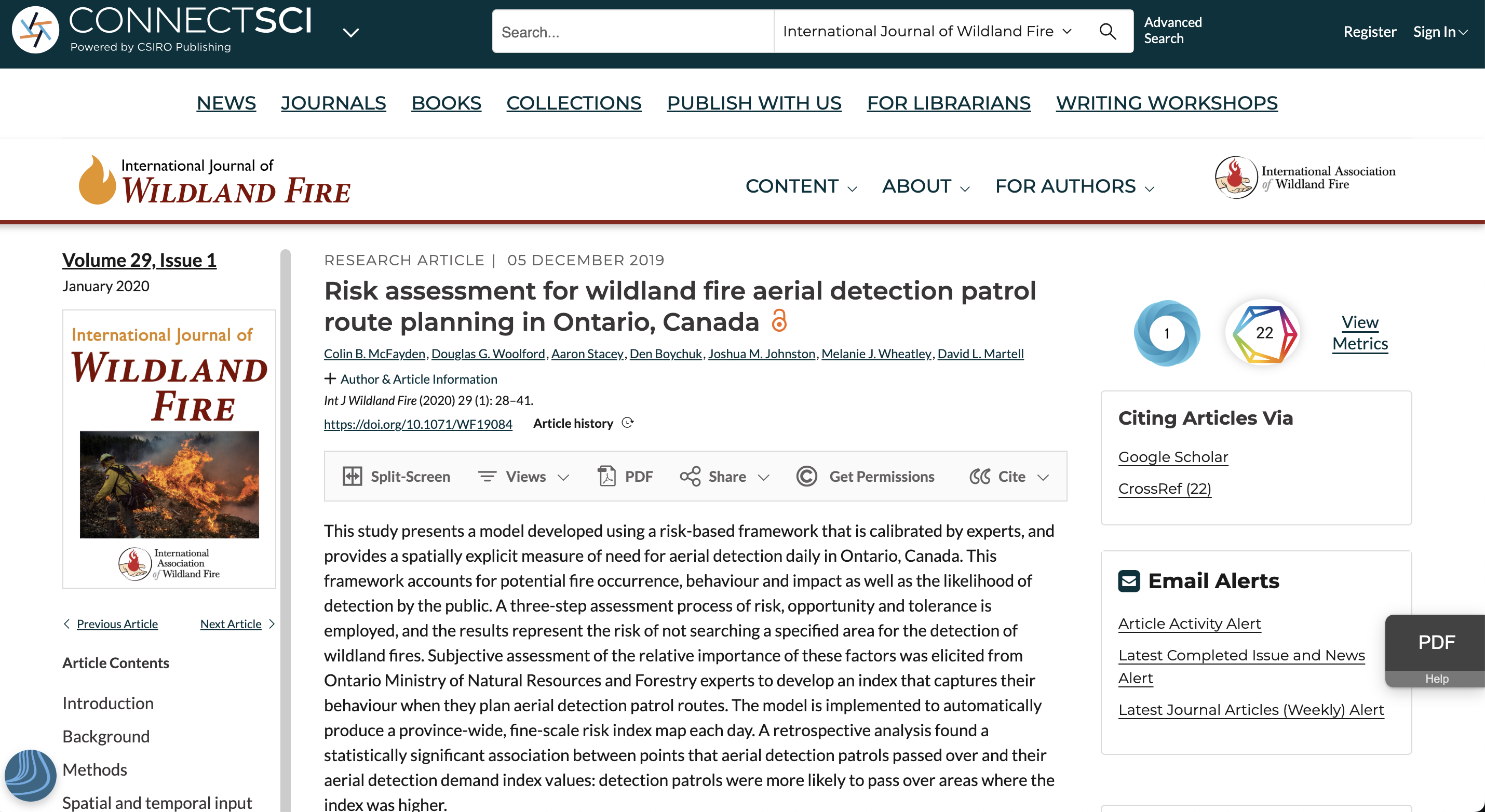
Risk assessment for wildland fire aerial detection patrol route planning in Ontario, Canada
This study presents a model developed using a risk-based framework that is calibrated by experts, and provides a spatially explicit measure of need for aerial detection daily in Ontario, Canada. This framework accounts for potential fire occurrence, behaviour and impact as well as the likelihood of detection by the public. A three-step assessment process of risk, opportunity and tolerance is employed, and the results represent the risk of not searching a specified area for the detection of wildland fires. Subjective assessment of the relative importance of these factors was elicited from Ontario Ministry of Natural Resources and Forestry experts to develop an index that captures their behaviour when they plan aerial detection patrol routes. The model is implemented to automatically produce a province-wide, fine-scale risk index map each day. A retrospective analysis found a statistically significant association between points that aerial detection patrols passed over and their aerial detection demand index values: detection patrols were more likely to pass over areas where the index was higher.

The 2023 wildfire season in Québec: an overview of extreme conditions, impacts, lessons learned, and considerations for the future
The 2023 wildfire season in Québec set records due to extreme warm and dry conditions, burning 4.5 million hectares and indicating persistent and escalating impacts associated with climate change. This study reviews the unusual weather conditions that led to the fires, discussing their extensive impacts on the forest sector, fire management, boreal caribou habitats, and particularly the profound effects on First Nation communities. To mitigate future extreme wildfire seasons, the study suggests changes in forest management practices to increase forest resilience and resistance, adapting industrial structures to changes in wood type harvested, and enhancing fire suppression and risk management strategies. It calls for a comprehensive, unified approach to risk management that incorporates the lessons learned from the 2023 fire season and accounts for ongoing climate change. The study underscores the urgent need for detailed planning and proactive measures to reduce the growing risks and impacts of wildfires in a changing climate.
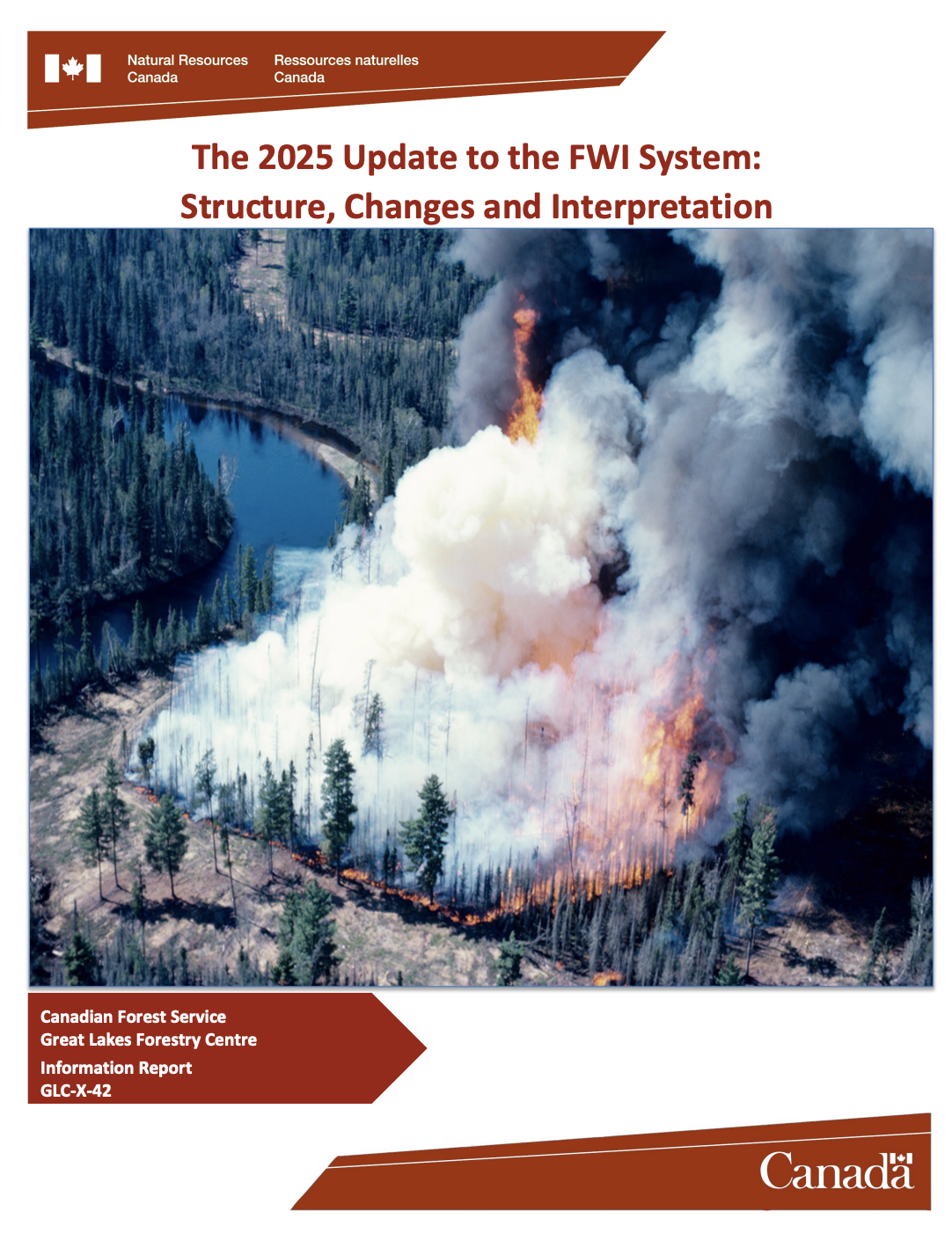
The 2025 Update to the FWI System: Structure, Changes and Interpretation
The FWI2025 update is part of a broader initiative to modernize the Canadian Forest Fire Danger Rating System (CFFDRS). An enhanced calculation methodology allows the use of higher resolution data within a consistent and scientifically sound framework, while maintaining the simplicity of the current FWI System (FWI1987). This document informs experienced users, particularly operational agencies, about the modifications in the FWI2025. It guides users in interpreting and utilizing the outputs generated by the updated system in their operational planning. The FWI2025's improvements provide a more accurate and flexible tool for daily fire danger assessment, enhancing the effectiveness of fire management strategies.
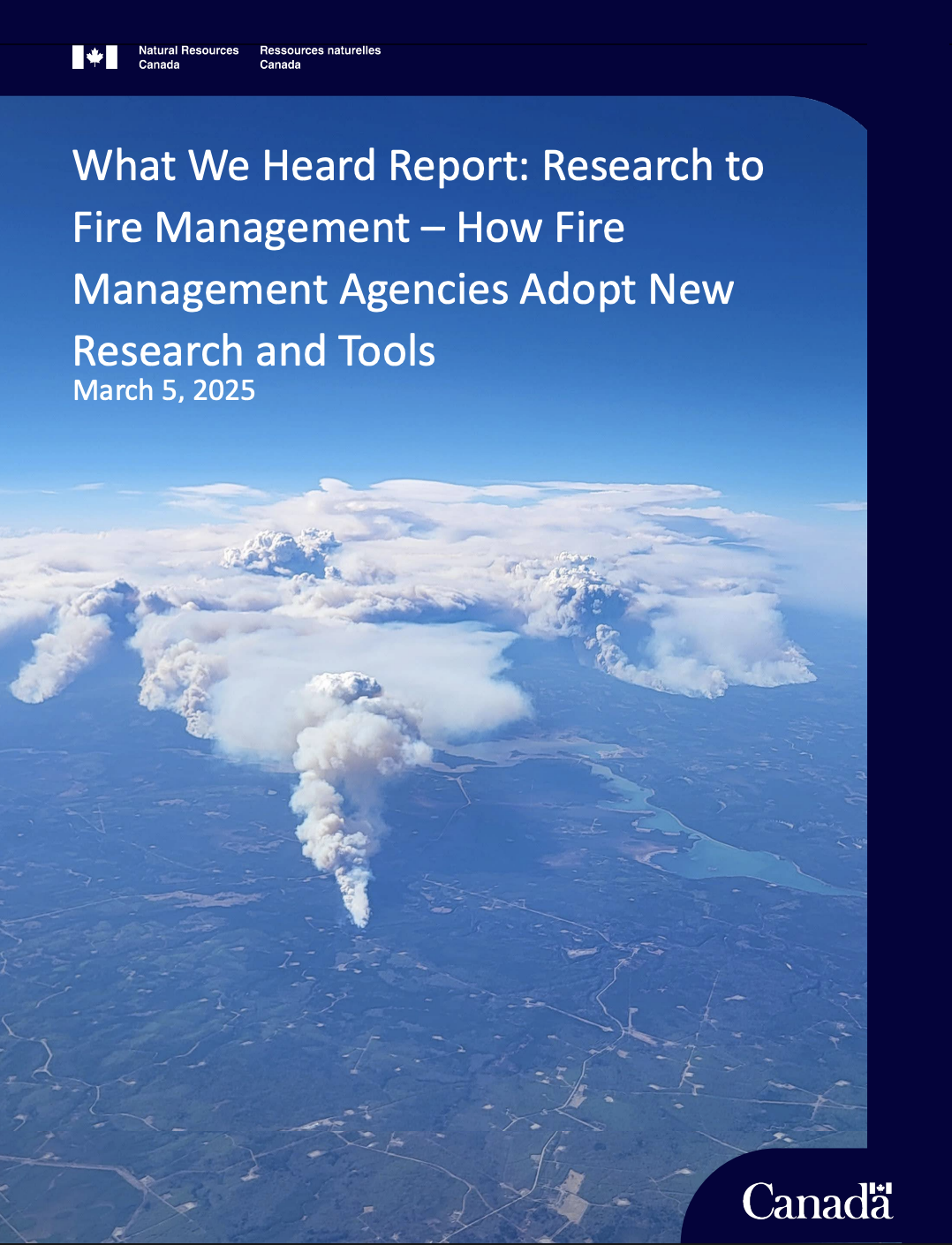
What We Heard Report: Research to Fire Management – How Fire Management Agencies Adopt New Research and Tools
Bridging the gap between research and fire operations remains a persistent challenge for fire management agencies across Canada. Although the potential benefits of new research findings and tools are widely recognized, translating these innovations into practice and making their adoption a shared priority continues to face significant hurdles. During the winter of 2024–25, the Canadian Forest Service undertook a national engagement initiative with provincial and territorial fire management agencies. In collaboration with Hill and Knowlton, a series of virtual regional sessions and an in-person national workshop were conducted. These sessions offered a deep dive with agency staff to better understand the barriers, challenges, and opportunities related to research uptake in a fire management agency context. This report presents a comprehensive overview of the key challenges identified and captures both short- and long-term practical recommendations shared by participants to enhance the adoption of research and tools within Canadian fire management operations.