Upload a document.
Have something useful to share without a clear place to host it? We can host file types including .pdf, .jpg, and .png.
What will I find here?
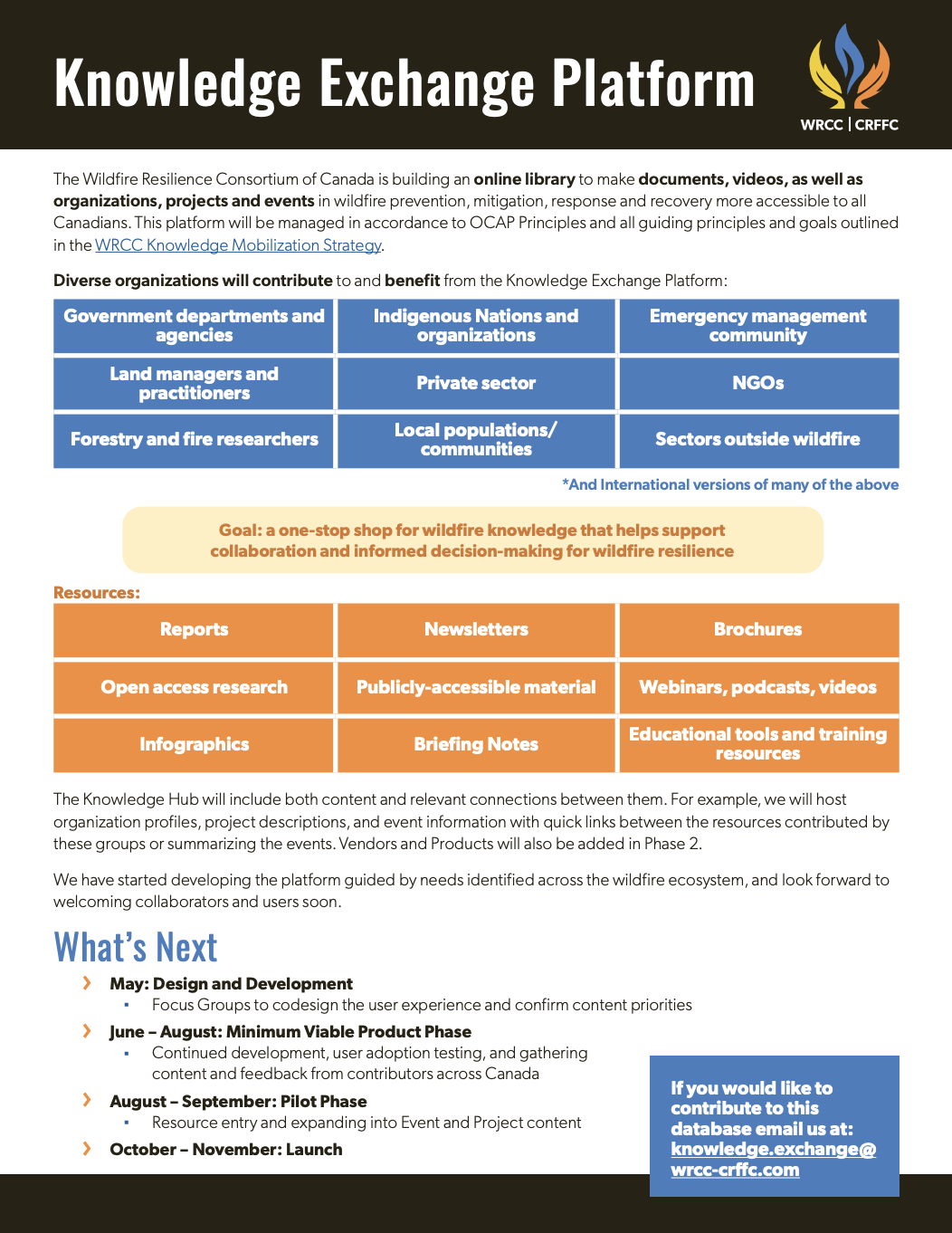
The Wildfire Resilience Consortium of Canada has co-designed an online library to make information on wildfire prevention, mitigation, response and recovery more accessible to all Canadians.
This information includes resources, such as reports, videos, and toolkits, as well as organizations, events, and projects that will help people be better connected and informed.
We aim to amplify the important work being done by organizations and groups across Canada.

A one-stop shop for wildfire knowledge that helps support collaboration and informed decision-making for wildfire resilience within Canada. The KEP is open to all who come and with a free account you can contribute to the ever growing library of information.
One shared platform for all those working towards wildfire resiliency.
A growing library of trusted resources to inform, connect, and empower all Canadians interested and practicing wildfire resiliency.
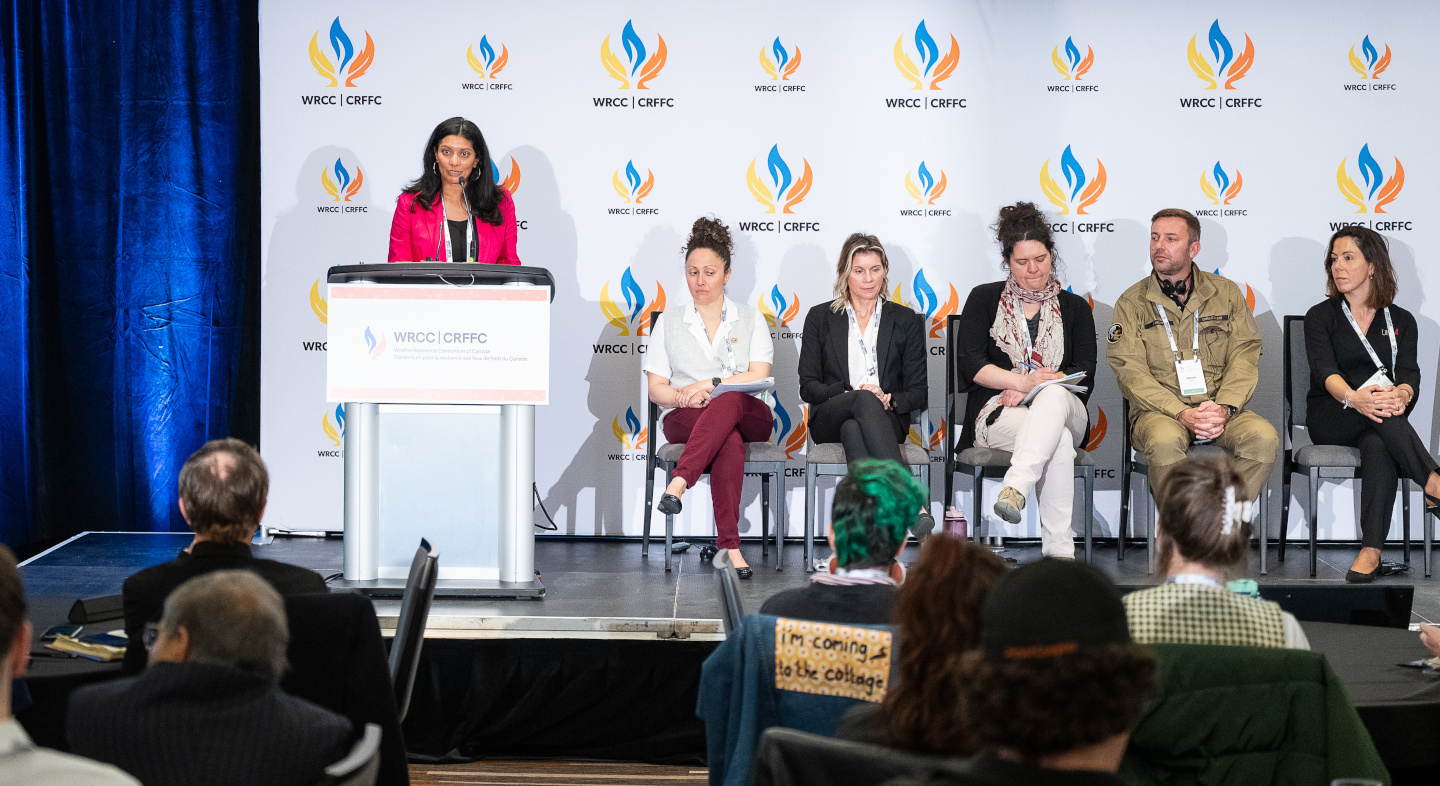
The WRCC hosted multiple focus groups with diverse representation from across the wildfire ecosystem, conducted in-depth user testing, and is continuing to seek guidance from key partners. This work is guided by an Information Management Strategy to ensure our values of transparency and relevancy are upheld throughout the KEP.
The information included in the KEP follows the OCAP Principles and guiding principles at WRCC.
For our Indigenous partners this platform will be managed in accordance with OCAP* Principles and guiding principles at WRCC.
To keep the KEP useful, trusted, and relevant, we review every resource before it is published. This helps ensure the content shared on the platform meets a consistent standard of quality. We also want that process to be transparent. We will review your resource and publish it to the library as soon as possible.
If a resource is declined, we'll always explain why. This keeps the process transparent and gives the contributor a clear path to address the issue, make any needed changes, and resubmit the resource for approval.
Files and Links. Files are directly downloadable and are valuable if you cannot host the information yourself, whereas links take you off site to maintain the original home of that information.
Have something useful to share without a clear place to host it? We can host file types including .pdf, .jpg, and .png.
Have information with a clear home where keeping connection to the original source maintains the information's integrity? Upload a link for datasets, community-based information, or other knowledge that the WRCC is not able to moderate or support. Examples include videos, podcasts, databases, or Indigenous resources where preserving the original source helps comply with OCAP.
Accuracy of the resources posted on our Knowledge Exchange Platform (KEP) is a top priority. If you notice an error or inappropriate use of KEP please report it to our WRCC curator for corrective action.
Report an issueOur step-by-step user guide walks you through the main features of the Knowledge Exchange Platform (KEP).
Download the user guideThe WRCC was formed by Core and Foundational Partners and is powered by a dedicated team of researchers, practitioners, and community leaders working together to reduce the risks and impacts of extreme wildfires. Our team brings diverse expertise and a shared commitment to helping communities prepare for, withstand, and recover from wildfire events across Canada. Each of these regions will have a dedicated Coordinator. For more information on the team covering Canada visit https://wrcc-crffc.com/about.
While the WRCC aims to support national knowledge sharing, we are also working to strengthen place-based knowledge exchange in our seven Regional Networks. These networks are each supported by a Regional Coordinator and aim to provide a connection point for learning within and across terrestrial ecozones, fire regimes and jurisdictions. Events displayed on the KEP are tagged with a corresponding WRCC Regional Network in an effort to highlight which events are available to network members and those interested in place-based opportunities. A concerted effort is being made to connect people, projects and organizations across traditional jurisdictional boundaries, while also giving them a clear regional point of contact and a network to belong to.
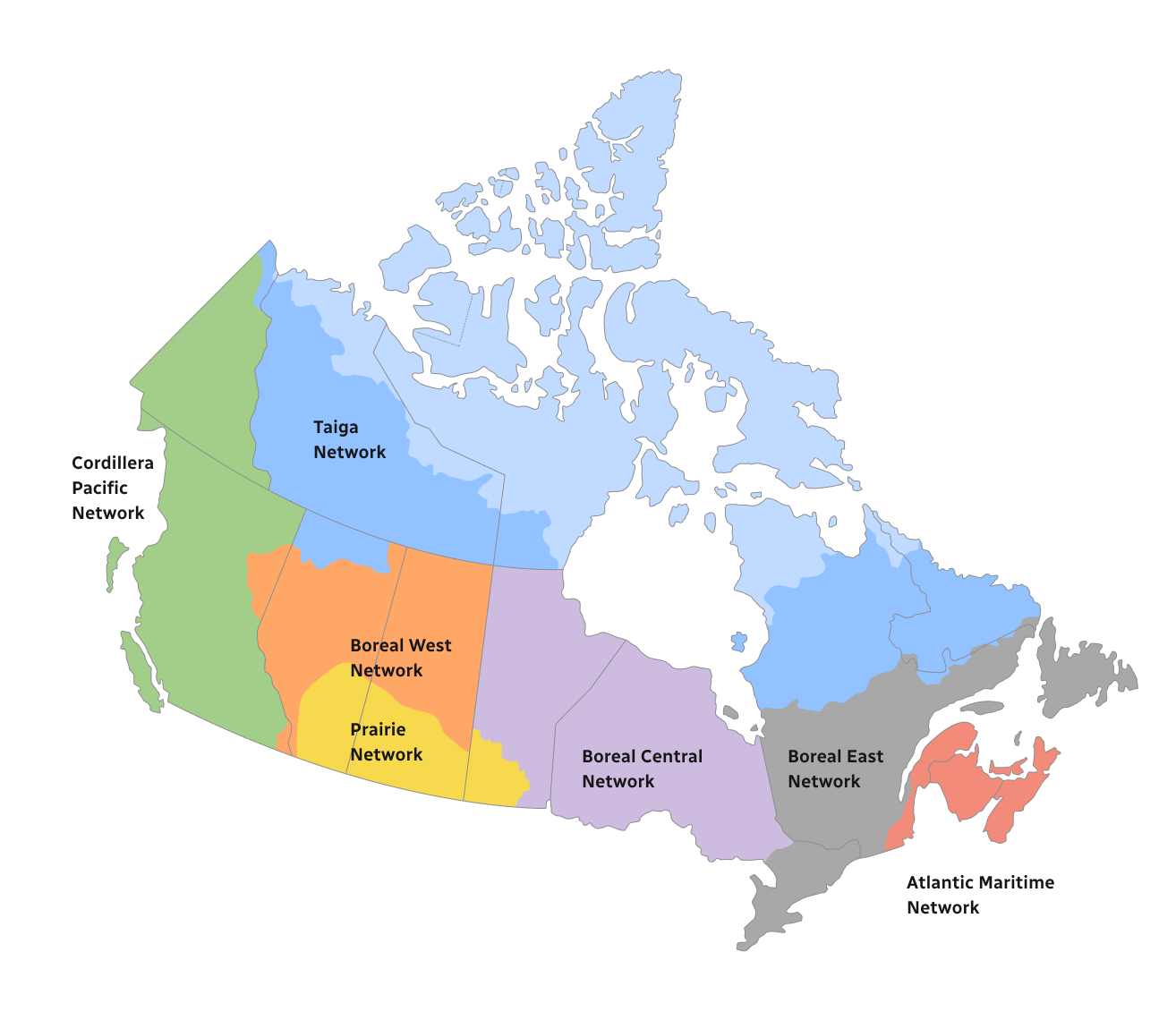
Each region in Canada has distinct social contexts that affect wildfire management (e.g., urban and rural development patterns, public perception, timber production, demographics, etc.). Likewise, each region’s ecological context affects the nature of wildfire and how it is changing (e.g., fuel types, terrain, climate change impacts, etc.). The establishment of seven wildfire knowledge networks fulfills the need for ecoregional action that reflects these unique regional contexts.
Browse answers to common questions about accessing, sharing, and managing resources on the Knowledge Exchange Platform.
When you create a profile, you become a registered user. This lets you build and maintain your own library of resources, while also contributing resources to the platform for others to access.
All newly uploaded resources are placed in a moderation queue before they are published. The WRCC curator will review each submission to make sure it is appropriate for the platform. Once reviewed, the resource will either be approved or declined. If approved, it will be published immediately and become searchable on the platform. You will also receive an automated email confirming the status of your upload.
If a resource needs to be removed, the original contributor or the person who uploaded it can remove it directly, provided they have the appropriate permissions. If an organization other than the original contributor or uploader requests removal, please contact us through the Report an issue page. The curator will review the request with you and help facilitate the removal of the resource.
We've put together a step-by-step user guide that walks you through the main features of the platform. You can download the user guide (PDF) to get started.
Is your organization interested in becoming a partner or becoming a regular contributor of content to KEP? Download the print friendly version to take to your next organization's meeting.
Download Brochure