Why some homes survived: Learning from the Fort McMurray wildland/urban interface fire disaster
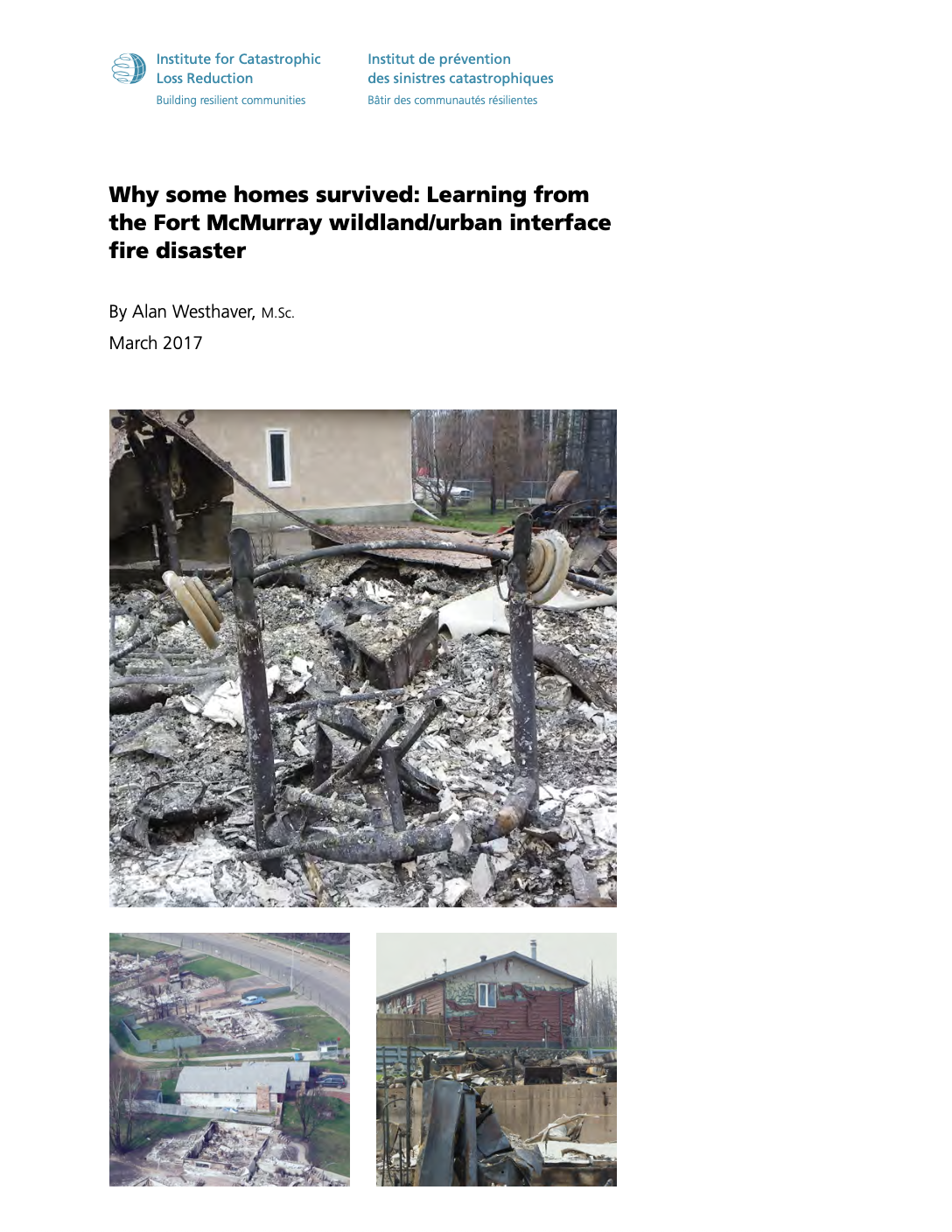
In early May 2016 Fort McMurray, Alberta experienced the largest in a series of increasingly disastrous wildland/urban interface fires to recently occur in Western Canada. When the damage extent became apparent, the Institute for Catastrophic Loss Reduction sought permission for on-site access and tasked the author with conducting an investigation to answer the vital question: ‘Why did some homes survive this wildland/urban interface fire with little or no damage, while others were vulnerable to ignition and destroyed?’ A methodology to evaluate the relative vulnerability or fire-resistance of homes was developed. Observations concentrated on homes near the edge of urban neighbourhoods where wildland fire first spread to, and established among, structures. Levels of hazard associated with 20 individual factors contributing to ignition potential of homes were evaluated.
Authors
- Alan Westhaver
Organizations
- ForestWise Environmental Consulting Ltd.