ForestWise Environmental Consulting Ltd.
Resources from this organization
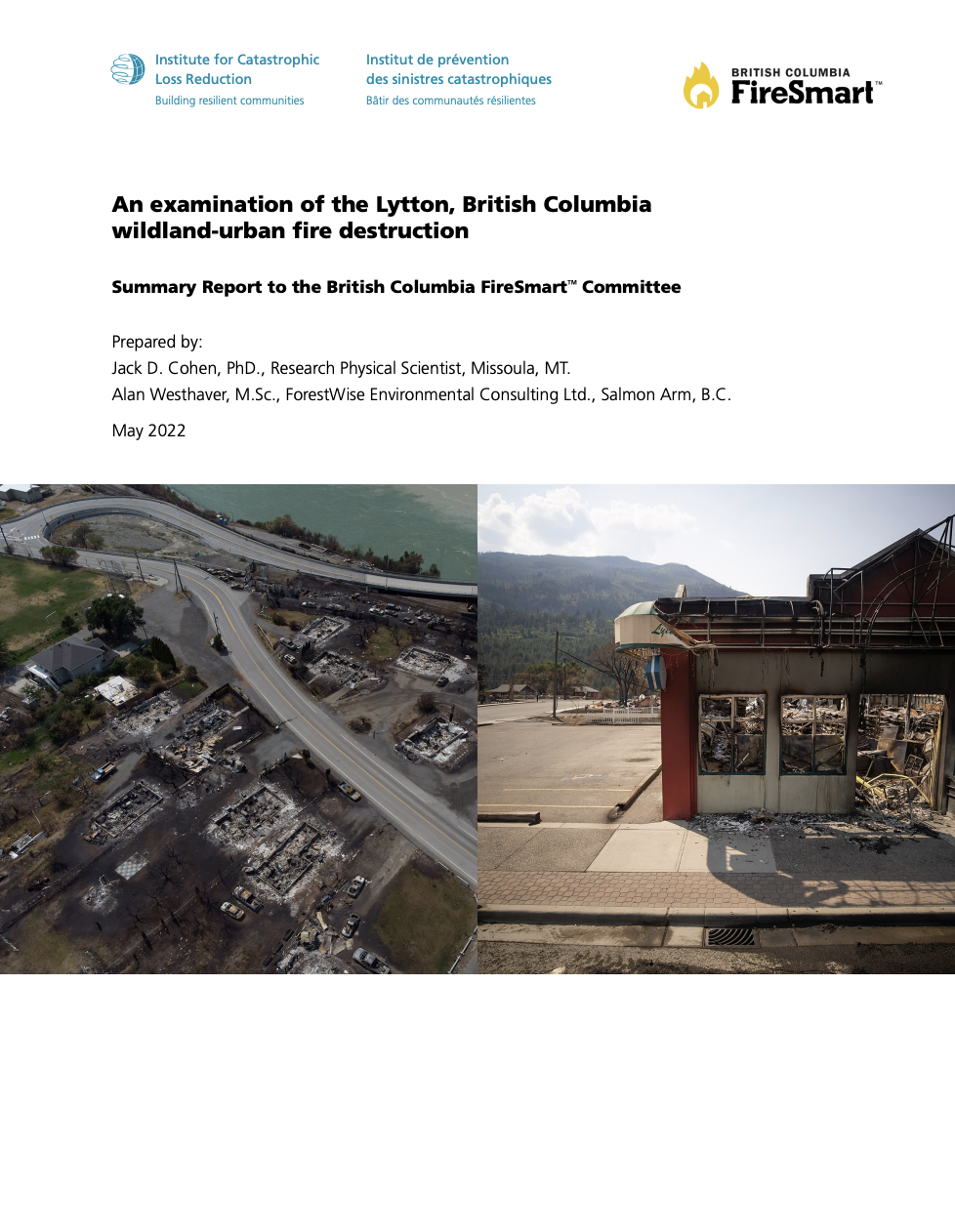
An examination of the Lytton, British Columbia wildland-urban fire destruction: Summary Report to the British Columbia FireSmartTM Committee
The British Columbia FireSmart Committee initiated this examination of the Lytton Wildland-Urban (WU) fire disaster for the purpose of: • Understanding the relationship between the wildfire conditions and how homes and businesses ignited and burned to total destruction resulting in the Lytton WU fire disaster on June 30, 2021. • Communicating understanding and awareness specifically related to the Lytton WU fire disaster examination revealing fundamental principles of all WU fires that can be generally applied by residents, municipal and emergency managers such that all communities can choose to become more wildfire resilient and more likely to avoid future disasters. • Making recommendations for readily attainable ignition resistant materials and designs, and best practices for rebuilding and maintenance of fire-resistant communities at the Village of Lytton and Lytton First Nations, Klahkamich (IR 17) and Klickkumcheen (IR 18).
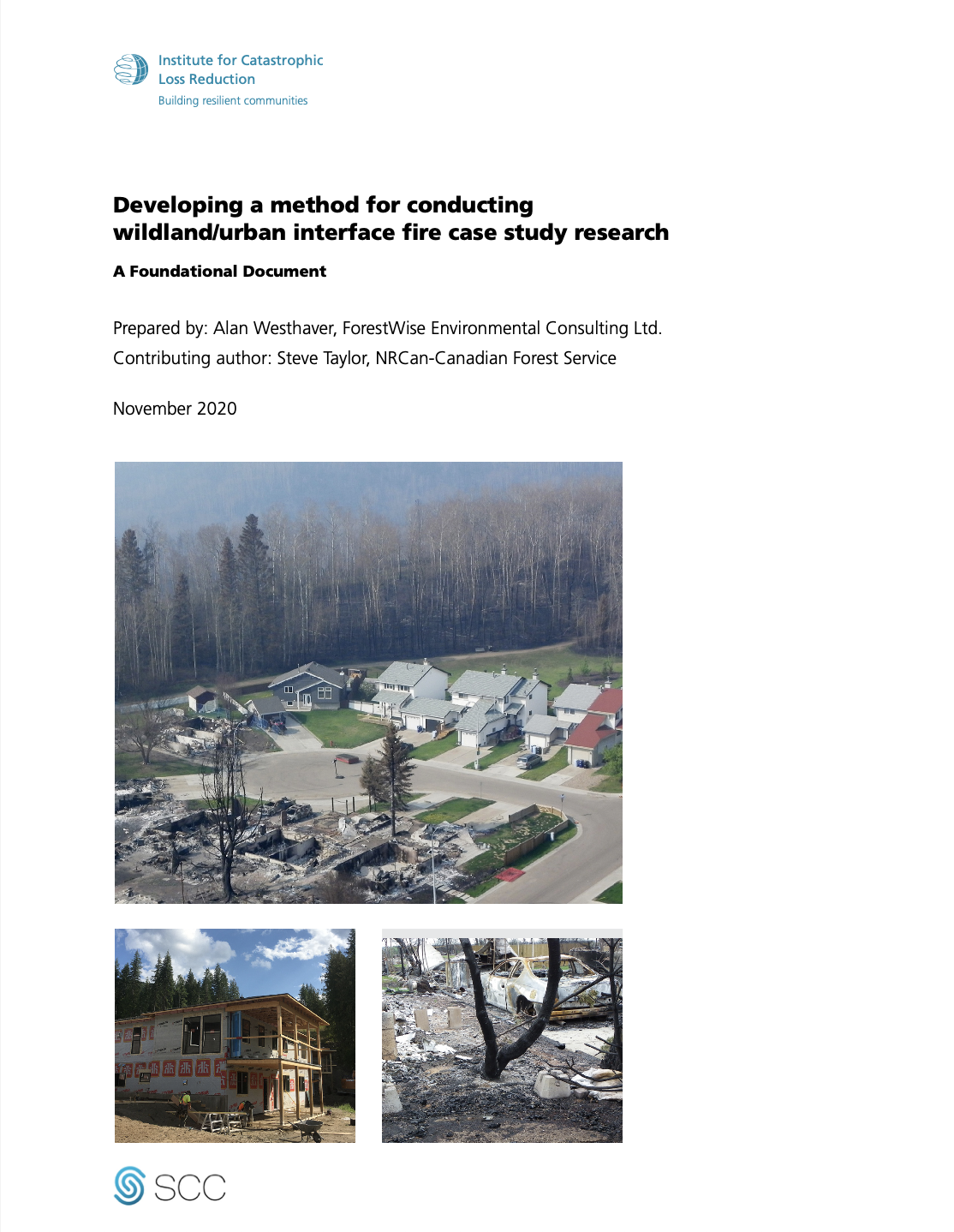
Developing a method for conducting wildland/urban interface fire case study research: A Foundational Document
This Foundational Document is a first step toward creating a comprehensive methodology (i.e., best practices) for WUI fire exposure and impact case studies in Canada. Such studies are vital to address outstanding knowledge deficiencies and improve mitigation measures that reduce structural vulnerability, ignition and loss. This document is not a prescriptive plan, but rather a backgrounder exploring what a comprehensive methodology might look like. It addresses scientific, operational and administrative aspects of implementing WUI fire case study research and provides a focal point for further discussion.
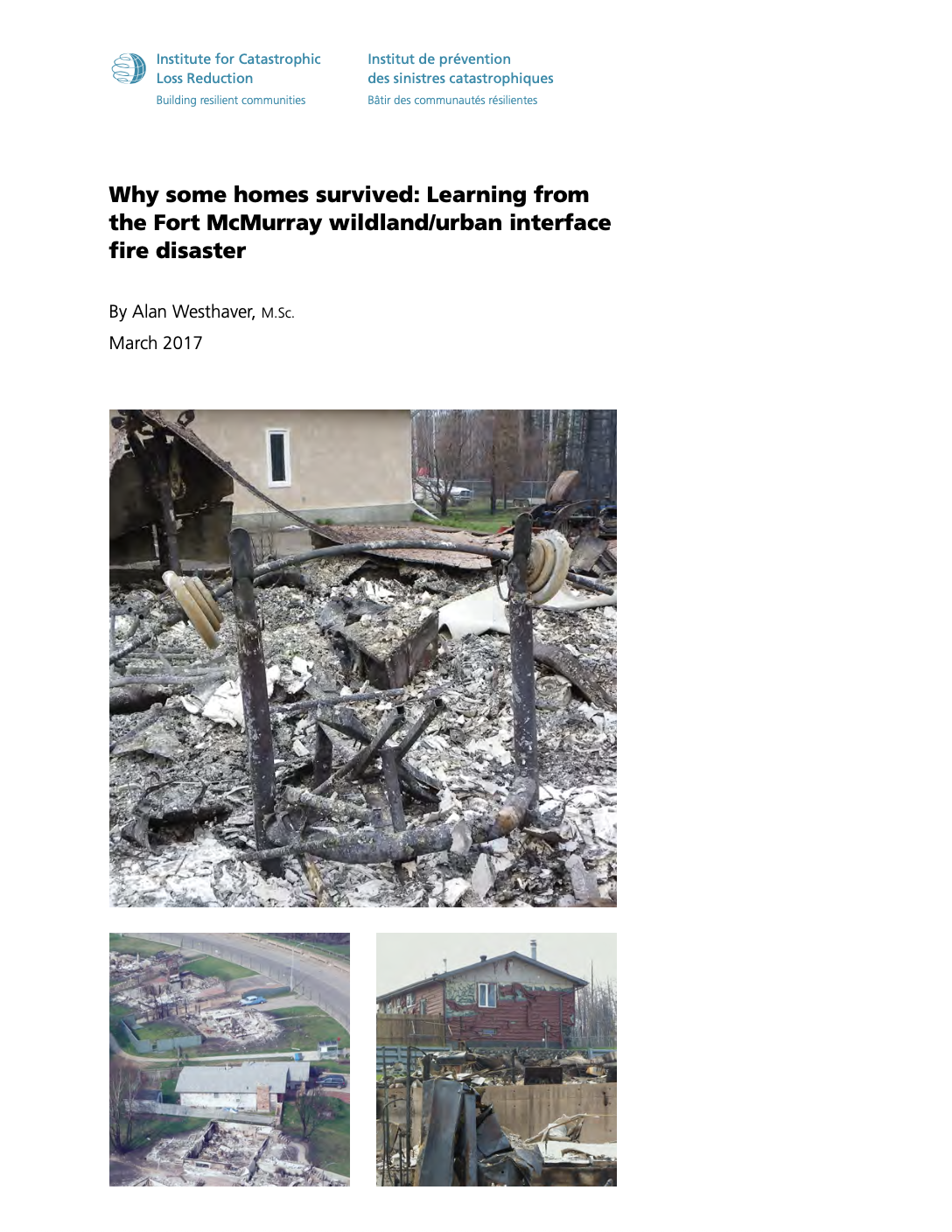
Why some homes survived: Learning from the Fort McMurray wildland/urban interface fire disaster
In early May 2016 Fort McMurray, Alberta experienced the largest in a series of increasingly disastrous wildland/urban interface fires to recently occur in Western Canada. When the damage extent became apparent, the Institute for Catastrophic Loss Reduction sought permission for on-site access and tasked the author with conducting an investigation to answer the vital question: ‘Why did some homes survive this wildland/urban interface fire with little or no damage, while others were vulnerable to ignition and destroyed?’ A methodology to evaluate the relative vulnerability or fire-resistance of homes was developed. Observations concentrated on homes near the edge of urban neighbourhoods where wildland fire first spread to, and established among, structures. Levels of hazard associated with 20 individual factors contributing to ignition potential of homes were evaluated.