An impact analysis for the National Guide for Wildland-Urban Interface Fires
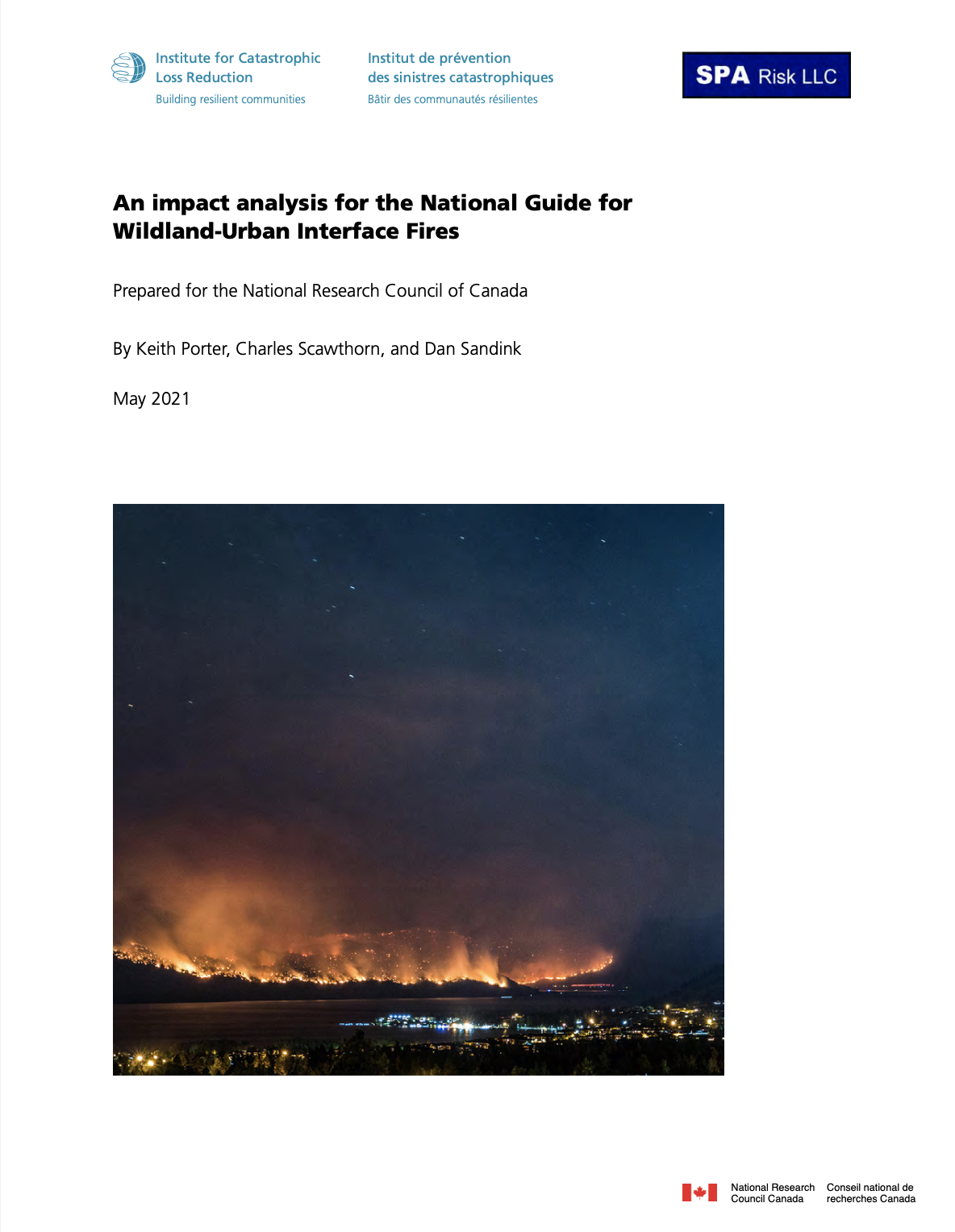
The National WUI Guide provides techniques to increase the resilience of buildings and communities in the wildland-urban interface (WUI). It offers optional combinations of building with non-combustible or fire-resistive material and controlling nearby vegetation. The Guide recommends public measures as well, including strategies related to planning, communication, roads, water, and vegetation management around power lines. This report provides comprehensive information concerning the Guide’s costs and benefits for new buildings, existing buildings, and communities in WUI fire hazard areas across the country.
Le Guide national sur l’interface zone urbaine-zone de forêt (WUI) propose des techniques visant à accroître la résilience des bâtiments et des collectivités situés dans cette zone. Il offre des combinaisons optionnelles de construction à l’aide de matériaux incombustibles ou résistants au feu et de gestion de la végétation environnante. Le Guide recommande également des mesures d’intérêt public, notamment des stratégies liées à l’aménagement du territoire, à la communication, au réseau routier, à l’approvisionnement en eau et à la gestion de la végétation autour des lignes électriques. Le présent rapport fournit des renseignements complets sur les coûts et les avantages du Guide pour les nouveaux bâtiments, les bâtiments existants et les collectivités situées dans les zones à risque d’incendie en zone d’interface urbaine-forestière (WUI) partout au pays.
Authors
- Keith Porter
- Dan Sandink
- Charles Scawthorn
Organizations
- Institute for Catastrophic Loss Reduction (ICLR)