Institute for Catastrophic Loss Reduction (ICLR)
Disaster prevention research centre affiliated with Western University, covering wildfire and other hazards.
Visit OrganizationResources from this organization
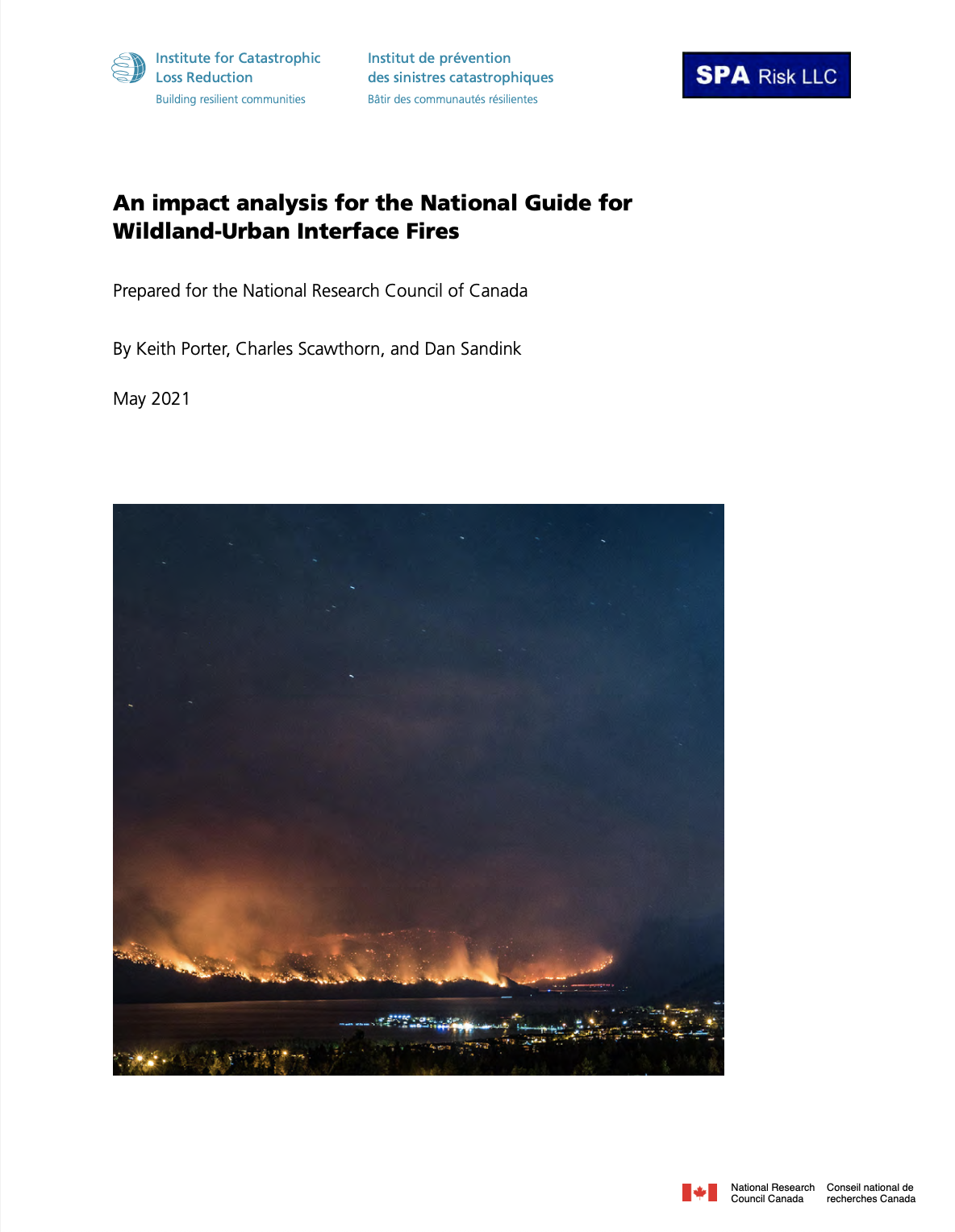
An impact analysis for the National Guide for Wildland-Urban Interface Fires
The National WUI Guide provides techniques to increase the resilience of buildings and communities in the wildland-urban interface (WUI). It offers optional combinations of building with non-combustible or fire-resistive material and controlling nearby vegetation. The Guide recommends public measures as well, including strategies related to planning, communication, roads, water, and vegetation management around power lines. This report provides comprehensive information concerning the Guide’s costs and benefits for new buildings, existing buildings, and communities in WUI fire hazard areas across the country.
An impact analysis for the National guide for wildland-urban-interface fires
This report, sponsored by the National Research Council of Canada, provides comprehensive information concerning the National WUI Guide's costs and benefits for new buildings, existing buildings, and communities in WUI fire hazard areas across the country.
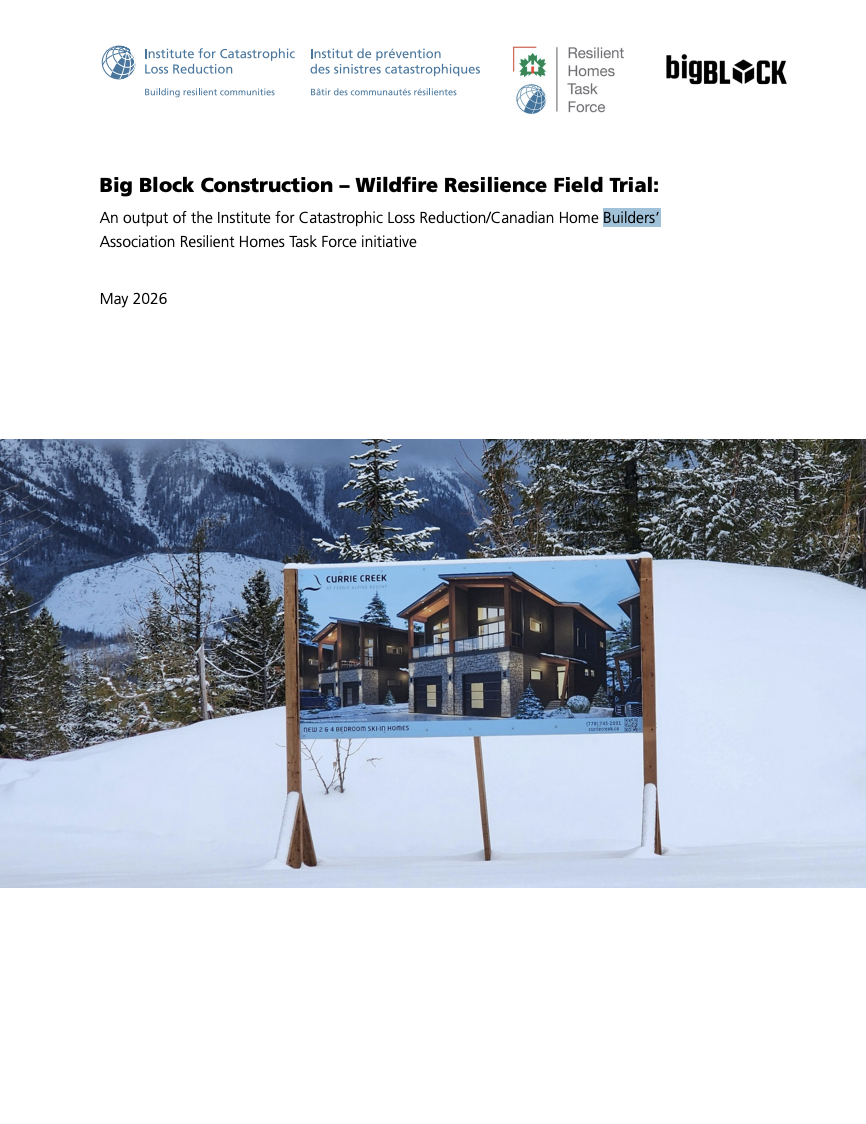
Big Block Construction – Wildfire Resilience Field Trial: An output of the Institute for Catastrophic Loss Reduction/Canadian Home Builders’ Association Resilient Homes Task Force initiative
In 2023, the Institute for Catastrophic Loss Reduction (ICLR) and the Canadian Home Builders’ Association (CHBA) identified the need to collaboratively develop and promote low-cost, low-risk voluntary resilience measures and natural hazard risk reduction strategies for the home building and renovation industries. ICLR and CHBA initiated field trials to test the applicability and practicality of the guidelines in actual construction projects across Canada and generate implementation insights unavailable through surveys and meeting-based consultation with builders and insurers.
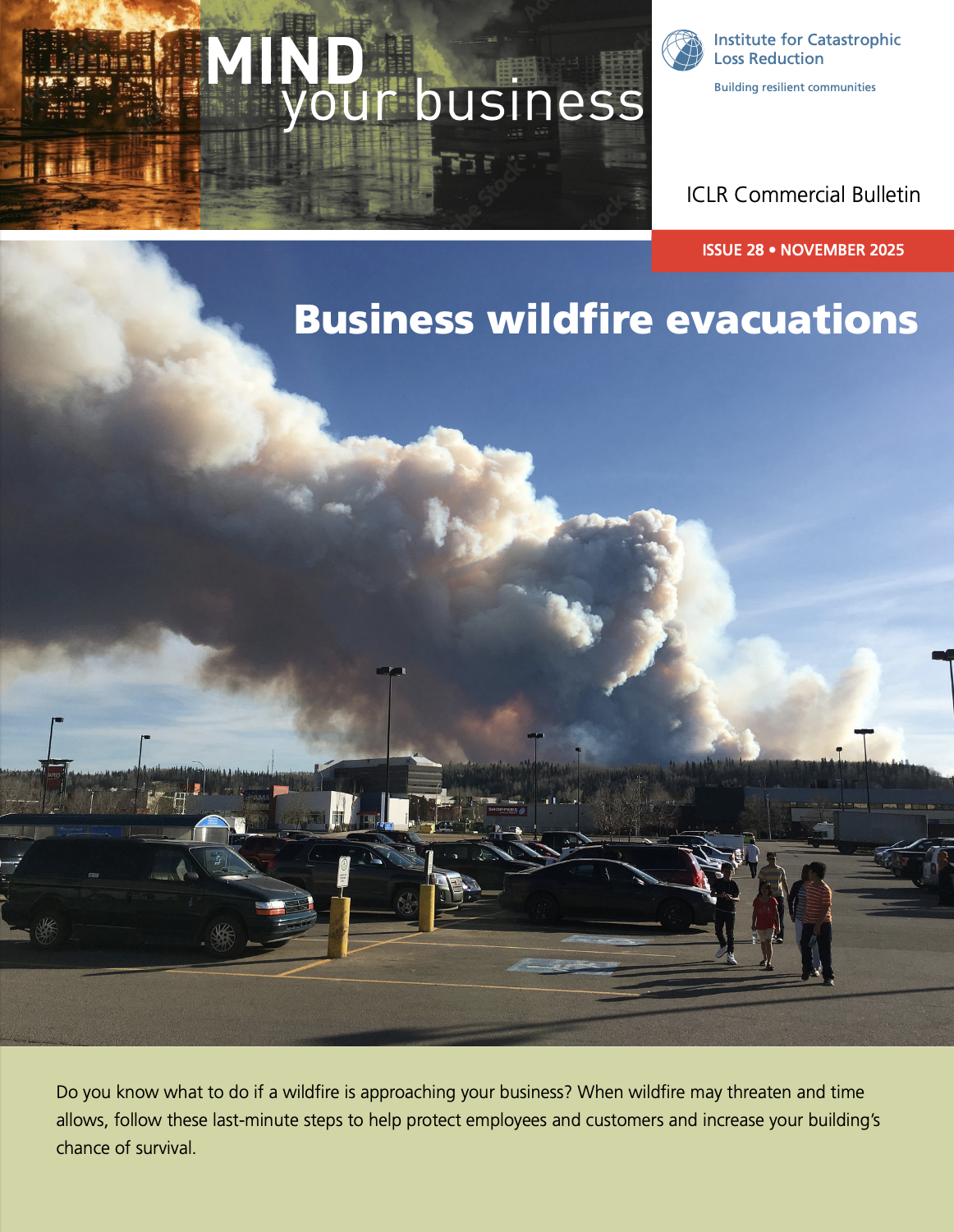
Business wildfire evacuations
Do you know what to do if a wildfire is approaching your business? When wildfire may threaten and time allows, follow these last-minute steps to help protect employees and customers and increase your building’s chance of survival.
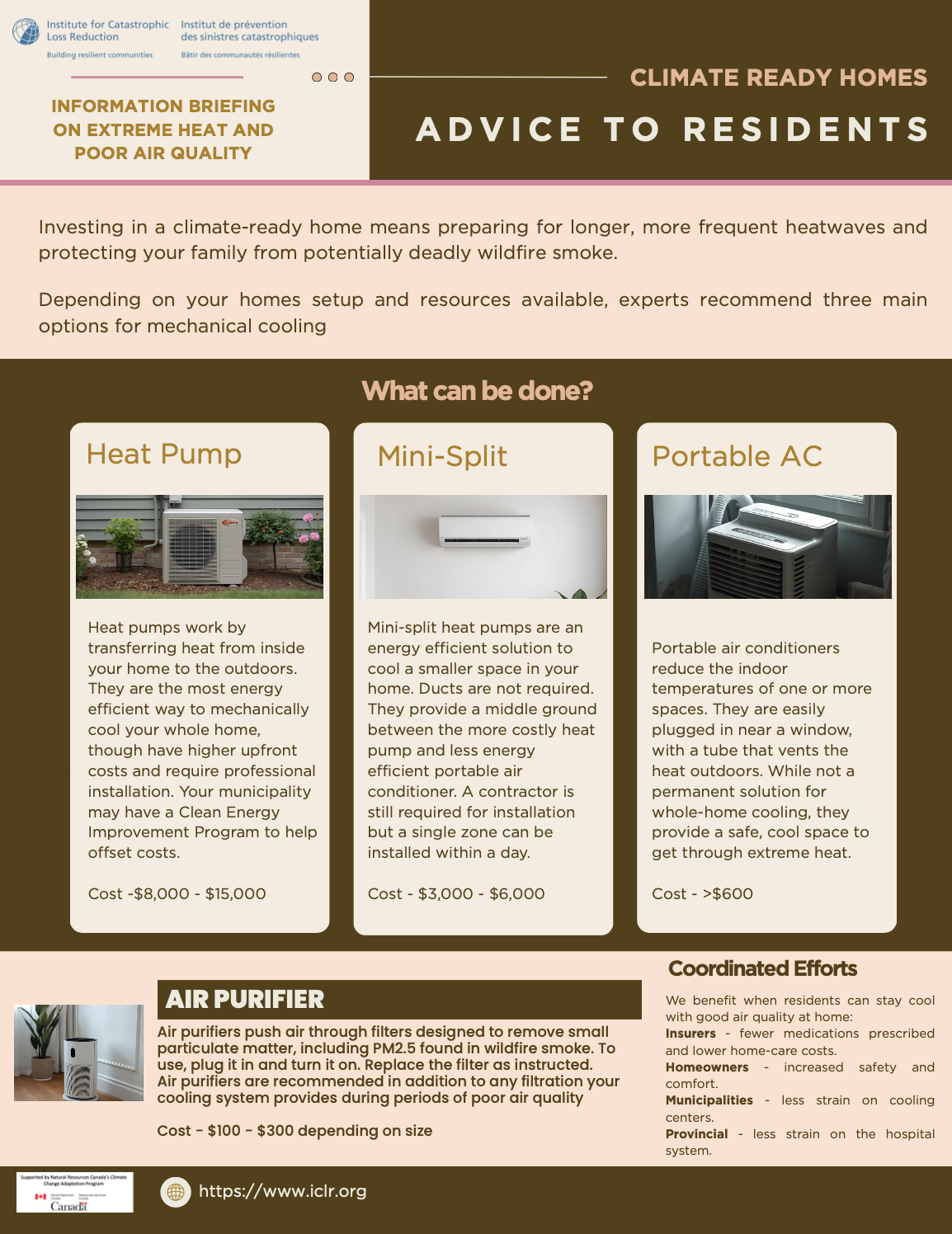
Climate Ready Homes: Information Briefing on Extreme Heat and Poor Air Quality: Advice to Residents
Investing in a climate-ready home means preparing for longer, more frequent heatwaves and protecting your family from potentially deadly wildfire smoke. Depending on your homes setup and resources available, experts recommend three main options for mechanical cooling.
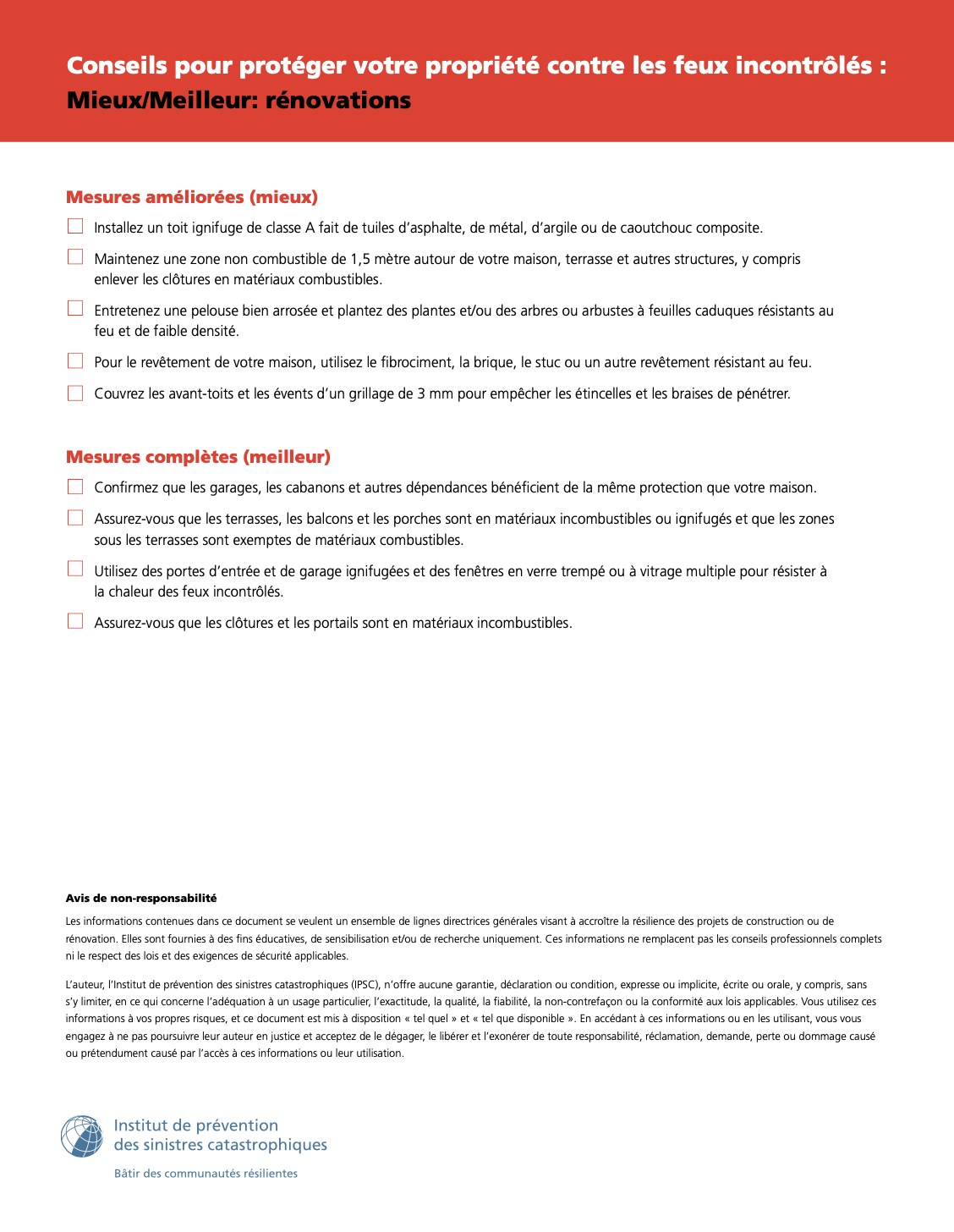
Conseils pour protéger votre propriété contre les feux incontrôlés : Mieux/Meilleur: rénovations
Ce document se veut un ensemble de lignes directrices générales visant à accroître la résilience des projets de construction ou de rénovation.
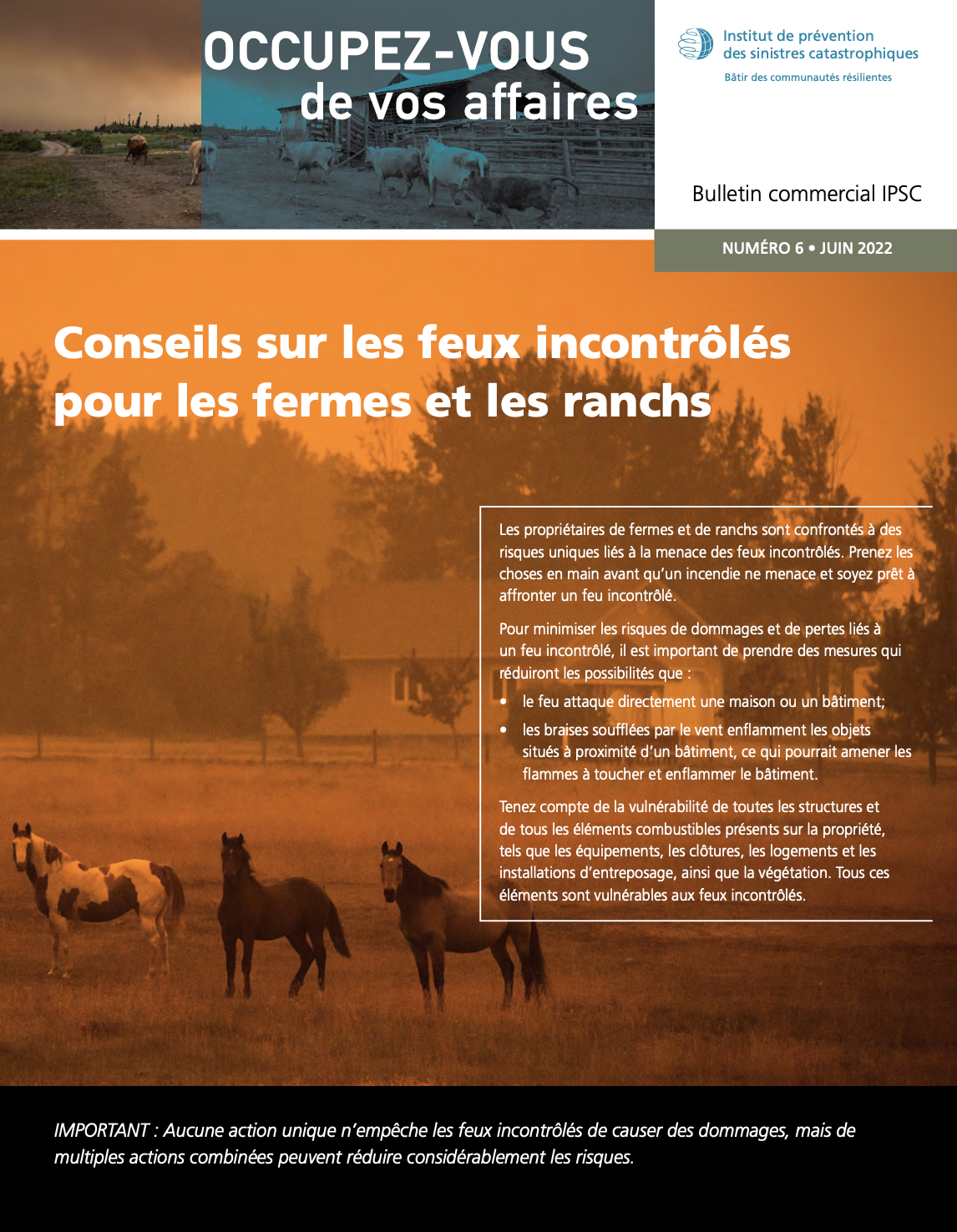
Conseils sur les feux incontrôlés pour les fermes et les ranchs
Les propriétaires de fermes et de ranchs sont confrontés à des risques uniques liés à la menace des feux incontrôlés. Prenez les choses en main avant qu’un incendie ne menace et soyez prêt à affronter un feu incontrôlé. Pour minimiser les risques de dommages et de pertes liés à un feu incontrôlé, il est important de prendre des mesures qui réduiront les possibilités que le feu attaque directement une maison ou un bâtiment, et que les braises soufflées par le vent enflamment les objets situés à proximité d’un bâtiment, ce qui pourrait amener les flammes à toucher et enflammer le bâtiment. Tenez compte de la vulnérabilité de toutes les structures et de tous les éléments combustibles présents sur la propriété, tels que les équipements, les clôtures, les logements et les installations d’entreposage, ainsi que la végétation. Tous ces éléments sont vulnérables aux feux incontrôlés.
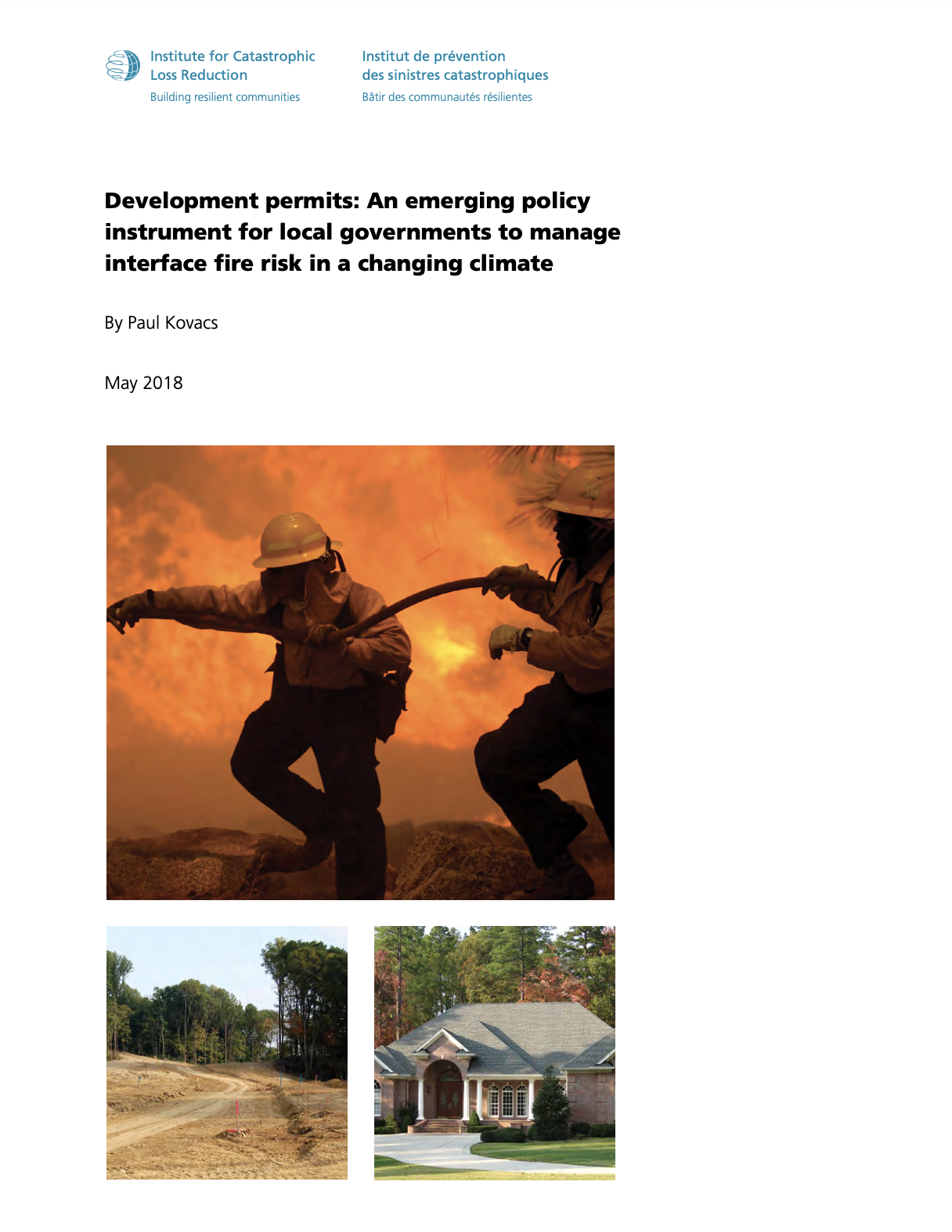
Development permits: An emerging policy instrument for local governments to manage interface fire risk in a changing climate
Development permits are planning tools that local governments can use to manage development, protect the environment and address local health and safety issues. The system can be used to combine management of zoning, site planning and minor variants into a single process. More than a dozen communities in British Columbia and Alberta have begun to use development permits to control the extent, nature and location of new residential development in the wildland-urban interface, establishing an emerging policy instrument for local governments to address the risk of loss from wildland fire and ensure that communities are safe places to live, work and play. Of interest in this report is the emerging role of local government planning officials.
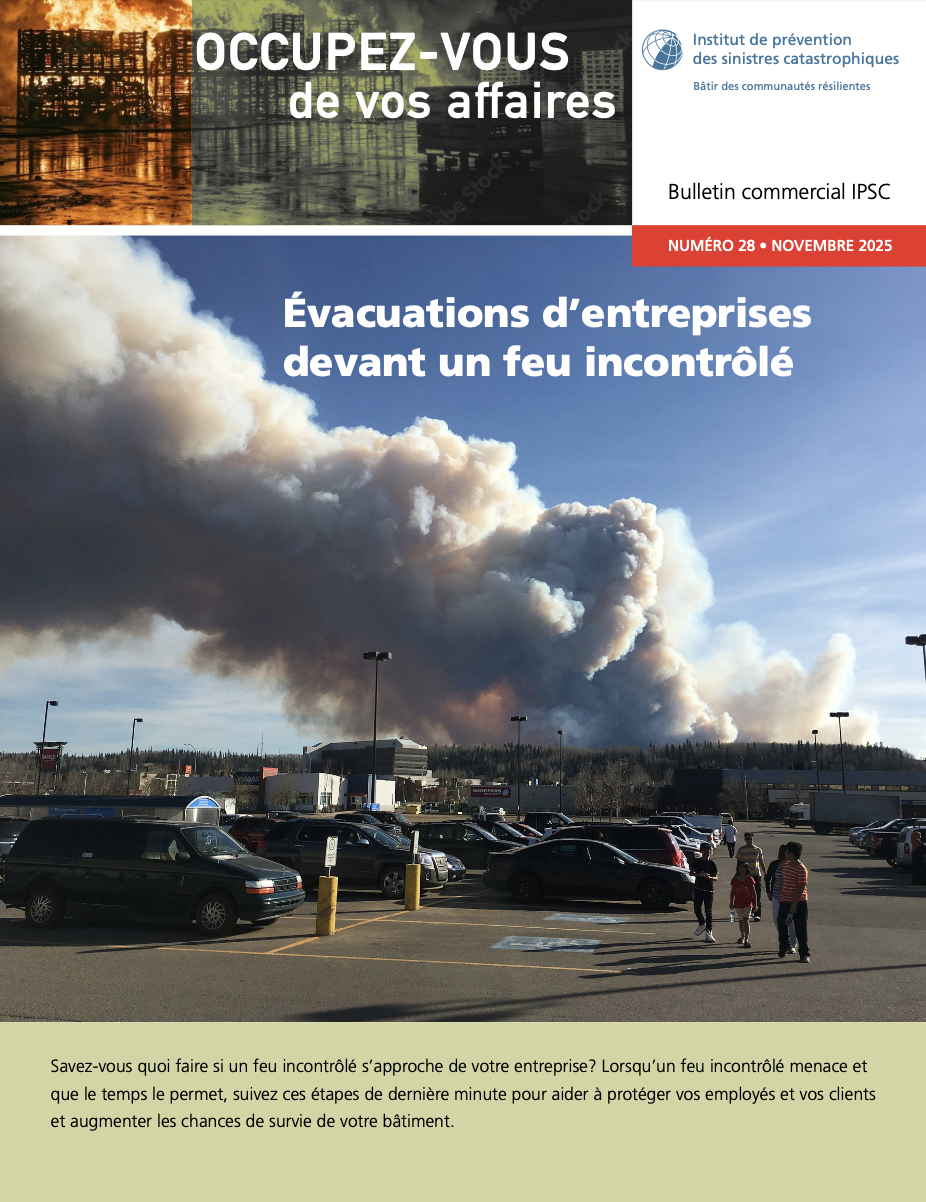
Évacuations d’entreprises devant un feu incontrôlé
Savez-vous quoi faire si un feu incontrôlé s’approche de votre entreprise? Lorsqu’un feu incontrôlé menace et que le temps le permet, suivez ces étapes de dernière minute pour aider à protéger vos employés et vos clients et augmenter les chances de survie de votre bâtiment.
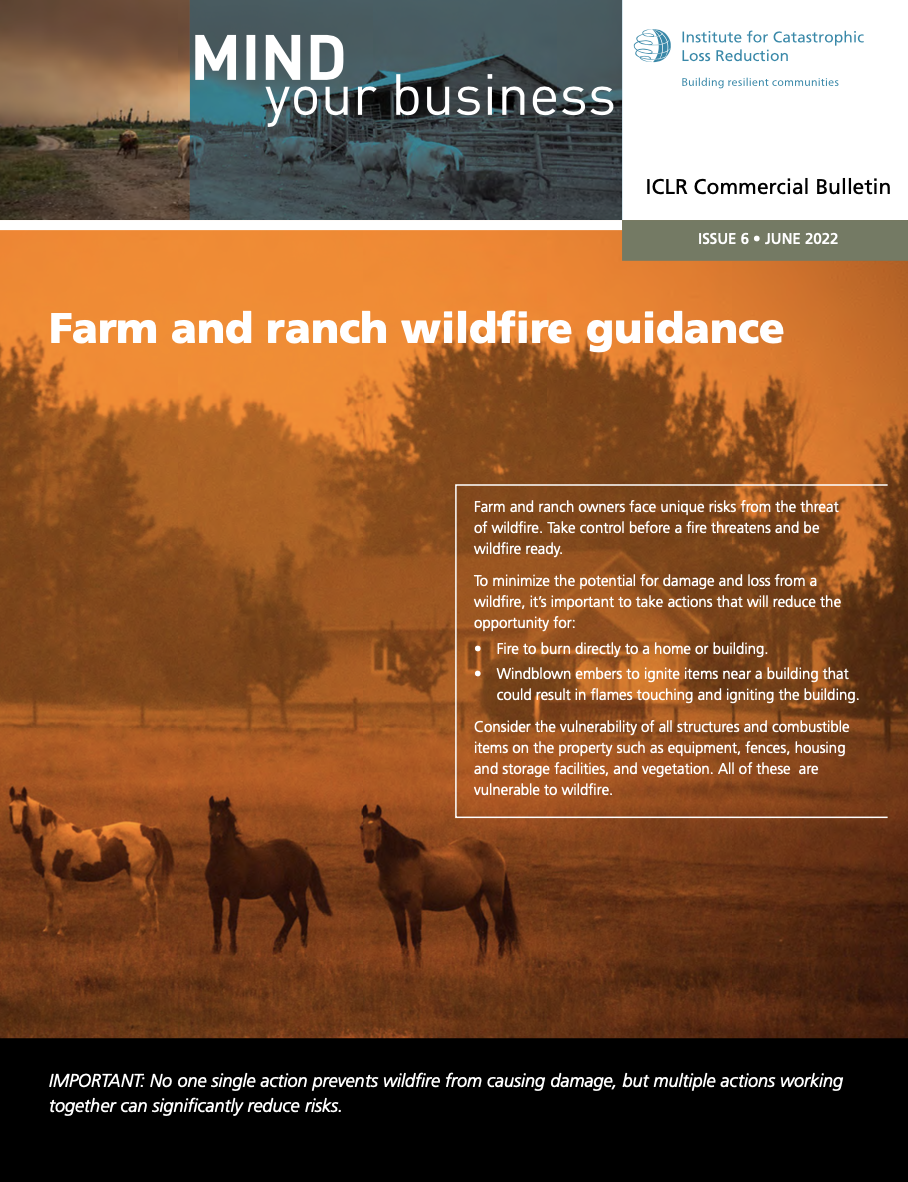
Farm and ranch wildfire guidance
Farm and ranch owners face unique risks from the threat of wildfire. Take control before a fire threatens and be wildfire ready. To minimize the potential for damage and loss from a wildfire, it’s important to take actions that will reduce the opportunity for fire to burn directly to a home or building, and for windblown embers to ignite items near a building that could result in flames touching and igniting the building. Consider the vulnerability of all structures and combustible items on the property such as equipment, fences, housing and storage facilities, and vegetation. All of these are vulnerable to wildfire.
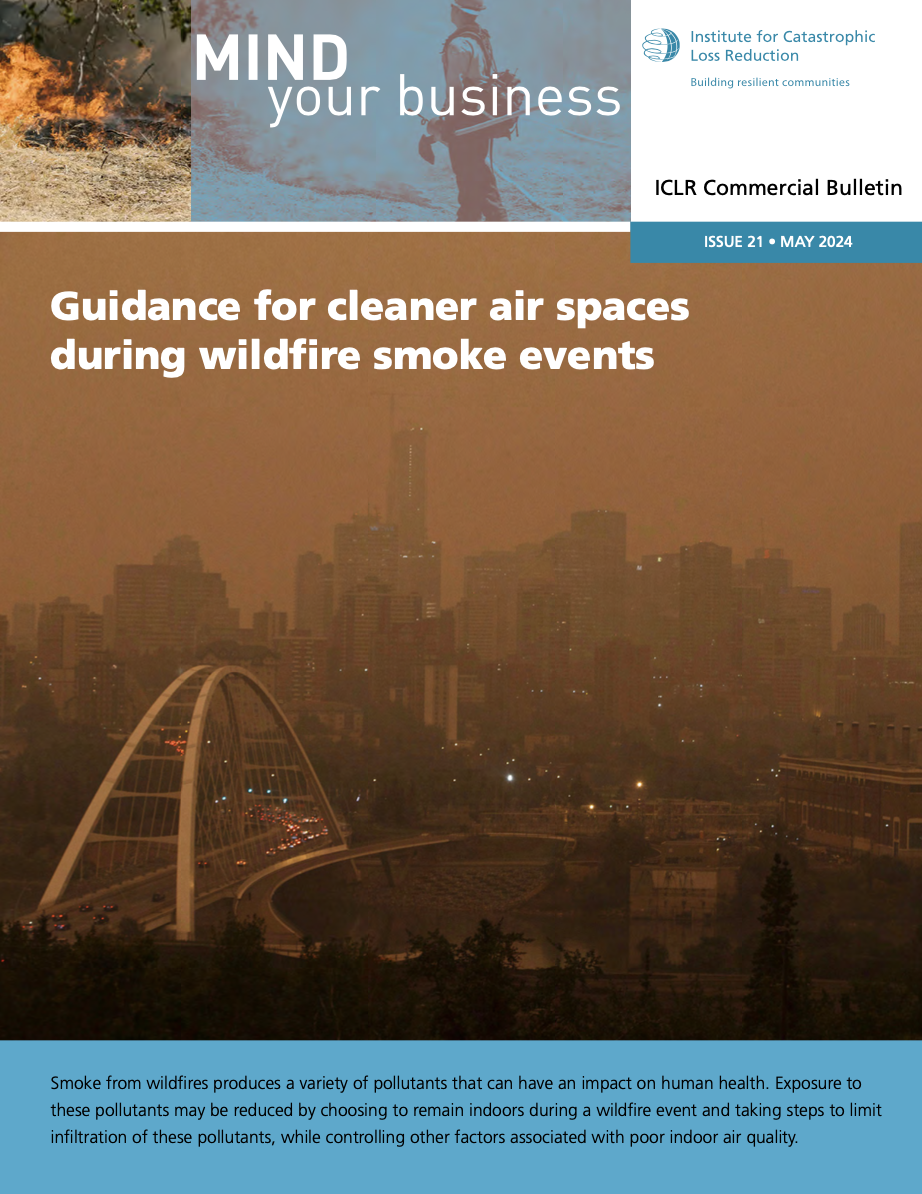
Guidance for cleaner air spaces during wildfire smoke events
Smoke from wildfires produces a variety of pollutants that can have an impact on human health. Exposure to these pollutants may be reduced by choosing to remain indoors during a wildfire event and taking steps to limit infiltration of these pollutants, while controlling other factors associated with poor indoor air quality. This guide includes recommendations for selecting or retrofitting a building to be used as a cleaner air space and operational considerations during a wildfire event.
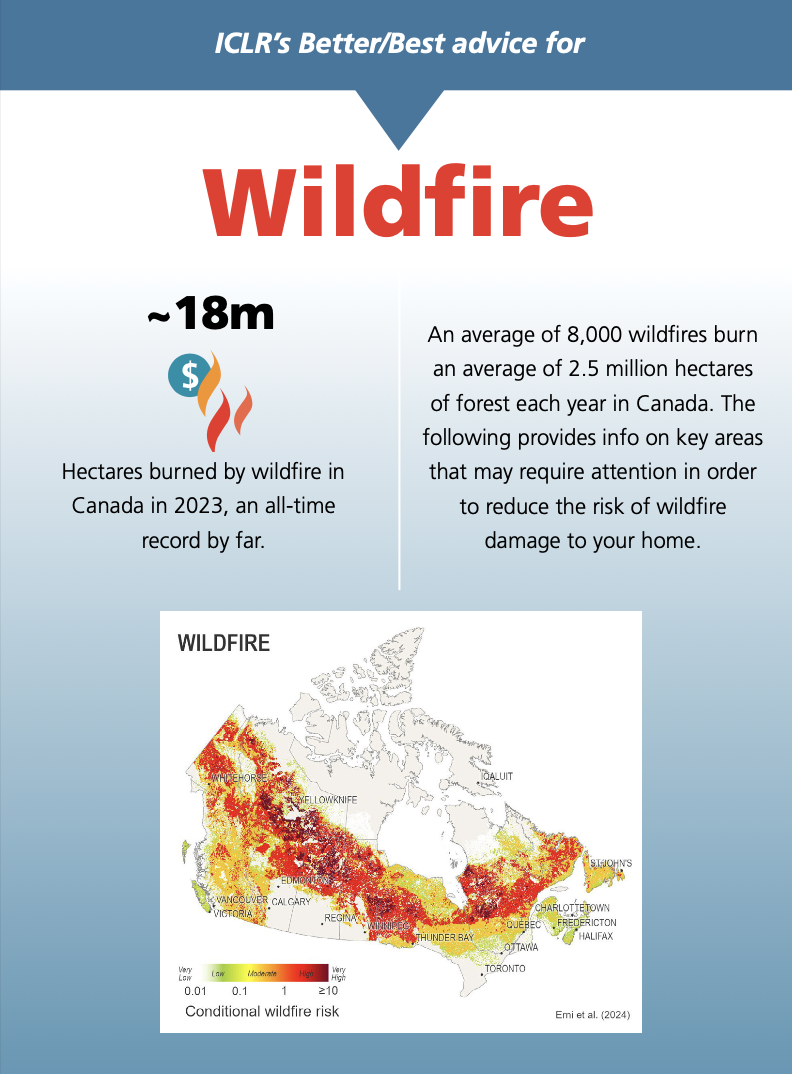
ICLR’s Better/Best advice for Wildfire
An average of 8,000 wildfires burn an average of 2.5 million hectares of forest each year in Canada. The following provides info on key areas that may require attention in order to reduce the risk of wildfire damage to your home.
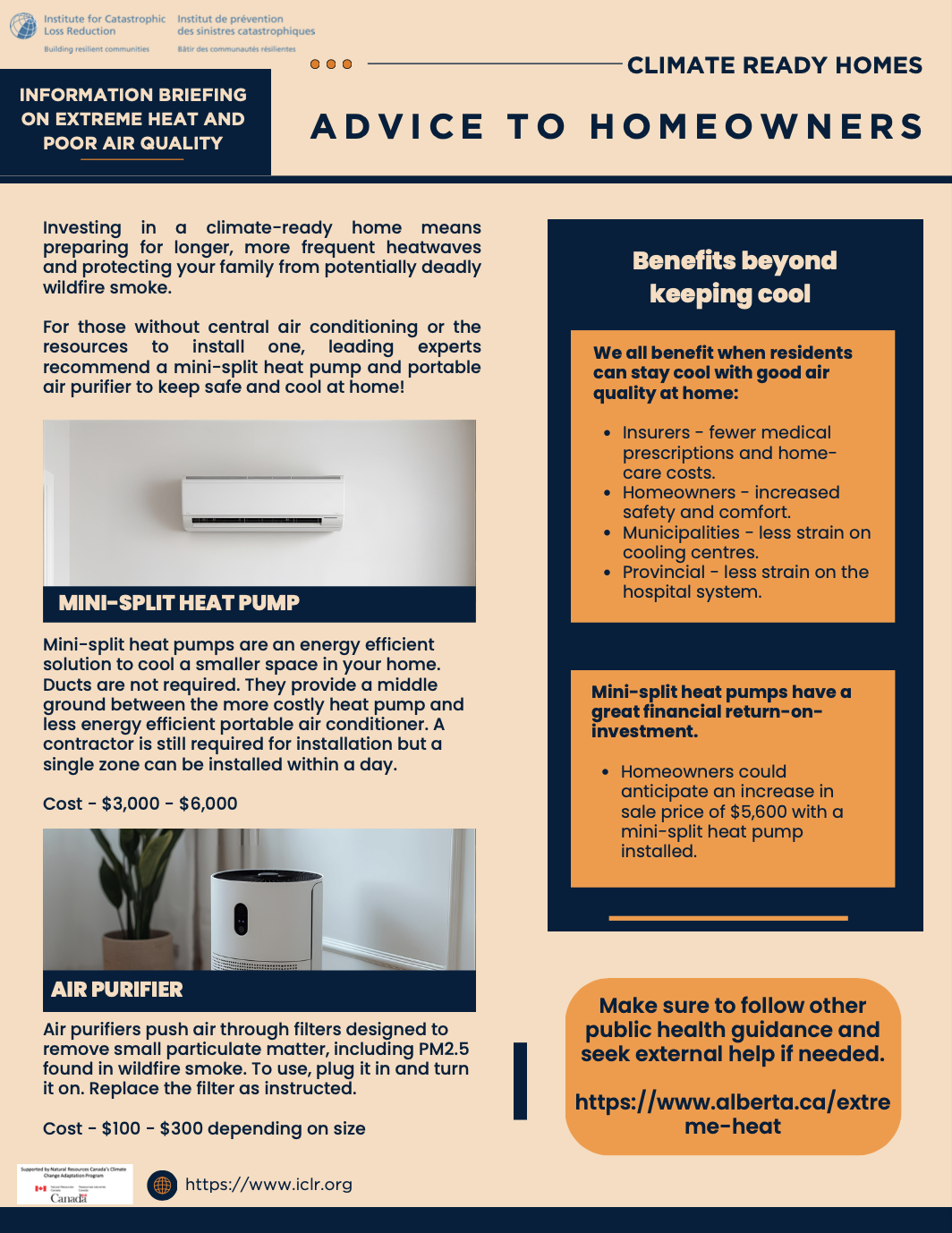
Information Briefing on Extreme Heat and Poor Air Quality: Advice to Homeowners
Investing in a climate-ready home means preparing for longer, more frequent heatwaves and protecting your family from potentially deadly wildfire smoke.
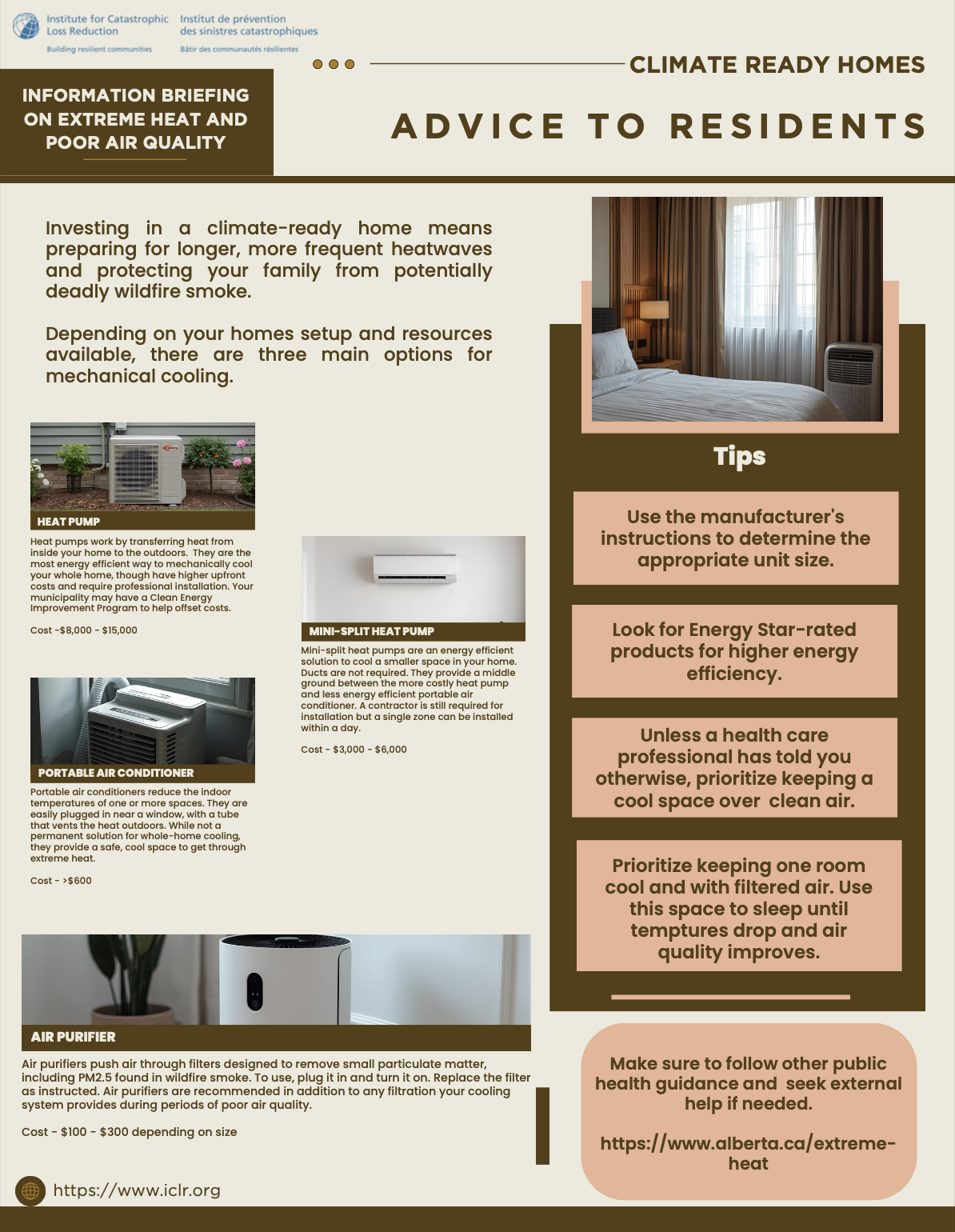
Information Briefing on Extreme Heat and Poor Air Quality: Advice to Residents
Investing in a climate-ready home means preparing for longer, more frequent heatwaves and protecting your family from potentially deadly wildfire smoke.
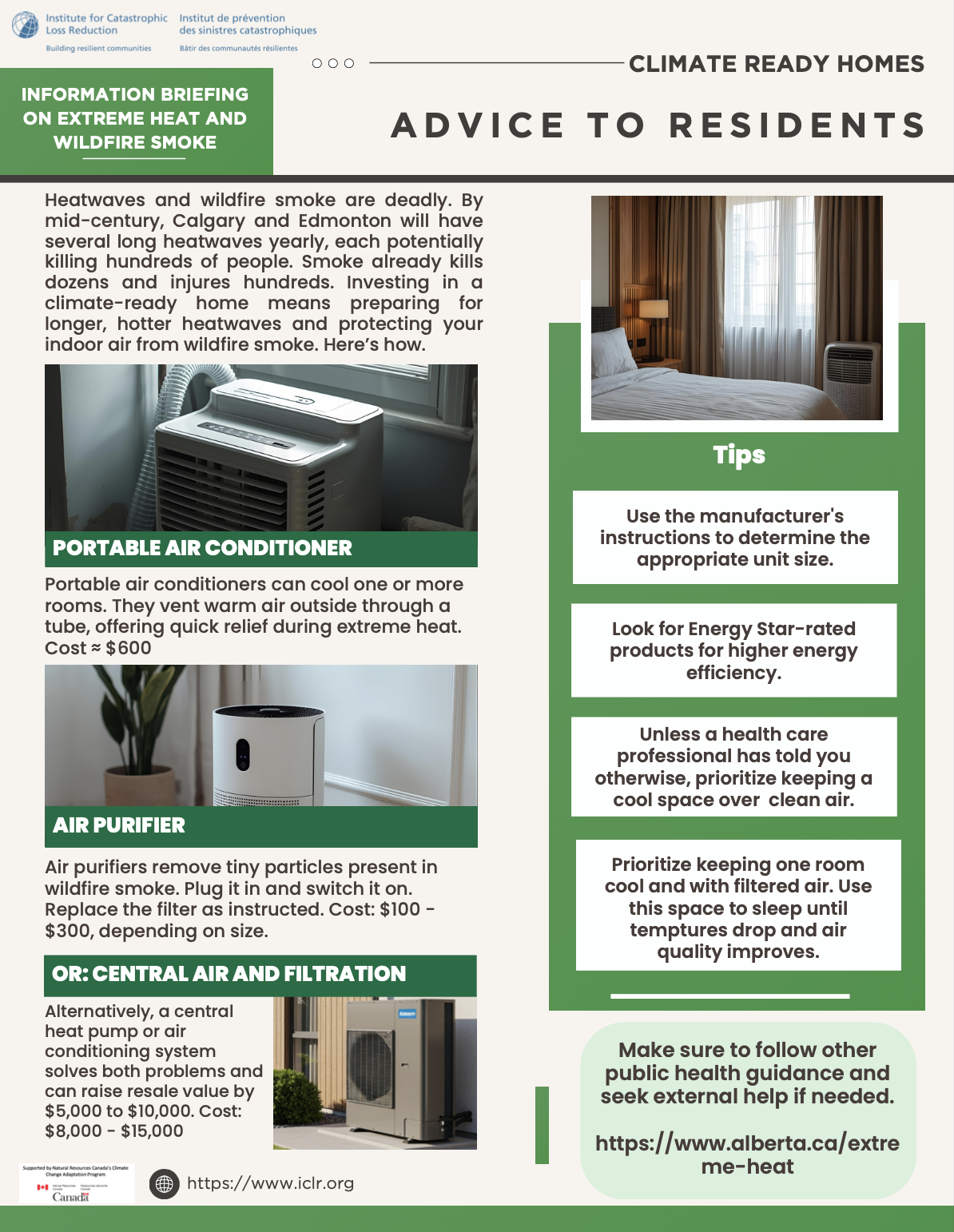
Information Briefing on Extreme Heat and Wildfire Smoke: Advice to Residents
Heatwaves and wildfire smoke are deadly. By mid-century, Calgary and Edmonton will have several long heatwaves yearly, each potentially killing hundreds of people. Smoke already kills dozens and injures hundreds. Investing in a climate-ready home means preparing for longer, hotter heatwaves and protecting your indoor air from wildfire smoke. Here’s how.
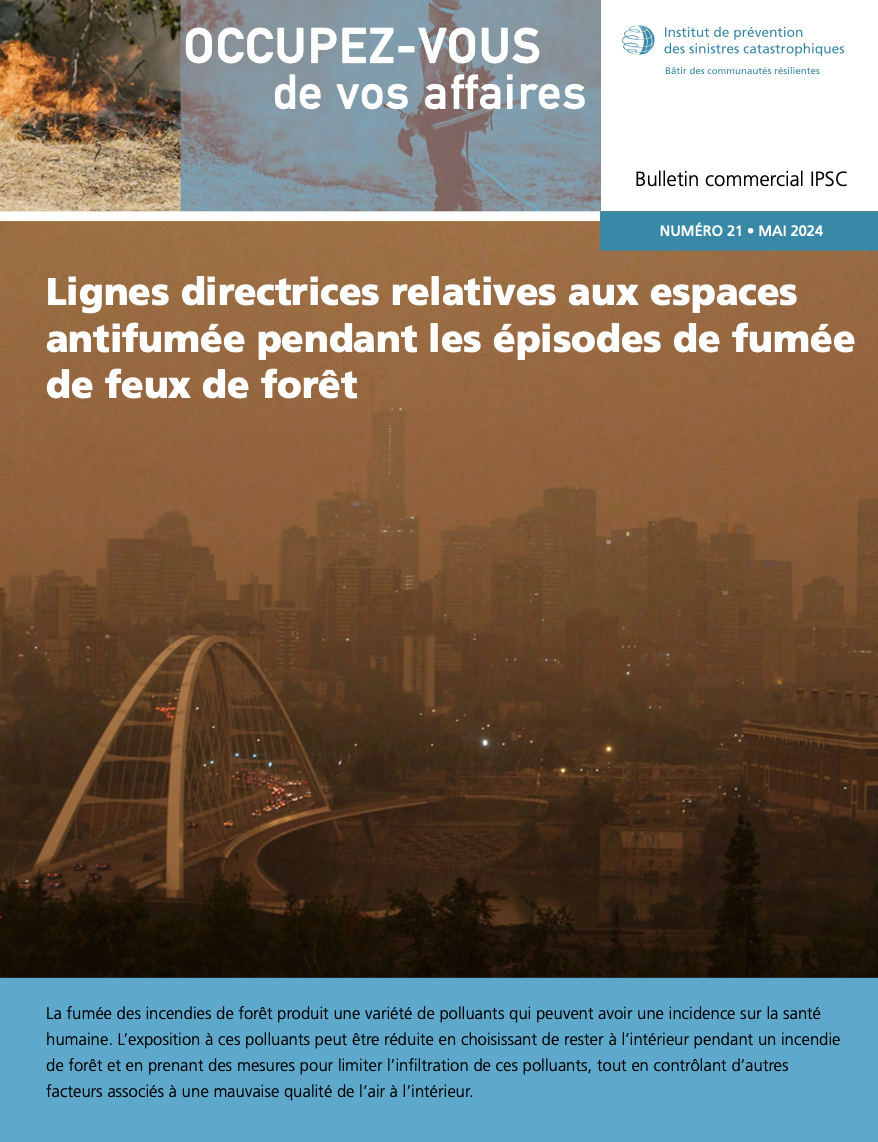
Lignes directrices relatives aux espaces antifumée pendant les épisodes de fumée de feux de forêt
La fumée des incendies de forêt produit une variété de polluants qui peuvent avoir une incidence sur la santé humaine. L’exposition à ces polluants peut être réduite en choisissant de rester à l’intérieur pendant un incendie de forêt et en prenant des mesures pour limiter l’infiltration de ces polluants, tout en contrôlant d’autres facteurs associés à une mauvaise qualité de l’air à l’intérieur. Voici une liste de recommandations quant au choix ou à la rénovation d’un bâtiment choisi comme espace antifumée et des mesures à considérer lors d’un feu de forêt.
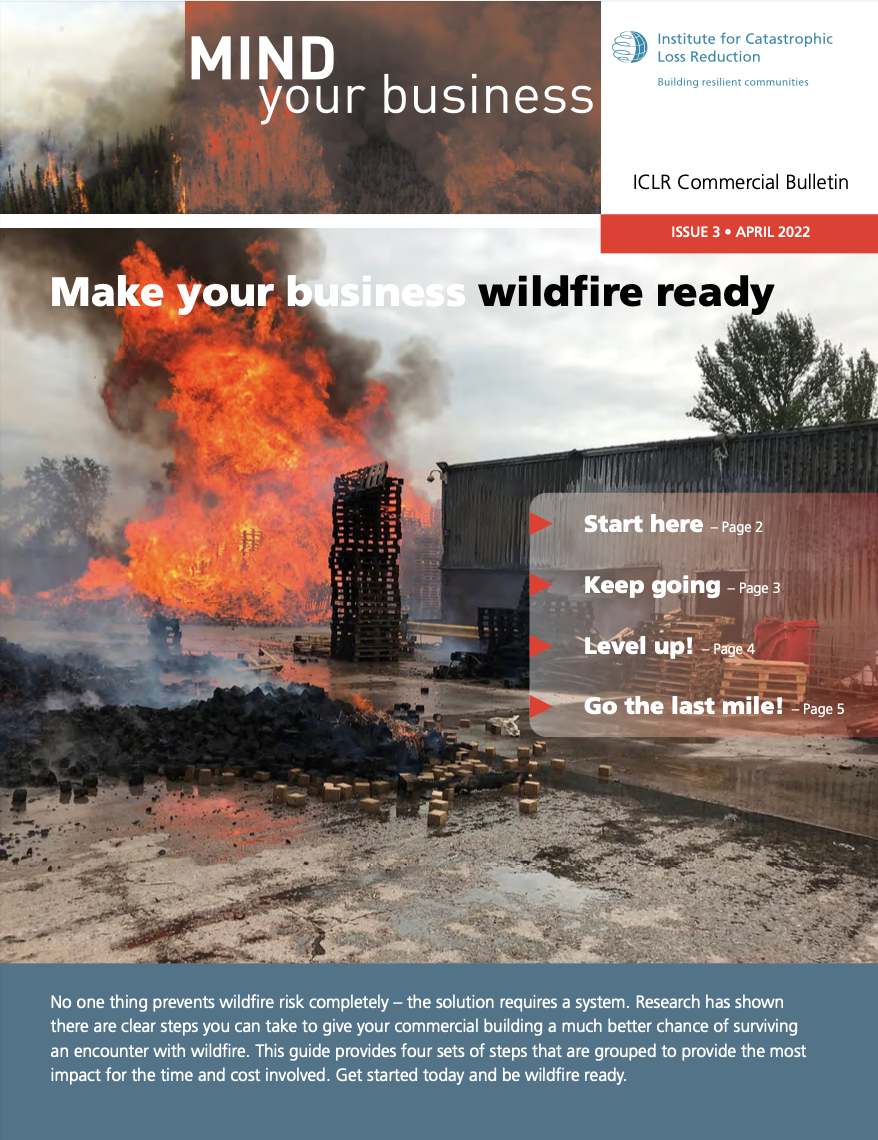
Make your business wildfire ready
No one thing prevents wildfire risk completely – the solution requires a system. Research has shown there are clear steps you can take to give your commercial building a much better chance of surviving an encounter with wildfire. This guide provides four sets of steps that are grouped to provide the most impact for the time and cost involved. Get started today and be wildfire ready.
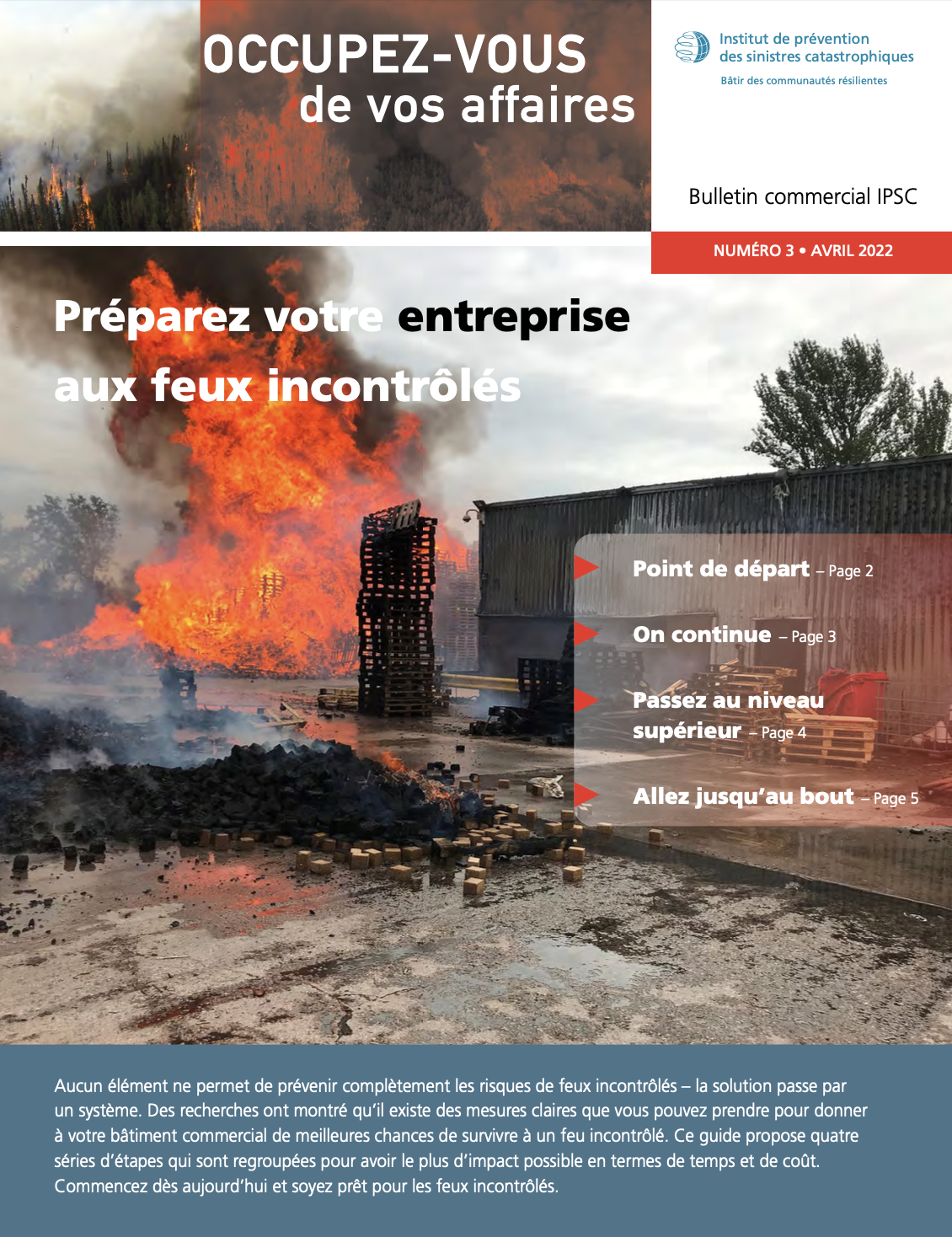
Préparez votre entreprise aux feux incontrôlés
Aucun élément ne permet de prévenir complètement les risques de feux incontrôlés – la solution passe par un système. Des recherches ont montré qu’il existe des mesures claires que vous pouvez prendre pour donner à votre bâtiment commercial de meilleures chances de survivre à un feu incontrôlé. Ce guide propose quatre séries d’étapes qui sont regroupées pour avoir le plus d’impact possible en termes de temps et de coût. Commencez dès aujourd’hui et soyez prêt pour les feux incontrôlés.
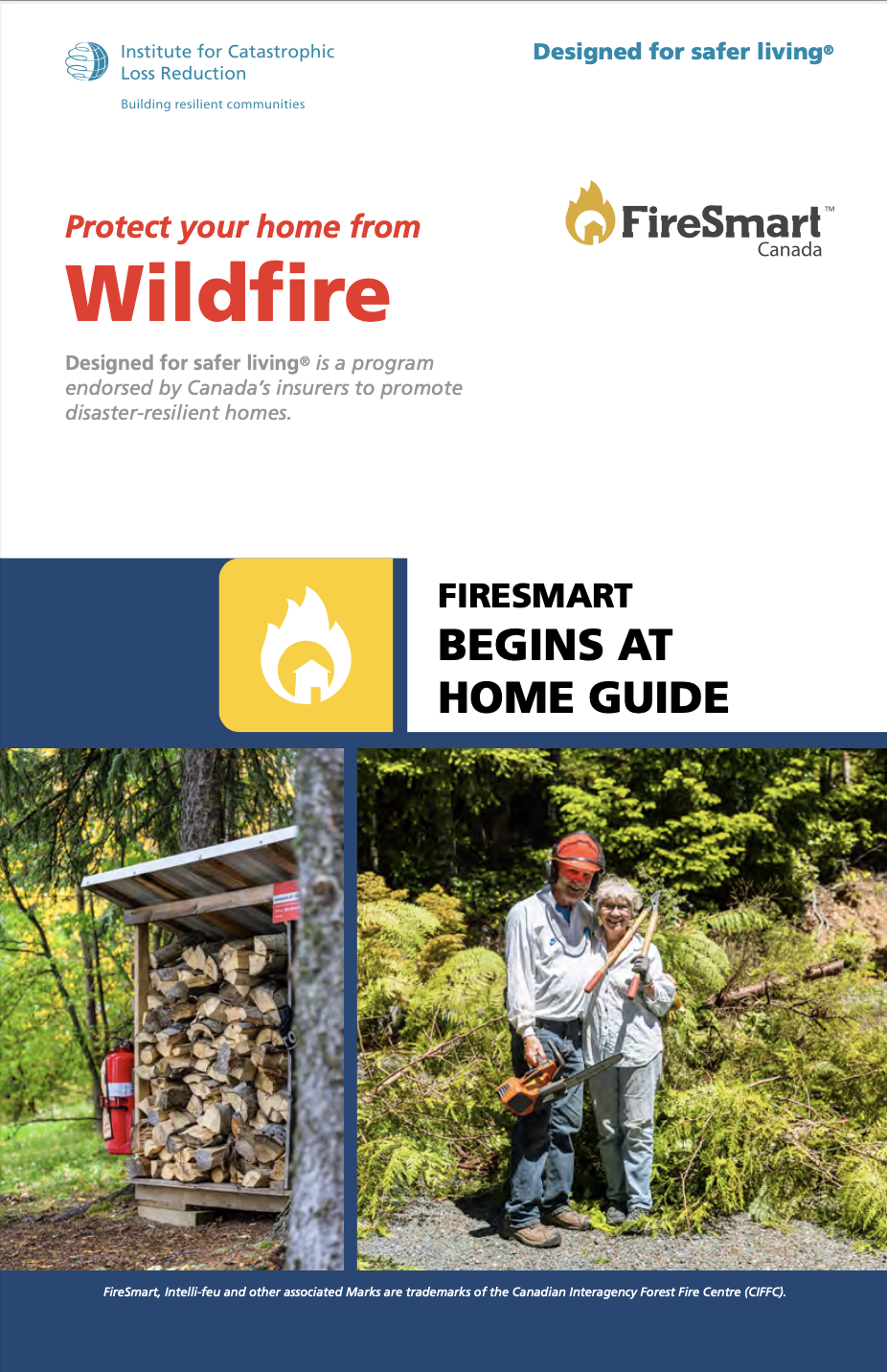
Protect your home from Wildfire: FireSmart Begins At Home Guide
By extending our lifestyles and communities further into forested areas, also referred to as the Wildland Urban Interface, we become more exposed to the danger of wildland fire, and this may put your home at risk. It is possible, however, to live safely with this natural event! The recommendations in this guide will help you reduce the risk of wildland fire to your home and neighbourhood.
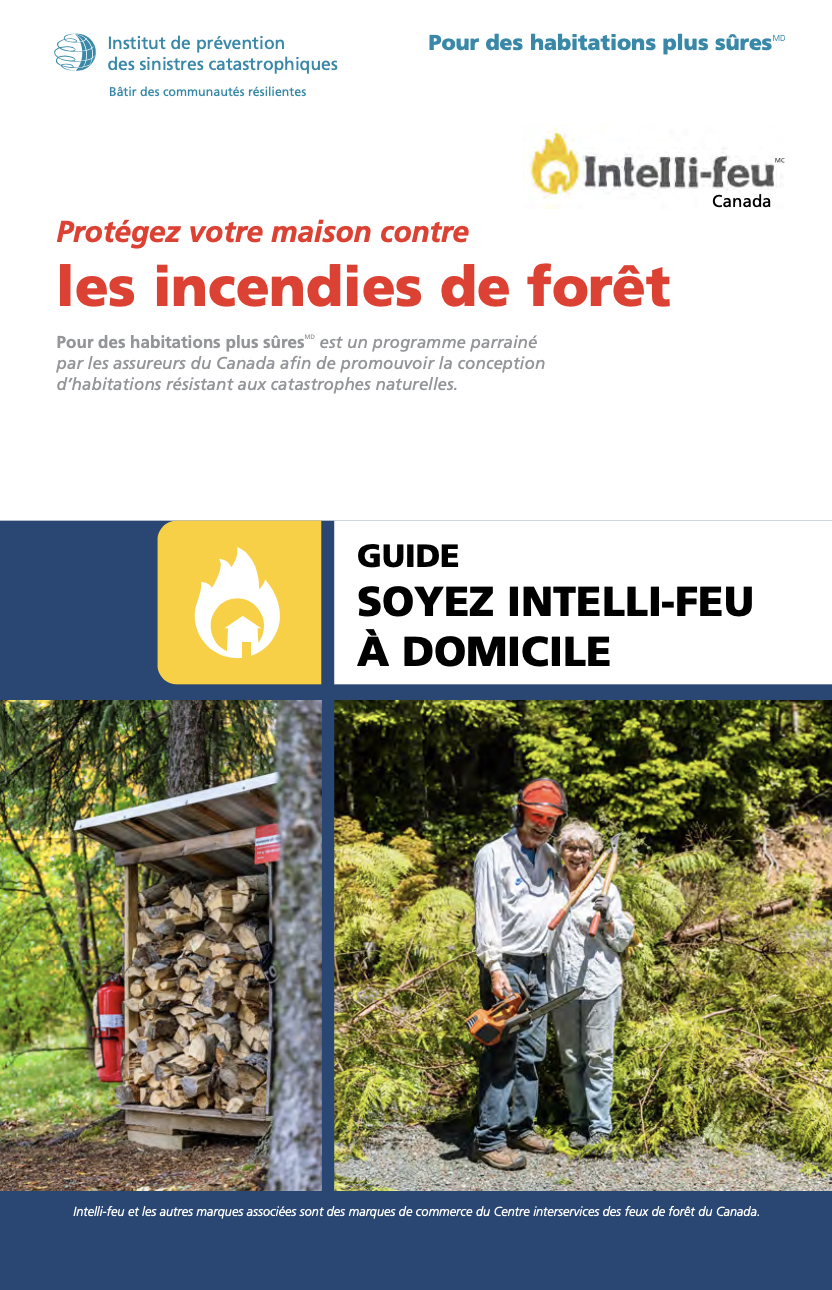
Protégez votre maison contre les incendies de forêt : Guide soyez intelli-feu à domicile
En étendant nos modes de vie et nos collectivités plus loin dans les zones forestières (aussi appelées « le milieu périurbain »), nous nous exposons davantage au danger des feux de forêt, augmentant les risques pour nos collectivités. Cependant, il est possible de jouir d’un bon niveau de sécurité malgré la présence de cet événement naturel! Les recommandations fournies par le présent guide réduiront les risques liés aux feux de forêt auxquels votre résidence et votre quartier sont exposés.
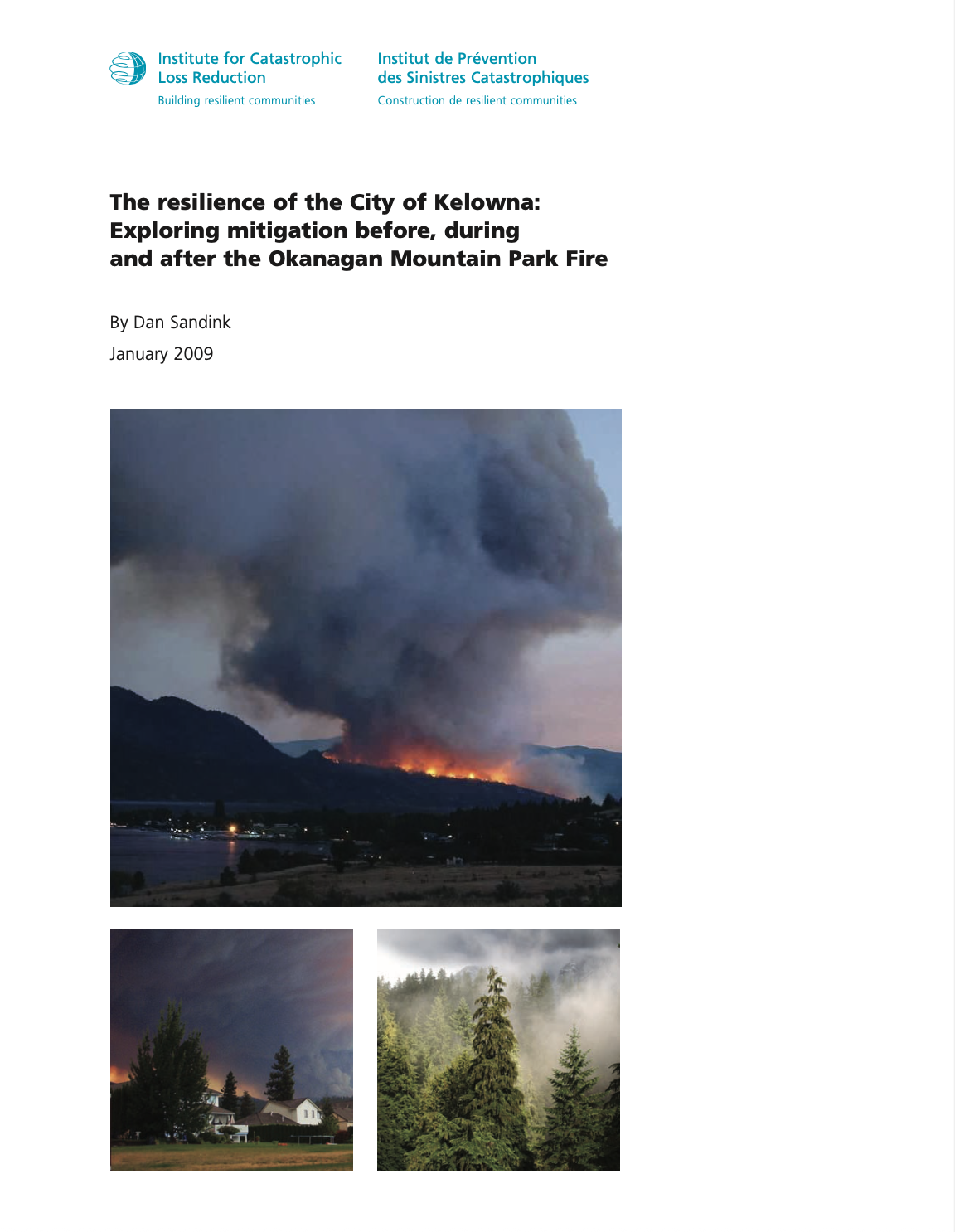
The resilience of the City of Kelowna: Exploring mitigation before, during and after the Okanagan Mountain Park Fire
This paper provides a discussion of a resilient community, through the exploration of impacts, reactions and mitigative adjustments adopted by the City of Kelowna before, during and after the OMPF. The paper provides context for disaster mitigation decision making in Canada and British Columbia, including a review of relevant legislation and government programs related to emergency management. It discusses the adoption of mitigation measures in the City of Kelowna, as well as barriers that led to reduced adoption of mitigative adjustments, and obstacles that had to be overcome to implement measures. Methods for the study included meetings and interviews with key City of Kelowna staff, reviews of internal documents and literature reviews.
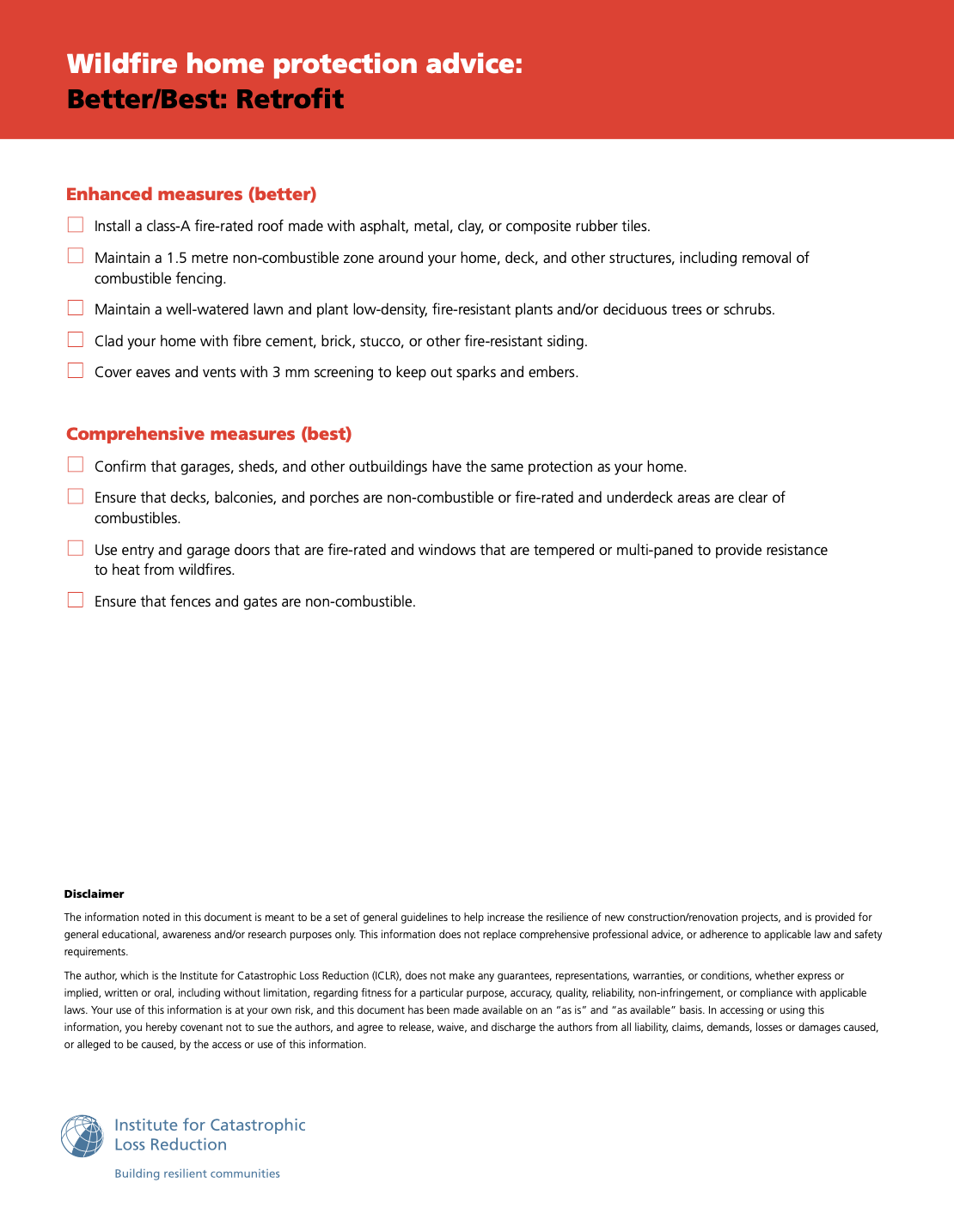
Wildfire home protection advice: Better/Best: Retrofit
This document is a set of general guidelines, including enhanced and comprehensive measures, to help increase the resilience of new construction/renovation projects.