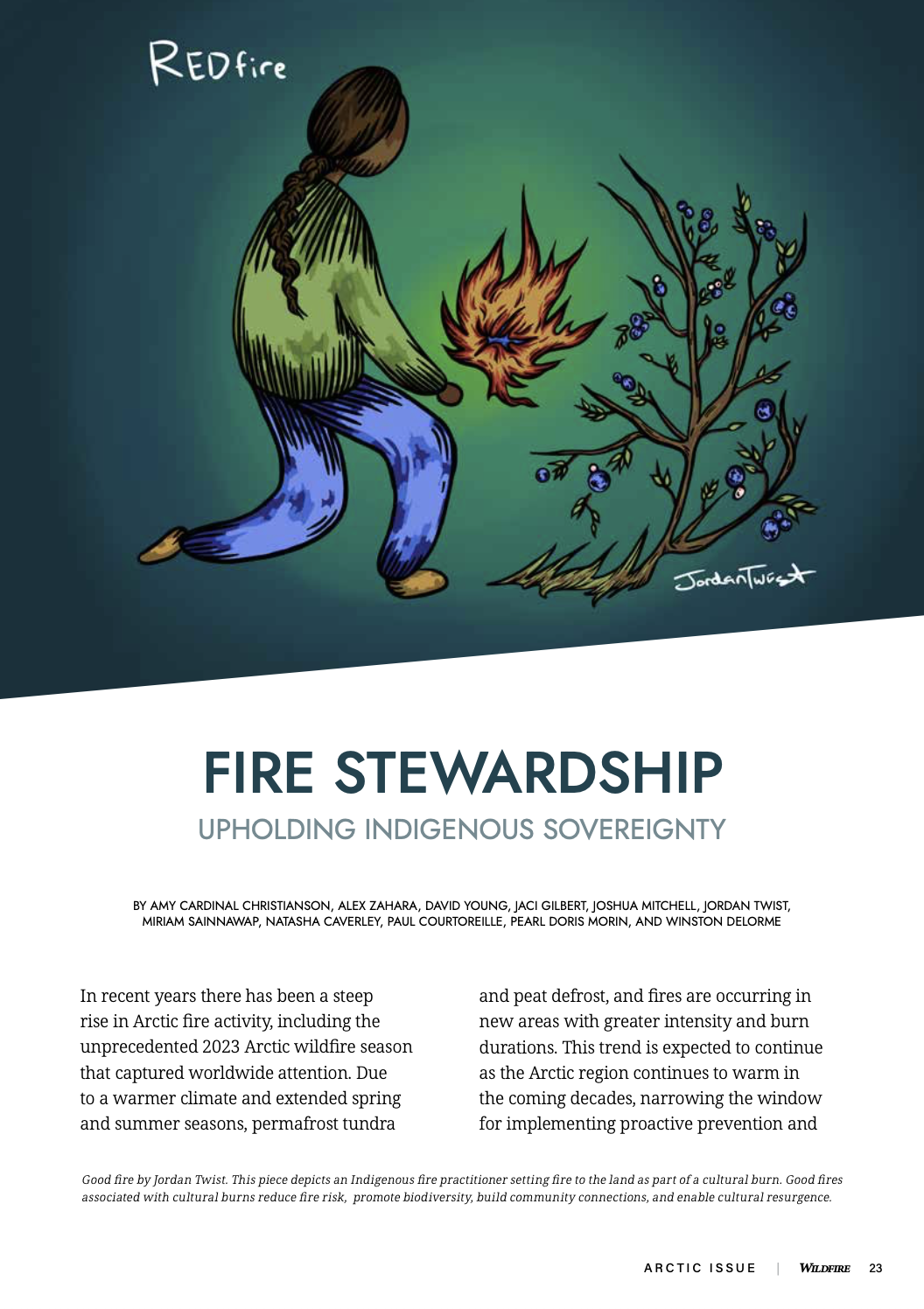
Fire Stewardship: Upholding Indigenous Sovereignty
In recent years there has been a steep rise in Arctic fire activity, including the unprecedented 2023 Arctic wildfire season that captured worldwide attention. Due to a warmer climate and extended spring and summer seasons, permafrost tundra and peat defrost, and fires are occurring in new areas with greater intensity and burn durations. This trend is expected to continue as the Arctic region continues to warm in the coming decades, narrowing the window for implementing proactive prevention and mitigation strategies. Indigenous Peoples in the Arctic, such as the Sámi, Inuit, First Nations, and various Siberian Indigenous groups, have deep-rooted knowledge of their environments and established Indigenous fire stewardship practices that can contribute to sustainable fire management. Indigenous Peoples have stewarded the environment by using fire practices deeply tied to their cultural traditions, ecological knowledge, and spiritual relationships with the land. These cultural practices continue to be disrupted through colonization, under which Indigenous land stewardship practices are restricted and colonial authorities assume jurisdiction over Indigenous lands and people.
Authors
- Amy Cardinal Christianson
- Natasha Caverley
- Paul Courtoreille
- Winston Delorme
- Pearl Doris Morin
- Jaci Gilbert
- Joshua Mitchell
- Miriam Sainnawap
- Jordan Twist
- David Young
- Alex Zahara