BC Wildfire Service
Provincial agency responsible for wildfire prevention, preparedness, response and recovery in British Columbia.
Visit OrganizationResources from this organization
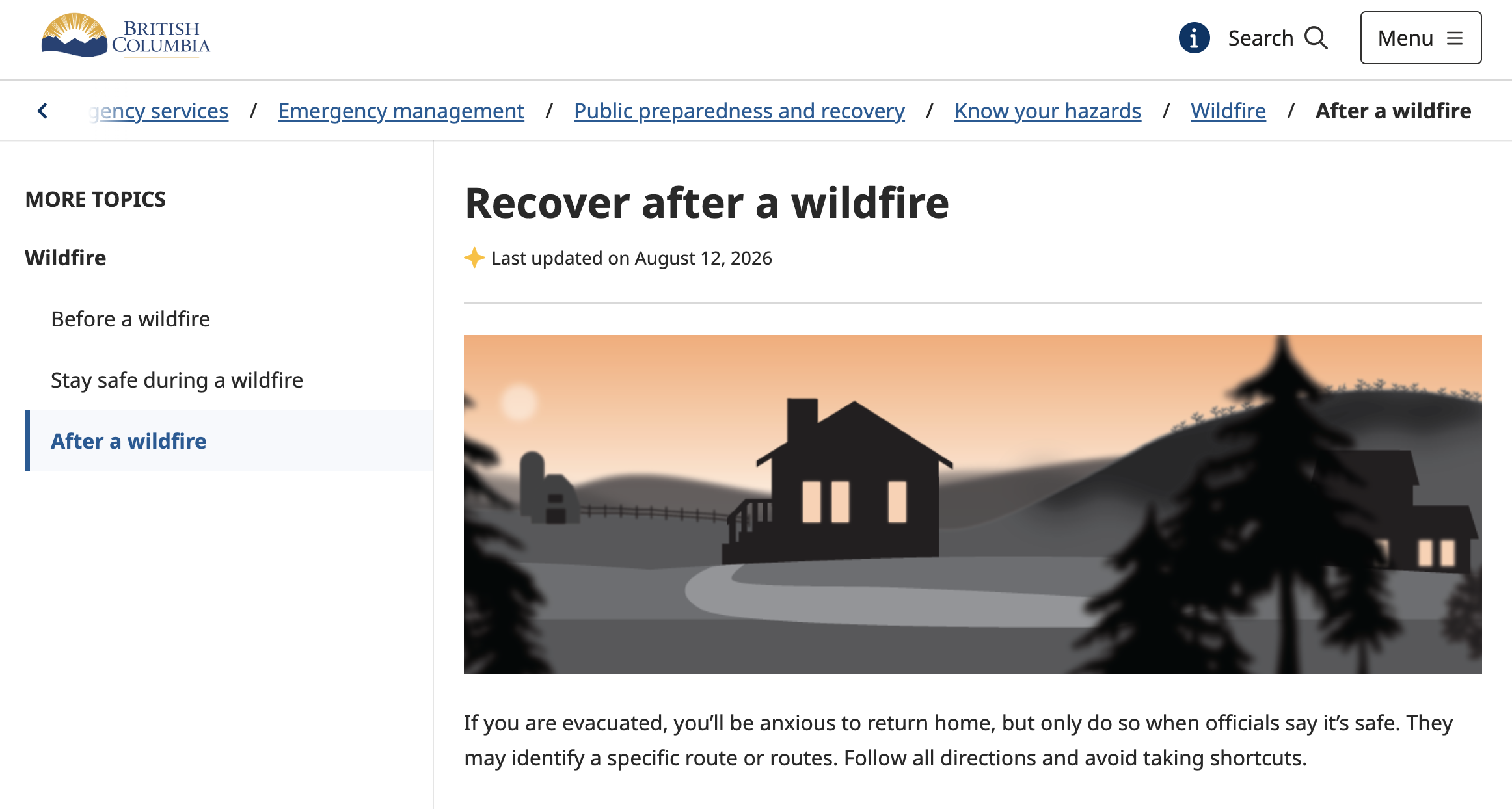
Recover after a wildfire
If you are evacuated, you’ll be anxious to return home, but only do so when officials say it’s safe. They may identify a specific route or routes. Follow all directions and avoid taking shortcuts.
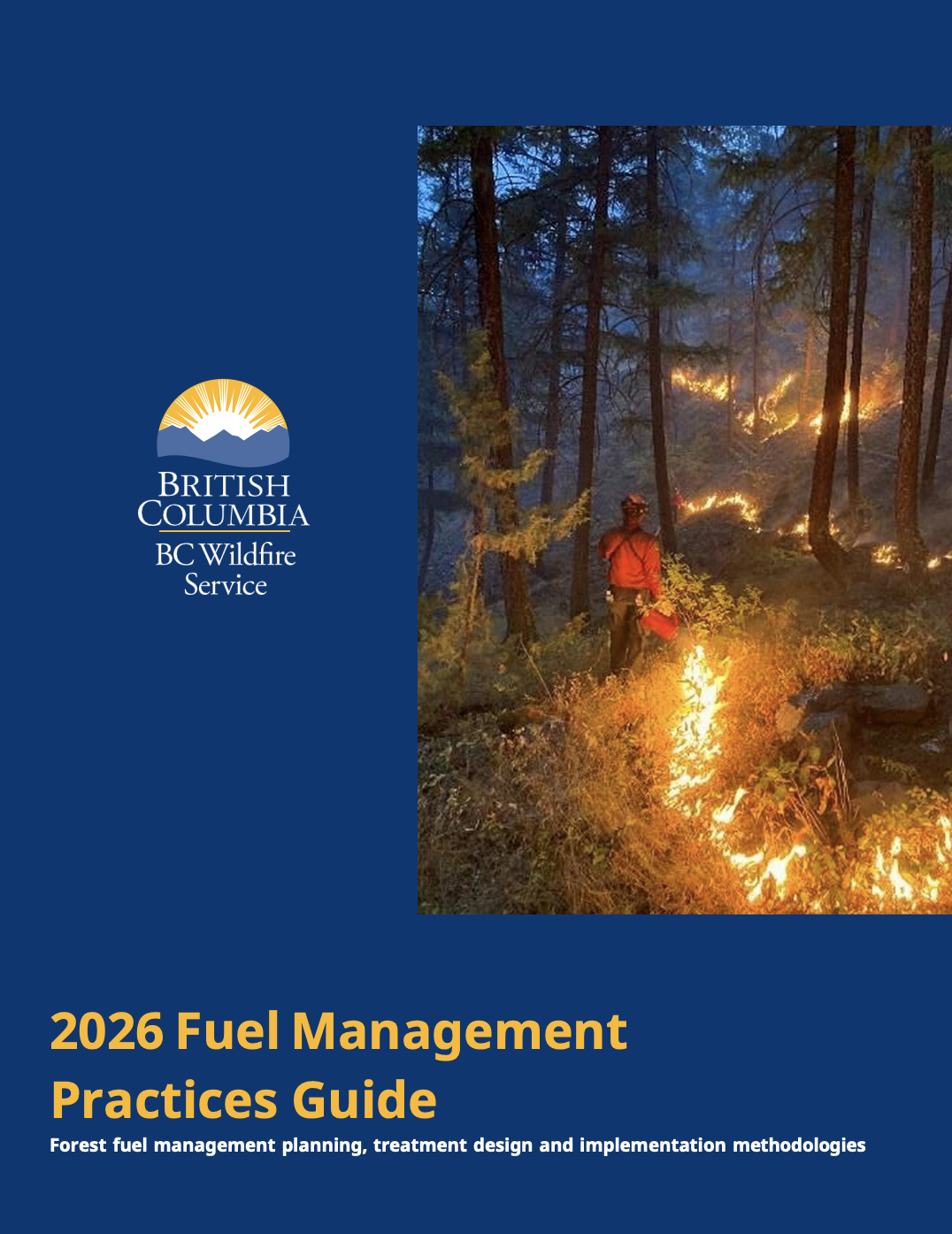
2026 Fuel Management Practices Guide
This document supports the planning and delivery of fuel management activities in B.C. by providing examples and guidance for applying science-based forest and fuel management principles within the provincial policy and legislative framework. It provides a reference for practices and is intended to be technical in nature.
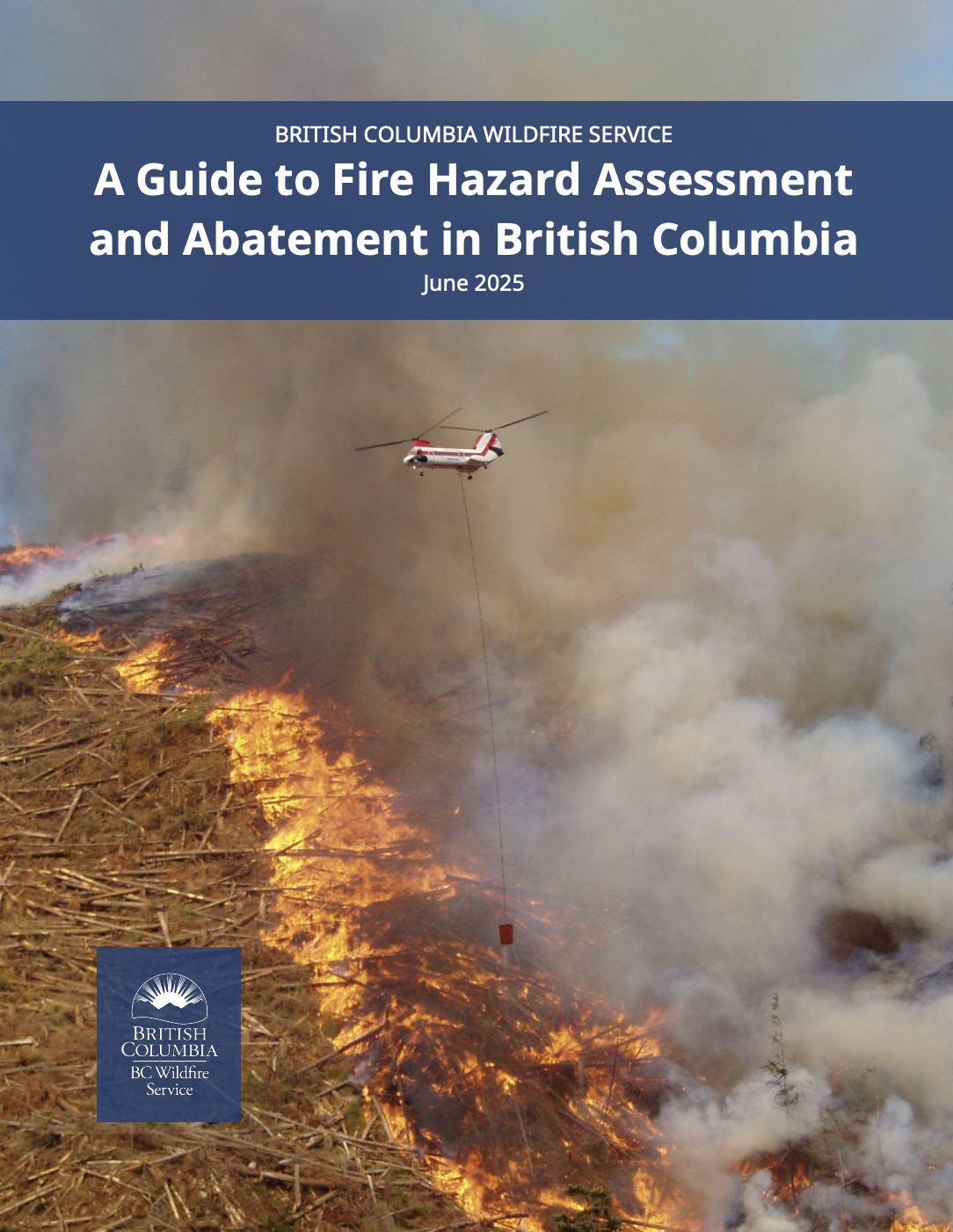
A Guide to Fire Hazard Assessment and Abatement in British Columbia
In British Columbia, fire hazard assessments and abatement are required actions under legislation to reduce wildfire risk from fuel left behind after industrial or prescribed activities. This guide aids understanding of those obligations and how to carry them out.
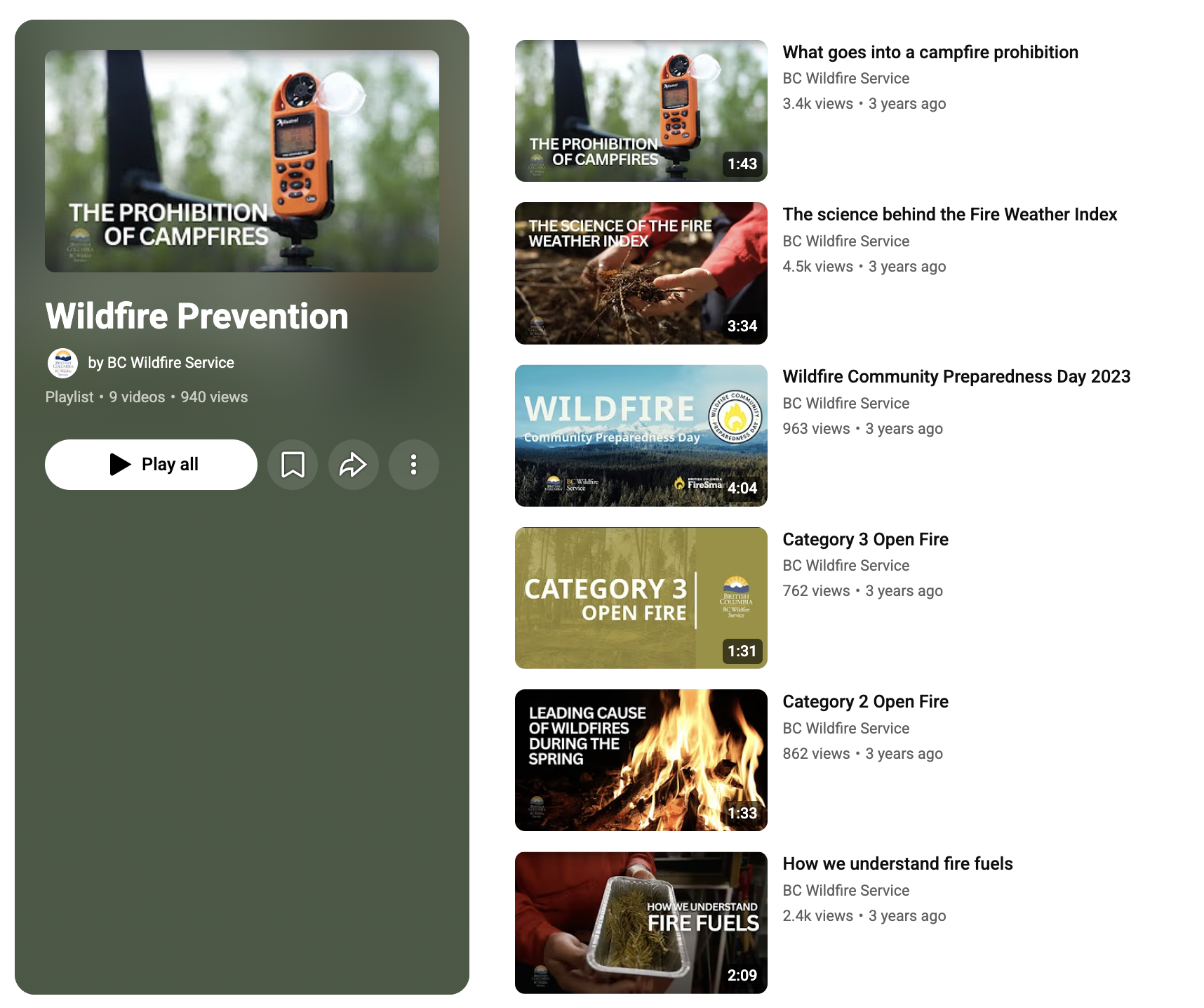
BC Wildfire Service Prevention Playlist
To help prevent wildfires, please take the time to learn how to burn safely. These videos explain some Prevention concepts.
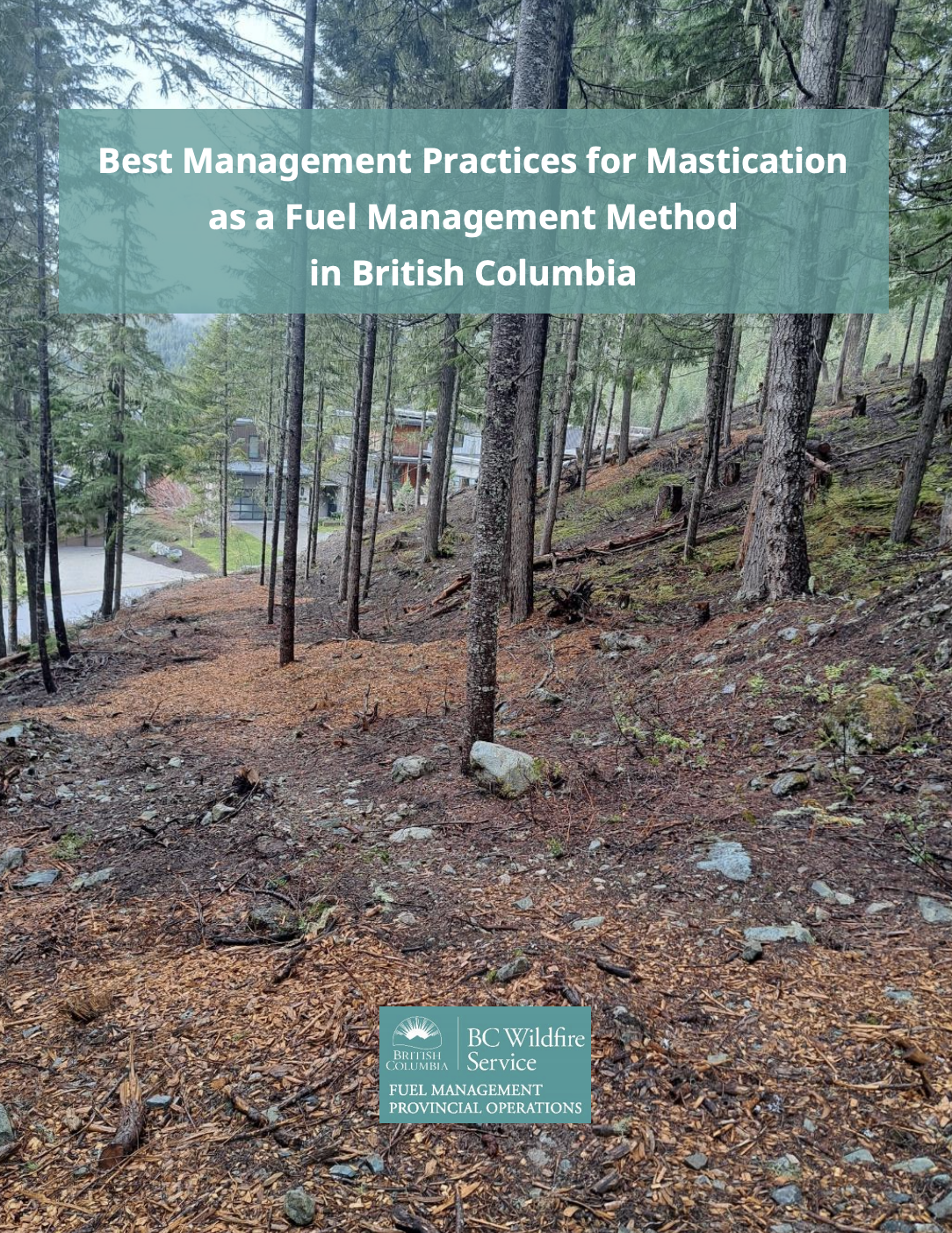
Best Management Practices for Mastication as a Fuel Management Method in British Columbia
This document is intended to provide forest managers with a summary of best management practices for integrating mastication as a fuel management method. The considerations discussed below apply to projects from the Wildland Urban Interface (WUI) to remote areas. This document is not intended as a comprehensive guide of all information and recommendations related to fuel management.
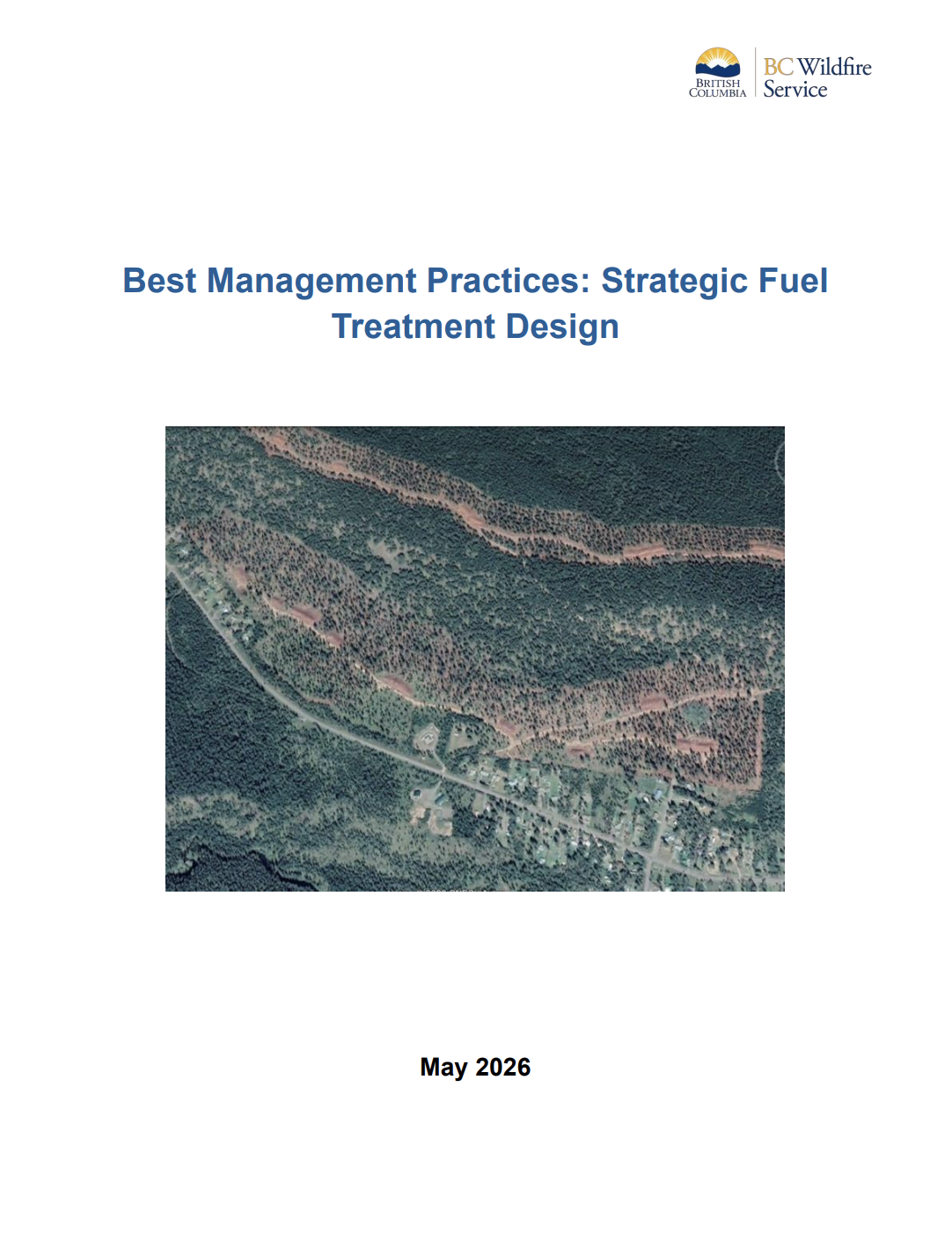
Best Management Practices: Strategic Fuel Treatment Design
Strategic Fuel Treatment Design is a practical planning resource for practitioners, contractors, and agency staff involved in the development and delivery of fuel treatment projects across British Columbia. Its purpose is to ensure that treatment design supports BC Wildfire Service (BCWS) response tactics and prescribed fire implementation by identifying shared treatment design considerations and concepts.
Build an emergency kit and grab-and-go bag
Following a disaster, you may need to: - Stay at home with an emergency kit or - Leave immediately with a grab-and-go bag Follow these basic supply lists to build your kits.
Cultural and prescribed fire
Cultural and prescribed fire is one of many land stewardship practices that can help reduce the intensity of naturally occurring wildfires while returning an integral and culturally significant process to the land base.
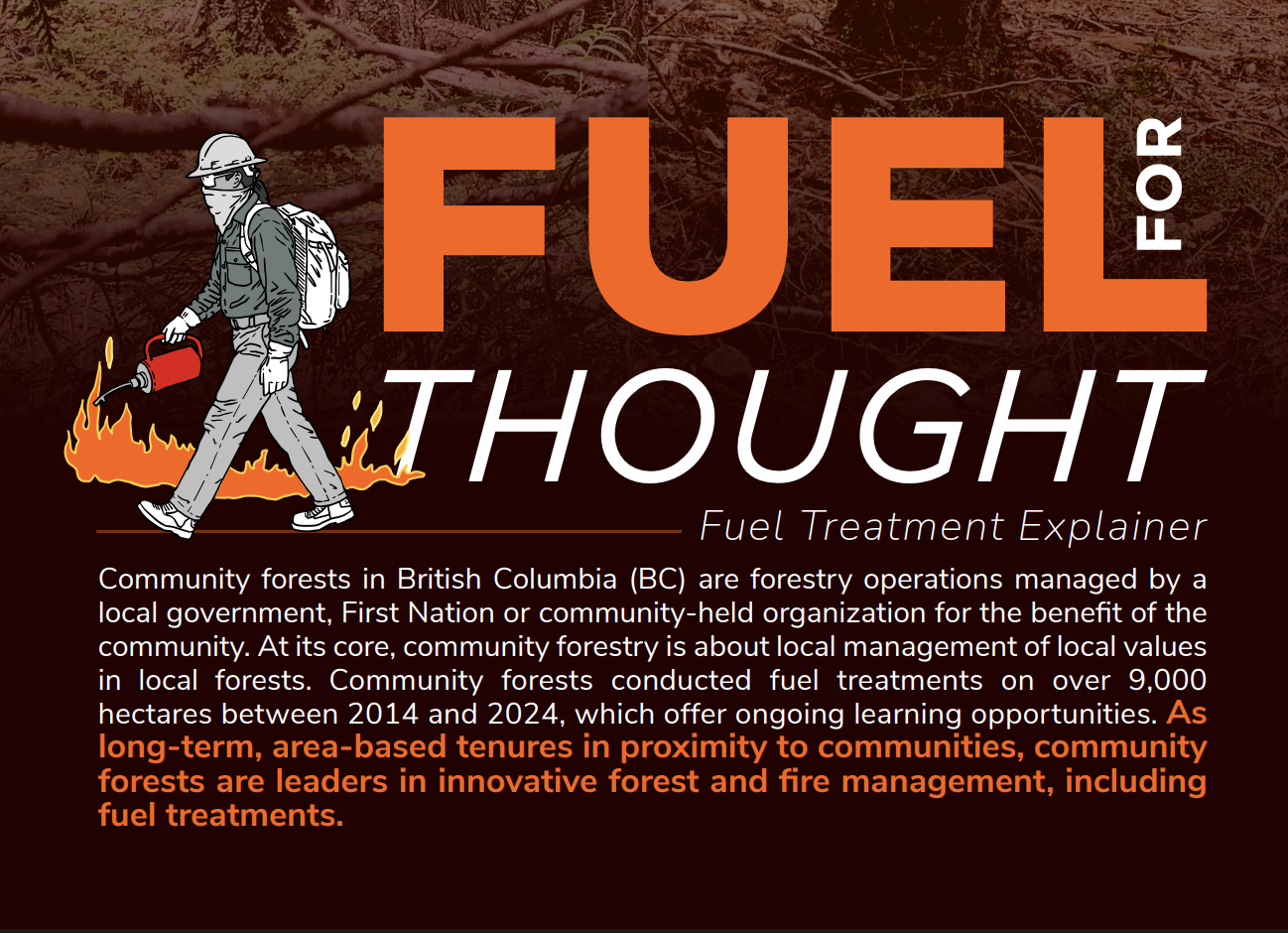
Fuel for Thought: Fuel Treatment Explainer
Fuel For Thought is designed to support forest practitioners in engaging with community members, stakeholders, and partners. This tool helps clarify the complexities of fuel treatments, addresses common concerns and misconceptions, and features user-friendly graphics, a helpful glossary, and additional resources to support informed discussions.
Fuel management references and literature
The BC Wildfire Service is committed to improving fuel management through continuous learning and evidence-based review. The materials on this page document observations, outcomes and key lessons learned from wildfire and fuel treatment interactions to help guide future fuel management planning.
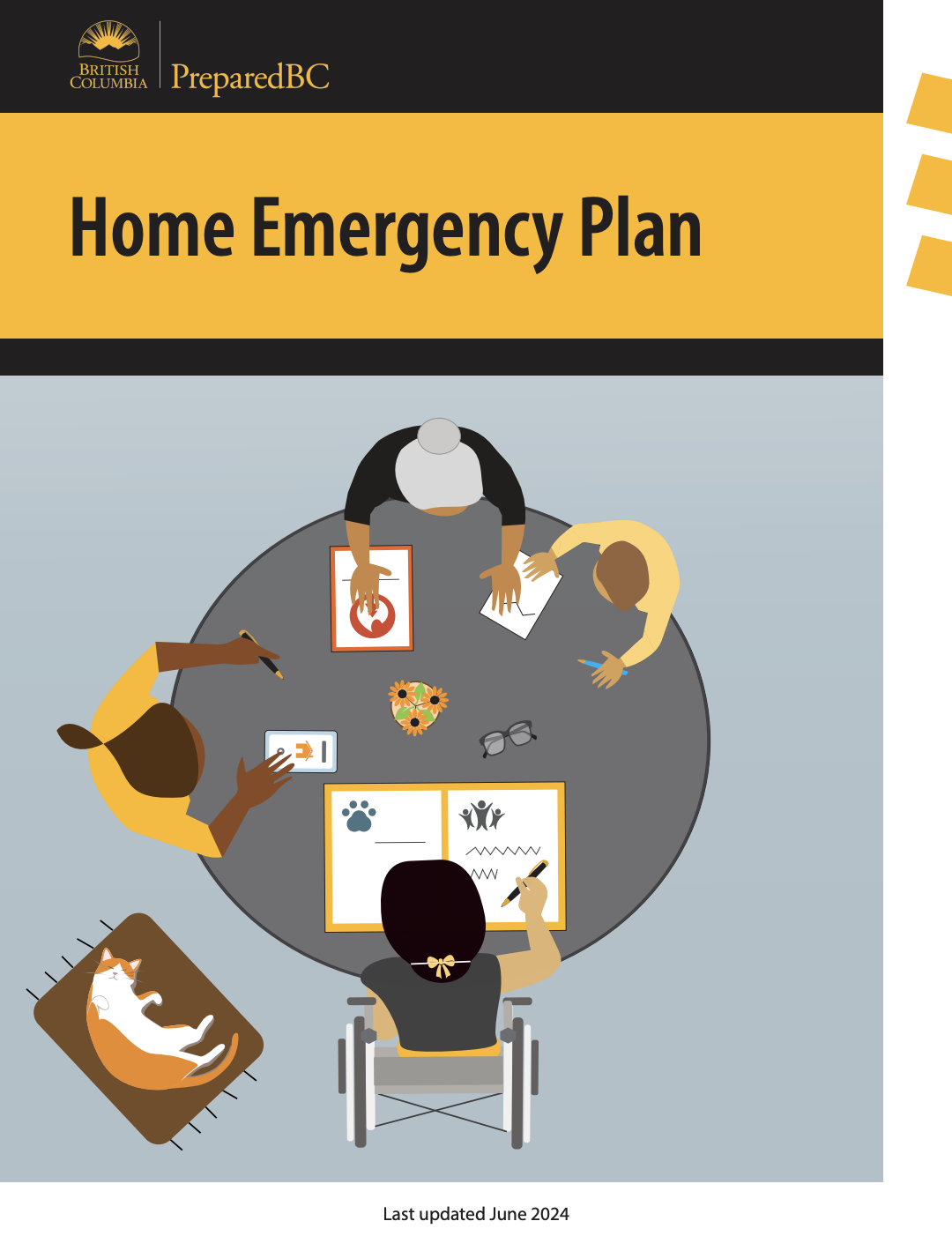
Home Emergency Plan
A home emergency plan says how you and the people you live with will respond during an emergency. Knowing what to do, where to go and who to contact will reduce stress and help keep you focused and safe.
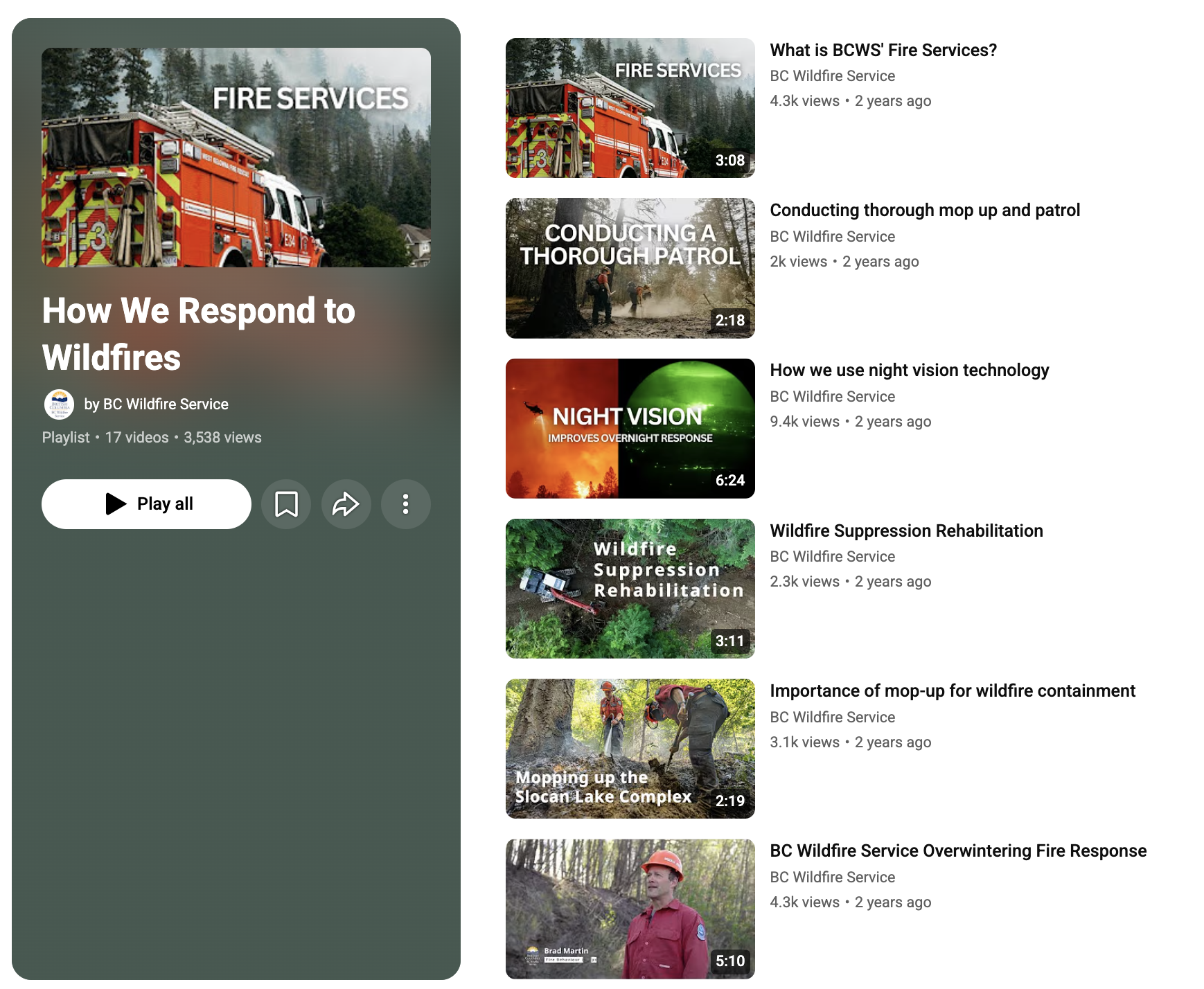
How We Respond to Wildfires
A B.C. Wildfire Service playlist featuring videos that explain how the fire service works, the challenges we face, and the tactics we use in response.
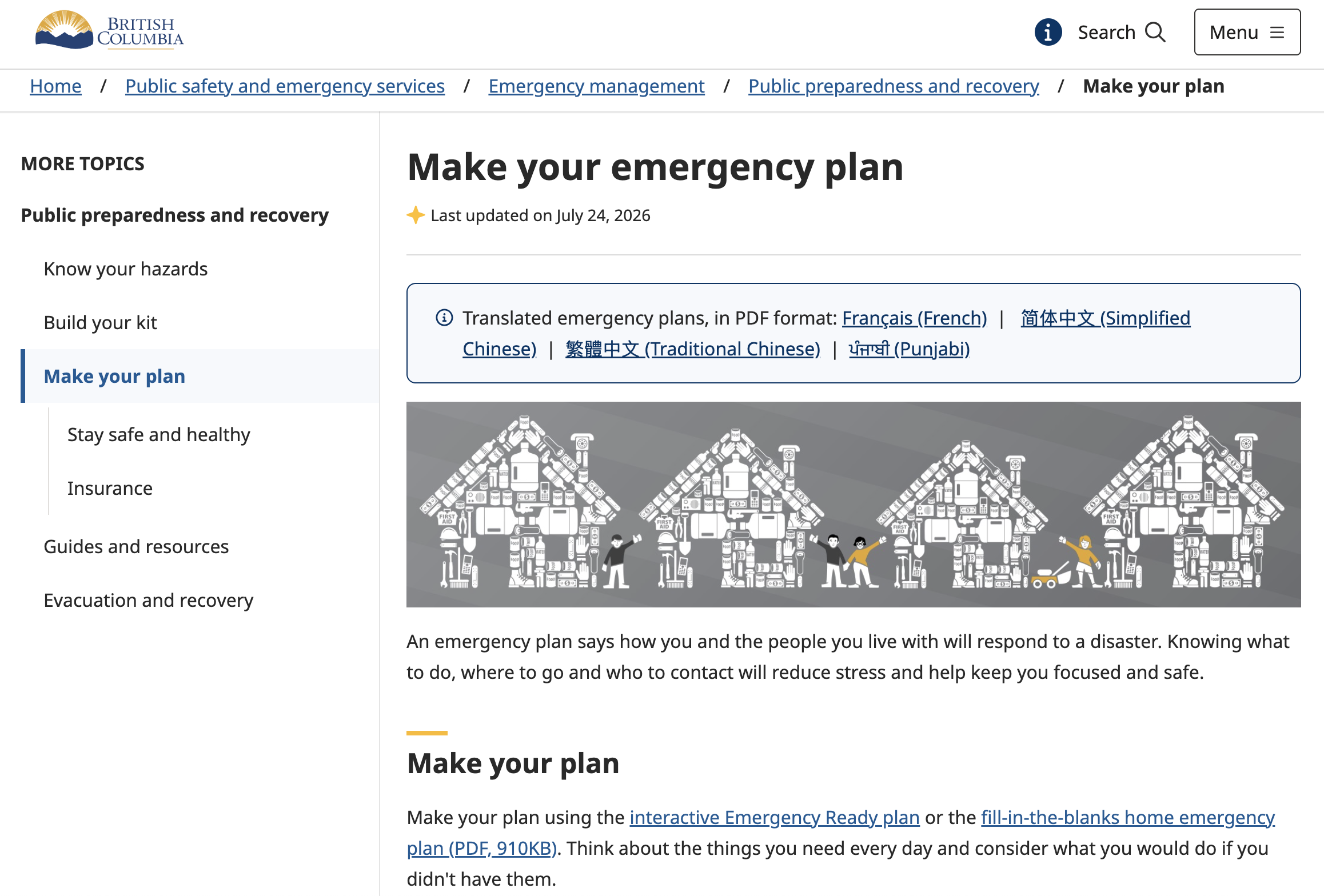
Make your emergency plan
An emergency plan says how you and the people you live with will respond to a disaster. Knowing what to do, where to go and who to contact will reduce stress and help keep you focused and safe.
Wildfire Risk Reduction Pile Construction and Burning Guidance
The purpose of this document is to provide guidance to ensure that pile construction and burning occurs in a manner that: • Reduces risk to surrounding structures and community. • Minimizes smoke emissions to decrease negative impact to the public. • Avoids or limits damage to standing trees and other land management values. • Meets contract obligations for treatment unit specifications outlined in the prescription, (coarse woody debris requirements, surface fuel reduction targets, etc.). • Avoids and/or limits invasive species propagation. • Complies with legal requirements under the Wildfire Act and the Environmental Management Act. The intent of this document is to help guide provincial resource agencies, forest practitioners, forest Industry, and other practitioners who engage in the planning and implementation of forest fuel management across B.C. This document is intended for use by practitioners planning Wildfire Risk Reduction (WRR) fuel management treatments on Crown, Municipal, First Nations or privately-owned lands.
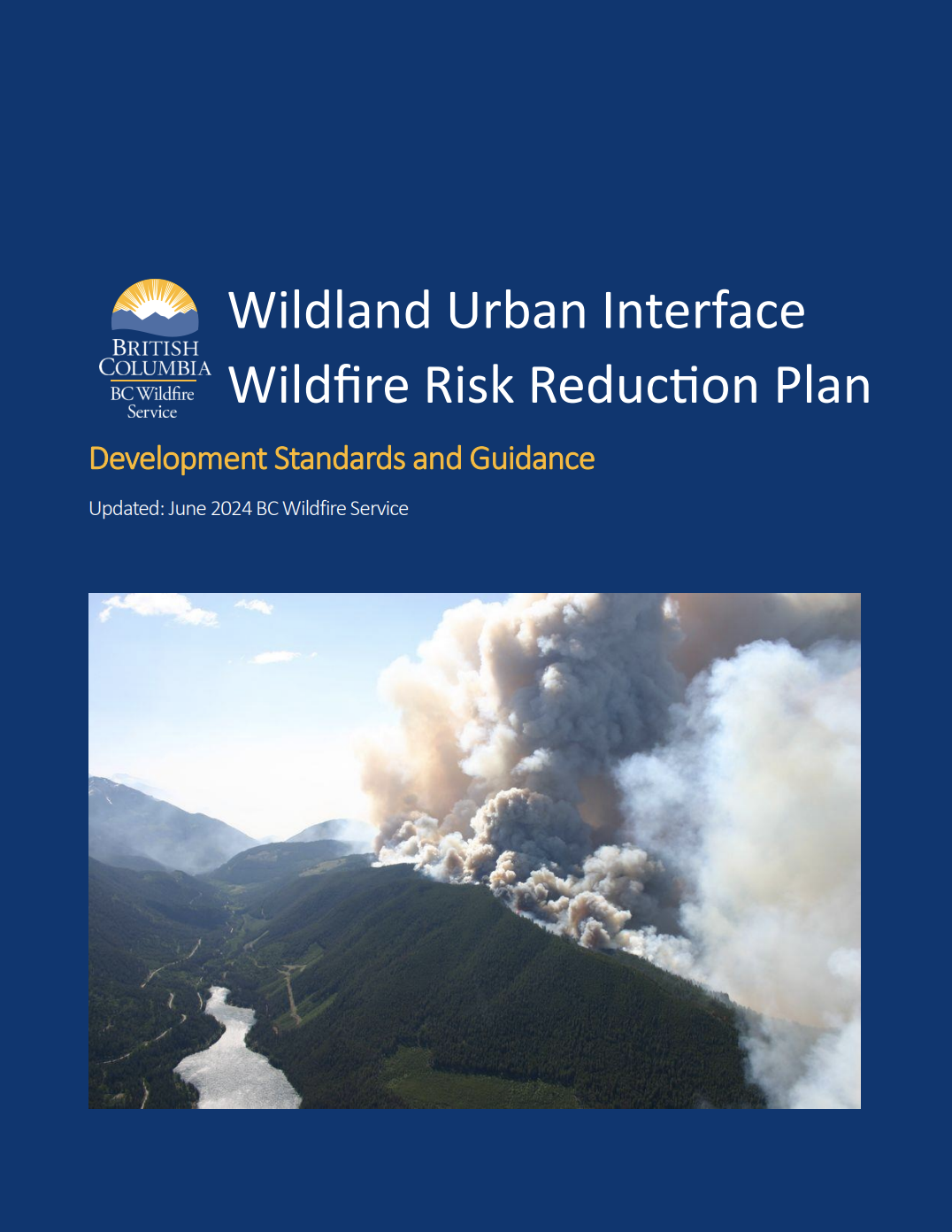
Wildland Urban Interface Wildfire Risk Reduction Plan: Development Standards and Guidance
The Wildland Urban Interface Wildfire Risk Reduction Plan development standards and guidance provides forest professionals with the direction, explanatory information, and resources necessary to develop Wildland Urban Interface (WUI) Wildfire Risk Reduction (WRR) Plans. The document aims for a consistent approach to fuel management planning and fuel management project prioritization within and adjacent to the WUI.