Canadian Interagency Forest Fire Centre (CIFFC)
The Canadian Interagency Forest Fire Centre (CIFFC) is a federally incorporated not-for-profit corporation established June 2, 1982. CIFFC is owned and operated by the federal, provincial, and territorial agencies responsible for wildland fire management.
Visit Organization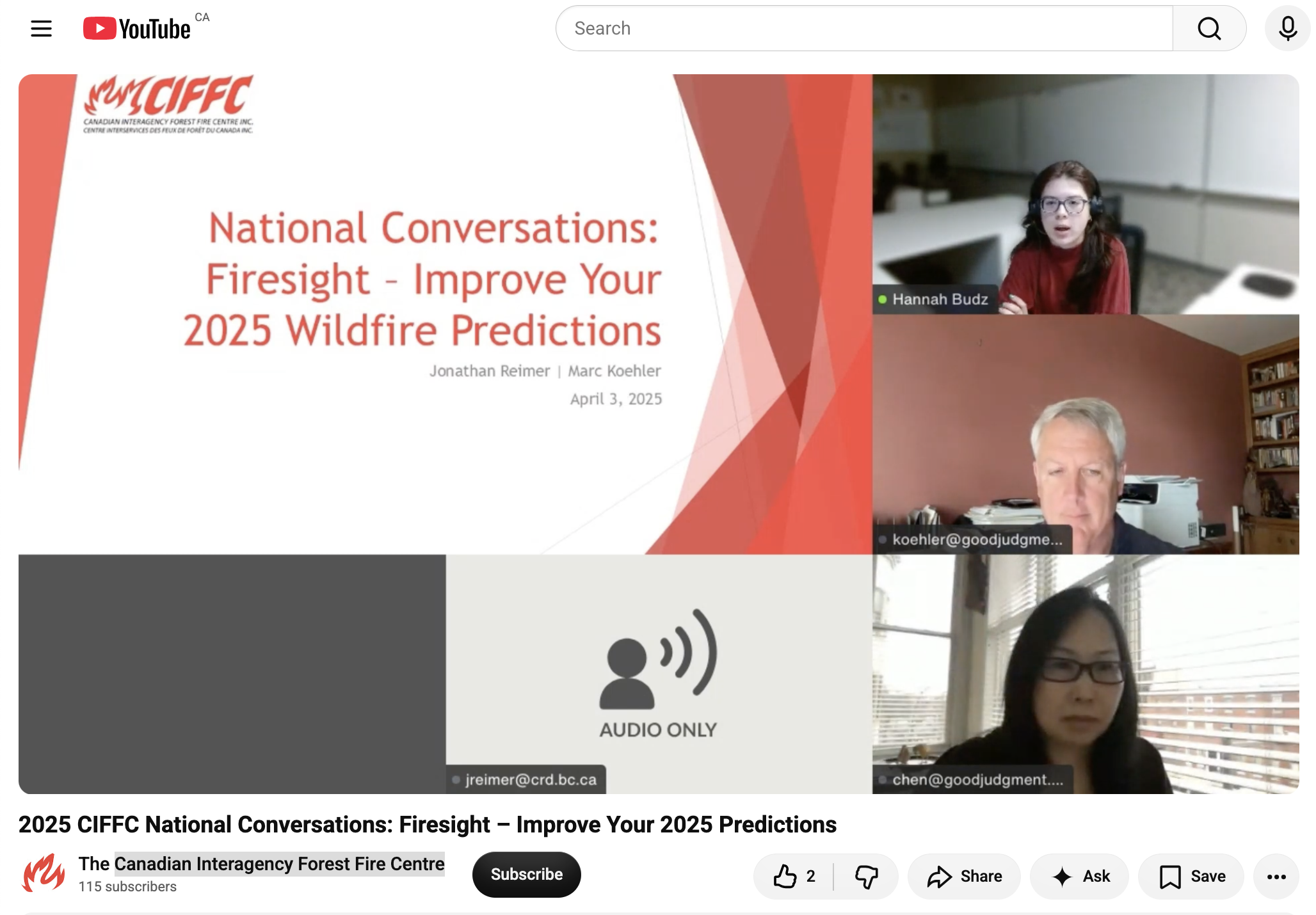
2025 CIFFC National Conversations: Firesight – Improve Your 2025 Predictions
This session features insights into current prediction processes and a live demonstration of a platform designed to enhance forecasting and preparedness across agencies.
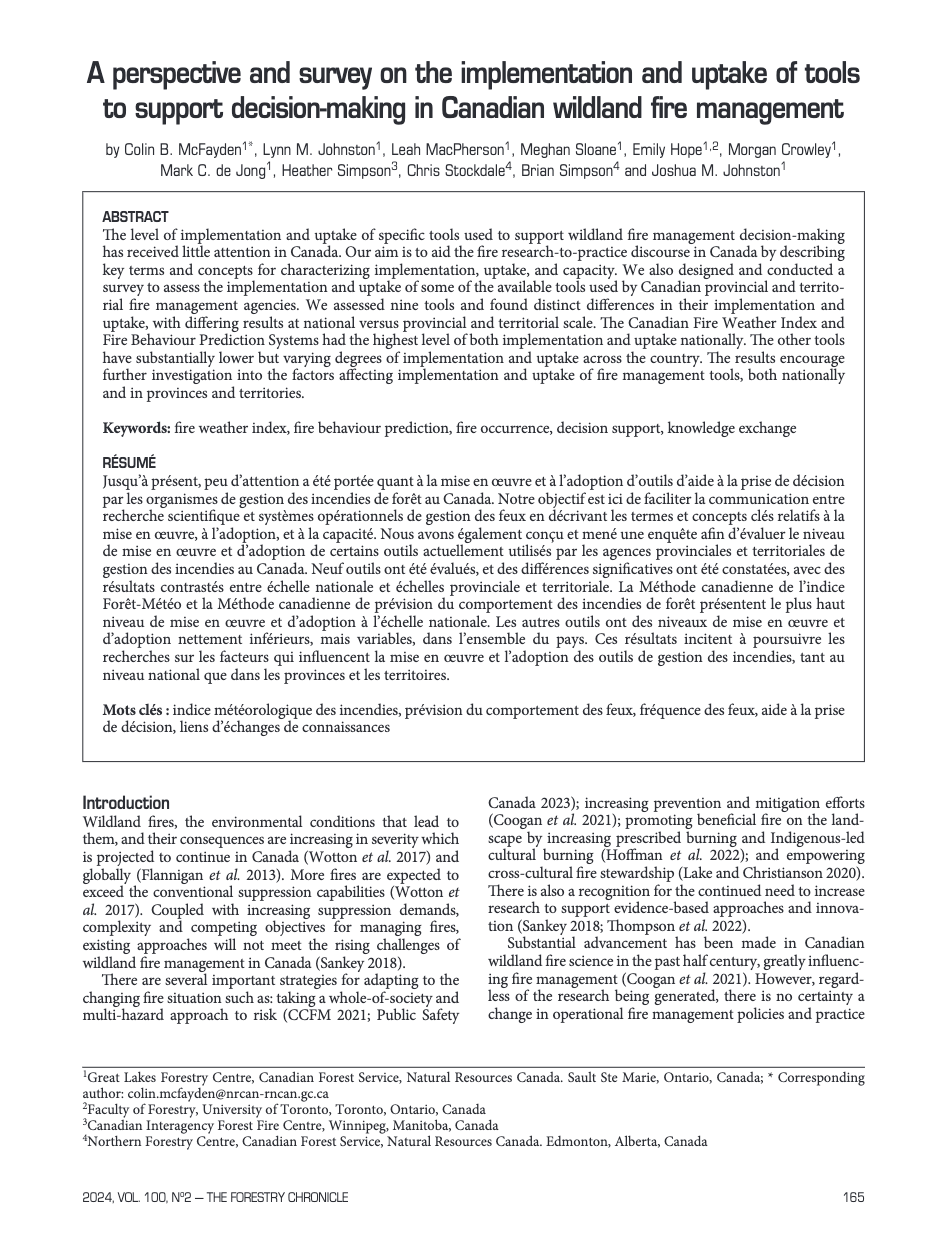
A perspective and survey on the implementation and uptake of tools to support decision-making in Canadian wildland fire management
The level of implementation and uptake of specific tools used to support wildland fire management decision-making has received little attention in Canada. Our aim is to aid the fire research-to-practice discourse in Canada by describing key terms and concepts for characterizing implementation, uptake, and capacity. We also designed and conducted a survey to assess the implementation and uptake of some of the available tools used by Canadian provincial and territorial fire management agencies. We assessed nine tools and found distinct differences in their implementation and uptake, with differing results at national versus provincial and territorial scale. The Canadian Fire Weather Index and Fire Behaviour Prediction Systems had the highest level of both implementation and uptake nationally. The other tools have substantially lower but varying degrees of implementation and uptake across the country. The results encourage further investigation into the factors affecting implementation and uptake of fire management tools, both nationally and in provinces and territories.
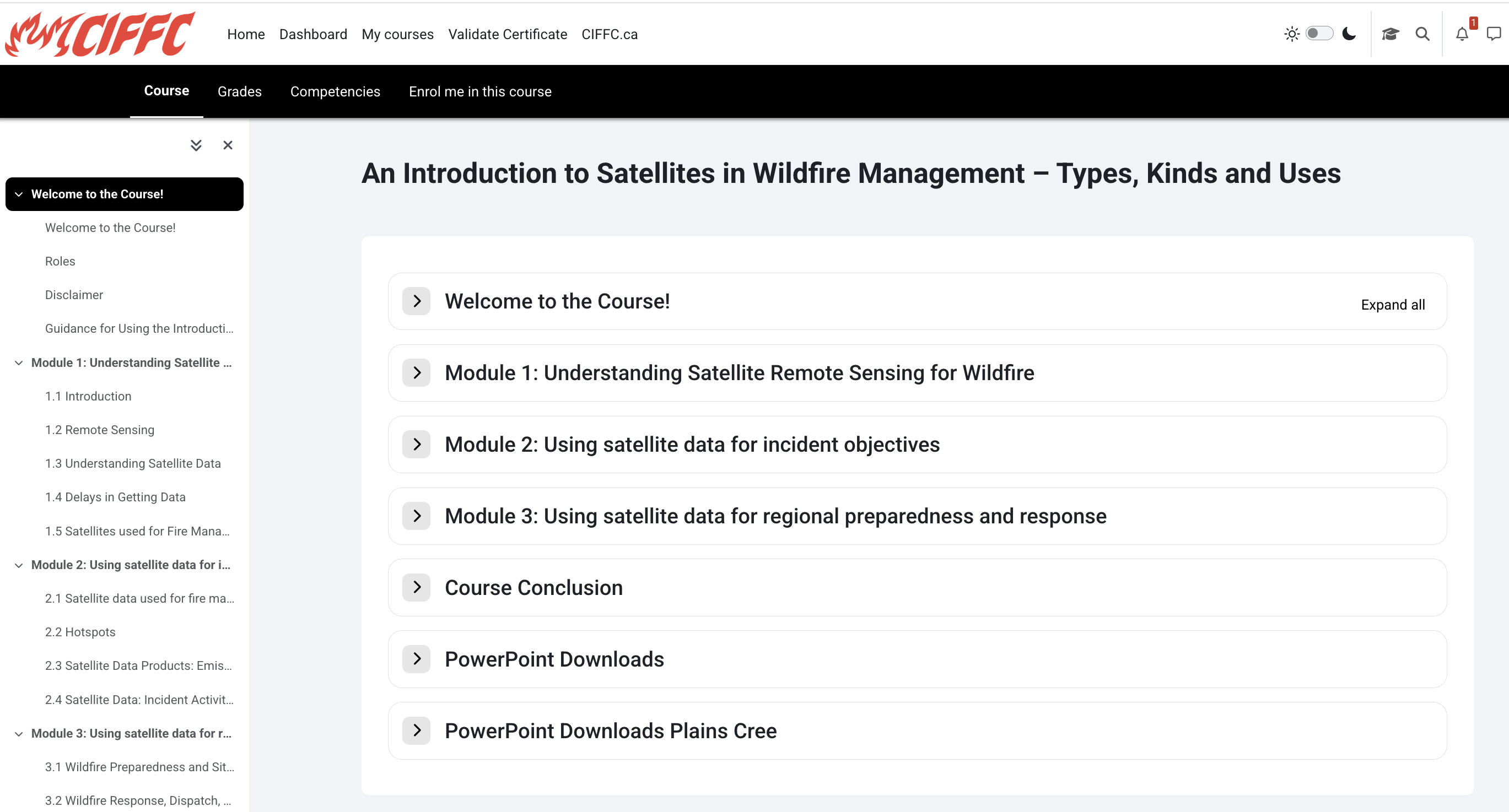
An Introduction to Satellites in Wildfire Management – Types, Kinds and Uses
Discover how satellites support wildfire management in Canada. This course introduces the basics of Earth Observation (EO), exploring how satellites and sensors work, what kind of data they collect, and how that information can support wildfire management at different stages. Using real examples and interactive modules, you will gain a better understanding on how to interpret and apply EO data in a fire management context operationally.
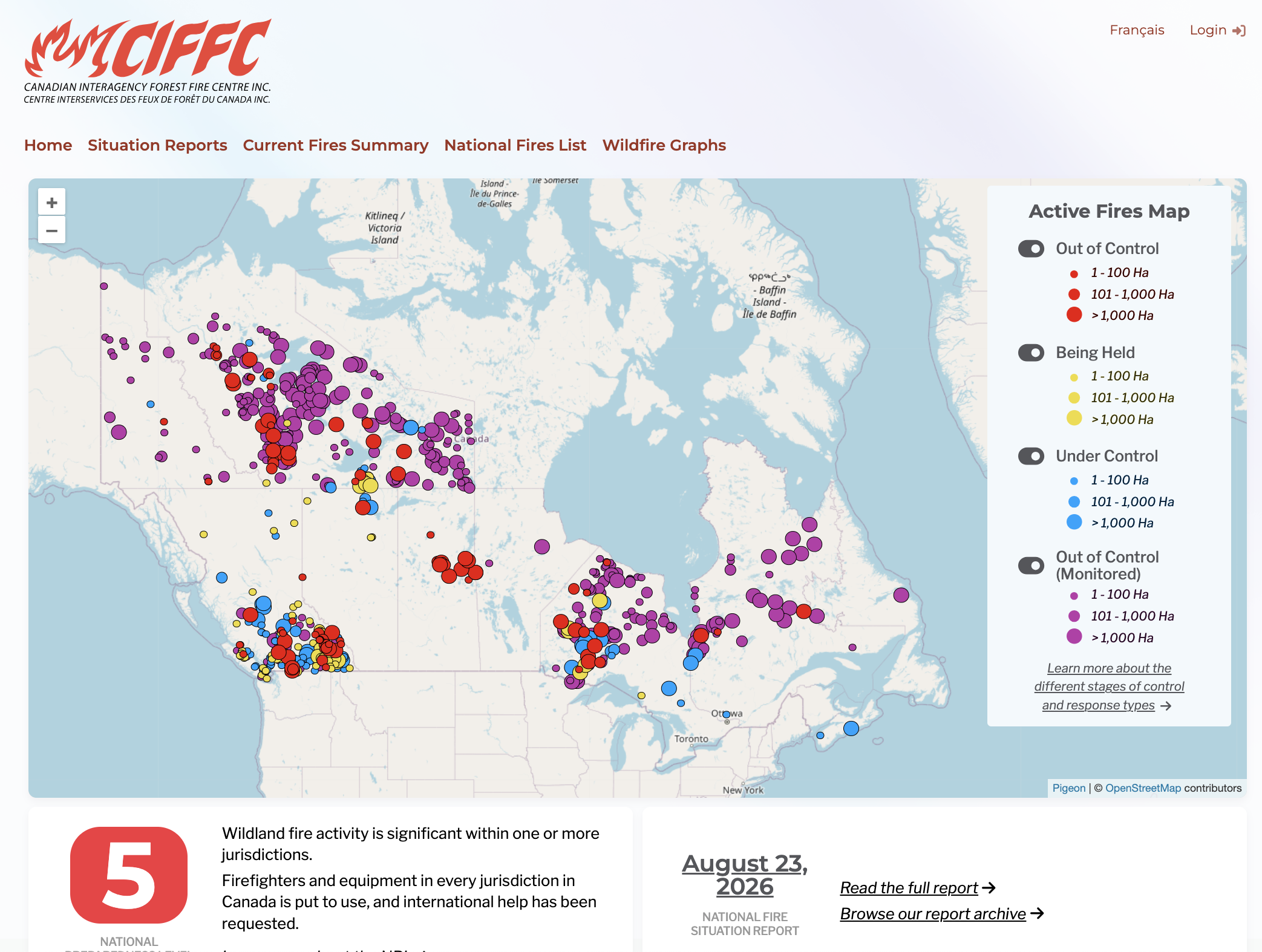
CIFFC Active Fires Map and Situation Report
CIFFC publishes daily updates and statistics on active wildfire activity across Canada, visualized in an interactive map as well as situation reports.
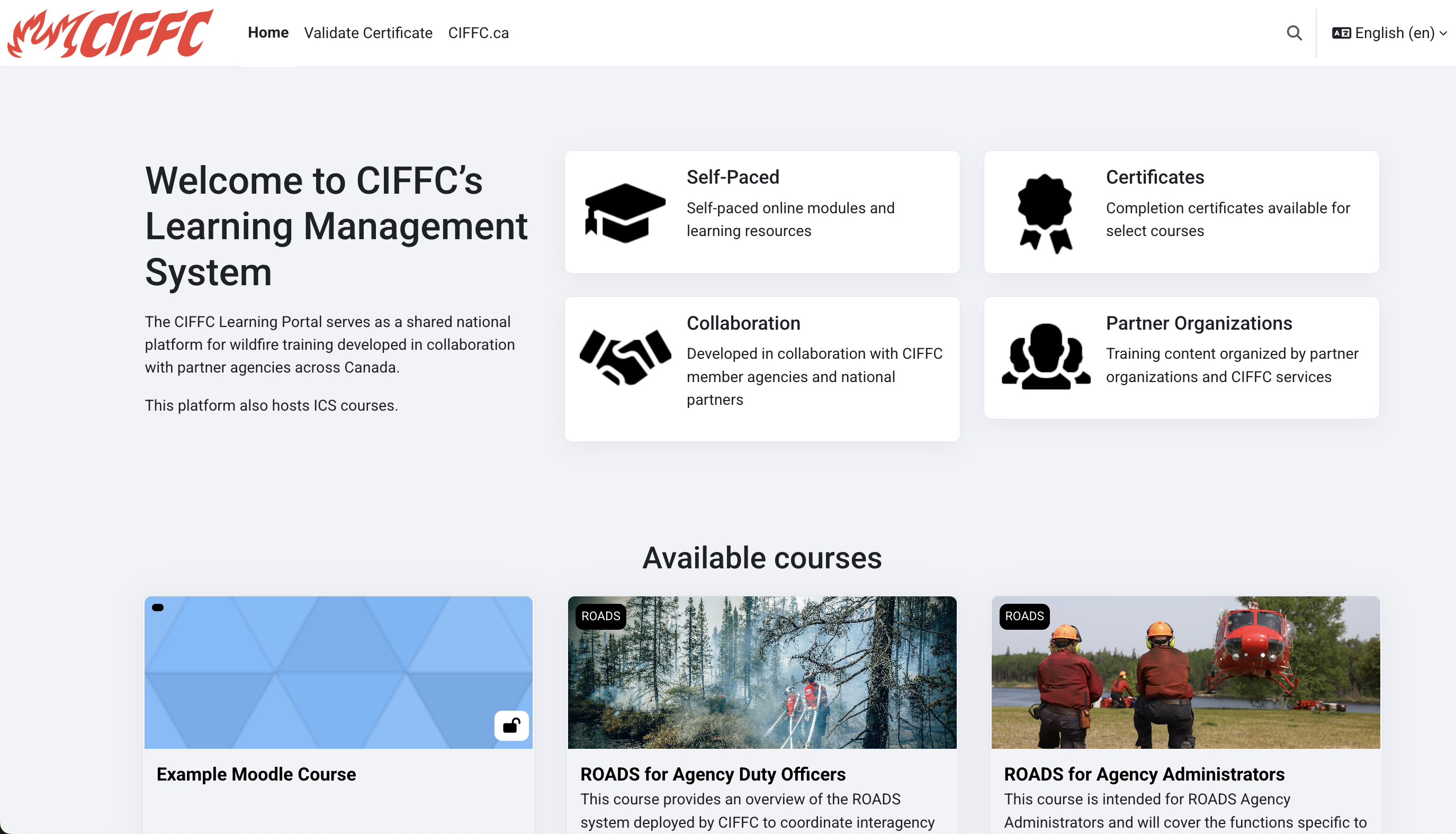
CIFFC Learning Management System
The CIFFC Learning Management System provides online wildfire training, educational resources, and course delivery platforms that support capacity building and knowledge sharing across the Canadian wildfire and emergency management community. The platform supports training initiatives for wildfire practitioners, agencies, and partner organizations.

CIFFC National Situation Reports
CIFFC National Situation Reports provide current wildfire activity summaries, preparedness levels, resource commitments, and interagency coordination information to support situational awareness and wildfire response efforts across Canada.
CIFFC Wildland Fire Prevention and Mitigation Action Plan
In 2021, under direction from the Canadian Council of Forest Ministers (CCFM), FireSmart Canada joined with the Canadian Interagency Forest Fire Centre (CIFFC) to extend the reach of FireSmart (Intelli-feu) concepts to all regions of Canada where wildland fire is a risk and to expand the collaboration among more partners to achieve, with their collective strengths and insights, what no one agency can do alone. This Action Plan has evolved from many conversations among those partners - all genuinely energized by the need to reduce wildland fire risk for Canadians. The goal of this Canadian Wildland Fire Prevention and Mitigation Action Plan is to make Canada more resilient to wildland fire risk and a changing climate by: • building collaboration among partners and the public; • creating information products that are effective and culturally appropriate; • developing tools and sustaining initiatives that assess and reduce risk; and • extending a risk-reduction focus across forested regions to support healthy and resilient forests for future generations.

FireSmart Resources
The full suite of FireSmart Canada resources, including educational materials like brochures, manuals, fact sheets, and checklists on the Home Ignition Zone, how to mitigate wildfire on your property, best practices for structure protection, and more.

Joe and the Thunderbird: Teachings of Fire
Developed in collaboration with the Thunderbird Collective, this free activity booklet introduces readers to Indigenous Fire Stewardship through the teachings of Fire Keeper and Knowledge Holder Joe Gilchrist and the Thunderbird. Featuring stories, colouring pages, and activities, the booklet encourages youth and families to learn about Good Fire, caring for the land, and building wildfire resilience.

Joe et l'Oiseau-tonnerre: Enseignements sur le feu
Developed in collaboration with the Thunderbird Collective, this free activity booklet introduces readers to Indigenous Fire Stewardship through the teachings of Fire Keeper and Knowledge Holder Joe Gilchrist and the Thunderbird. Featuring stories, colouring pages, and activities, the booklet encourages youth and families to learn about Good Fire, caring for the land, and building wildfire resilience.
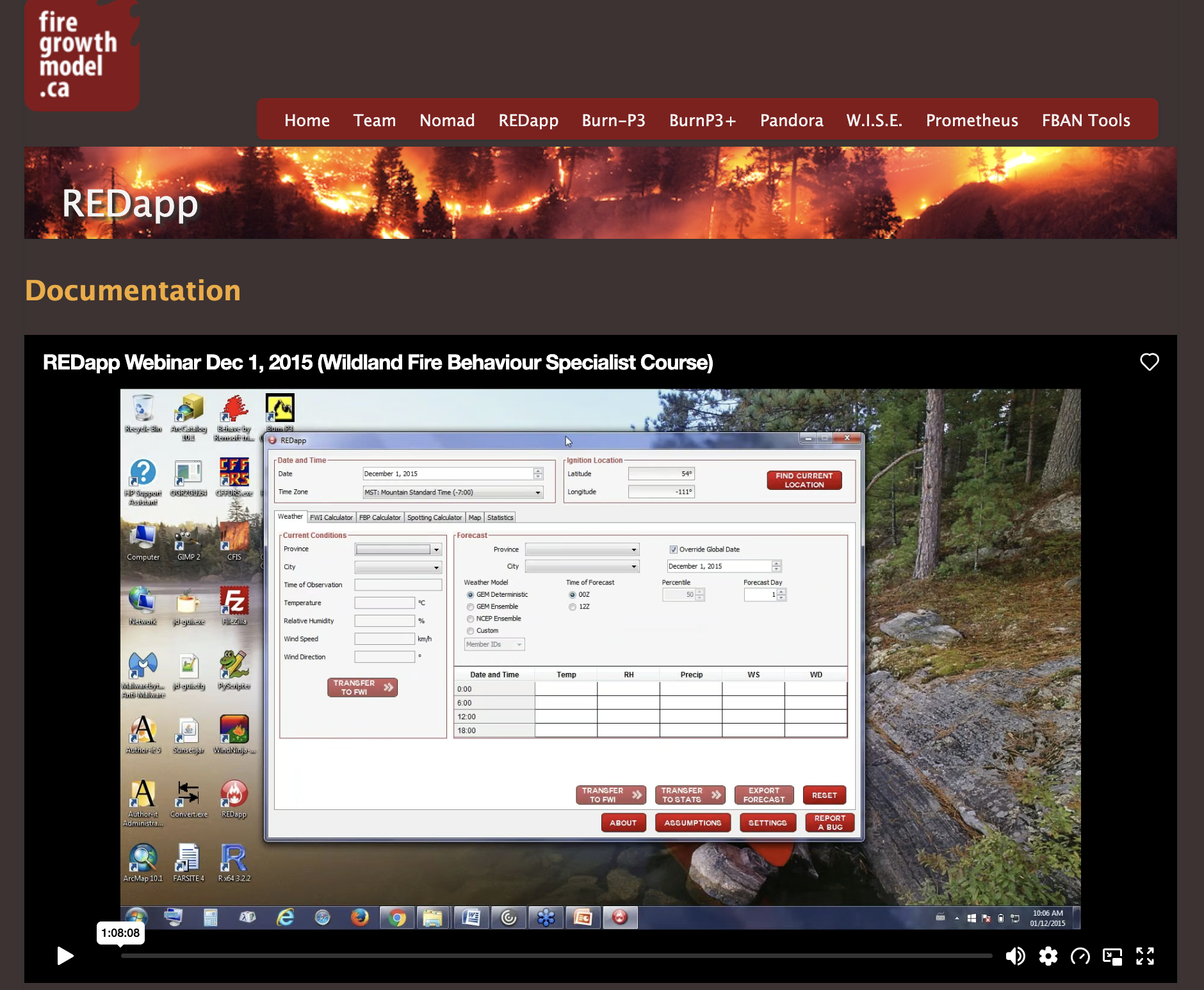
REDapp
REDapp documentation and user resources provide technical guidance for wildfire decision-support tools based on the Canadian Forest Fire Danger Rating System. The platform supports wildfire practitioners, researchers, and emergency management personnel with fire behaviour prediction workflows, weather integration guidance, and operational wildfire modelling resources.
CIFFC Symposium: The Pathways to Resilience: Fuel Management Strategies and Actions
This pan-Canadian Symposium will bring together practitioners, Indigenous partners, researchers, industry representatives, policymakers, and decision-makers from across Canada to advance a shared understanding of fuel management and opportunities to strengthen wildfire resilience. Through a series of facilitated sessions, participants will examine current challenges, emerging opportunities, and practical solutions to support effective fuel management across diverse landscapes and jurisdictions. The Symposium will explore key themes including fuel management practices, Indigenous knowledge and collaboration, community engagement, operational tools and approaches, long-term fuel treatment maintenance, and opportunities to scale from individual projects to landscape-level approaches. Participants will engage in discussions on planning, implementation, research needs, and the trade-offs involved in advancing fuel management in a changing wildfire environment. Together, participants will identify knowledge needs, strengthen connections across the fuel management community, and help shape future actions and tools to support wildfire resilience across Canada.