Wildfire Impacts
The Wildfire Impacts Resource Collection highlights resources that explore the far-reaching, multifaceted, and inequitable impacts of wildfire. It aims to reduce information silos in support of an ongoing exchange between practitioners, policy-makers, and communities affected by wildfire. Best practices for management, emerging science, community needs and priorities, and other forms of knowledge are collated here to advance wildfire resilience.
Resources in this collection
Drivers and Impacts of the Record-Breaking 2023 Wildfire Season in Canada
The 2023 wildfire season in Canada was unprecedented in its scale and intensity, spanning from mid-April to late October and across much of the forested regions of Canada. Here, we summarize the main causes and impacts of this exceptional season. The record-breaking total area burned (~15 Mha) can be attributed to several environmental factors that converged early in the season: early snowmelt, multiannual drought conditions in western Canada, and the rapid transition to drought in eastern Canada. Anthropogenic climate change enabled sustained extreme fire weather conditions, as the mean May–October temperature over Canada in 2023 was 2.2 °C warmer than the 1991–2020 average. The impacts were profound with more than 200 communities evacuated, millions exposed to hazardous air quality from smoke, and unmatched demands on fire-fighting resources. The 2023 wildfire season in Canada not only set new records, but highlights the increasing challenges posed by wildfires in Canada.
Impacts des feux de forêt sur la santé
Cet article fait la synthèse des impacts connus des feux de forêt sur la santé et présente une approche structurée d’interventions en soins primaires, y compris l’éducation des patients, l’identification des personnes à risque élevé, l’optimisation de la prise en charge adaptée aux problèmes de santé, de même que la surveillance des effets immédiats et à long terme sur la santé. Des références rapides ainsi que des détails et des liens additionnels sont fournis pour identifier les patients dont le risque est le plus élevé et passer en revue les principales interventions. This article synthesizes the known health impacts of wildfires and presents a structured approach to primary care interventions, including patient education, identification of high-risk individuals, optimization of management tailored to health conditions, and monitoring of immediate and long-term health effects. Quick references as well as additional details and links are provided to identify patients at highest risk and review key interventions.
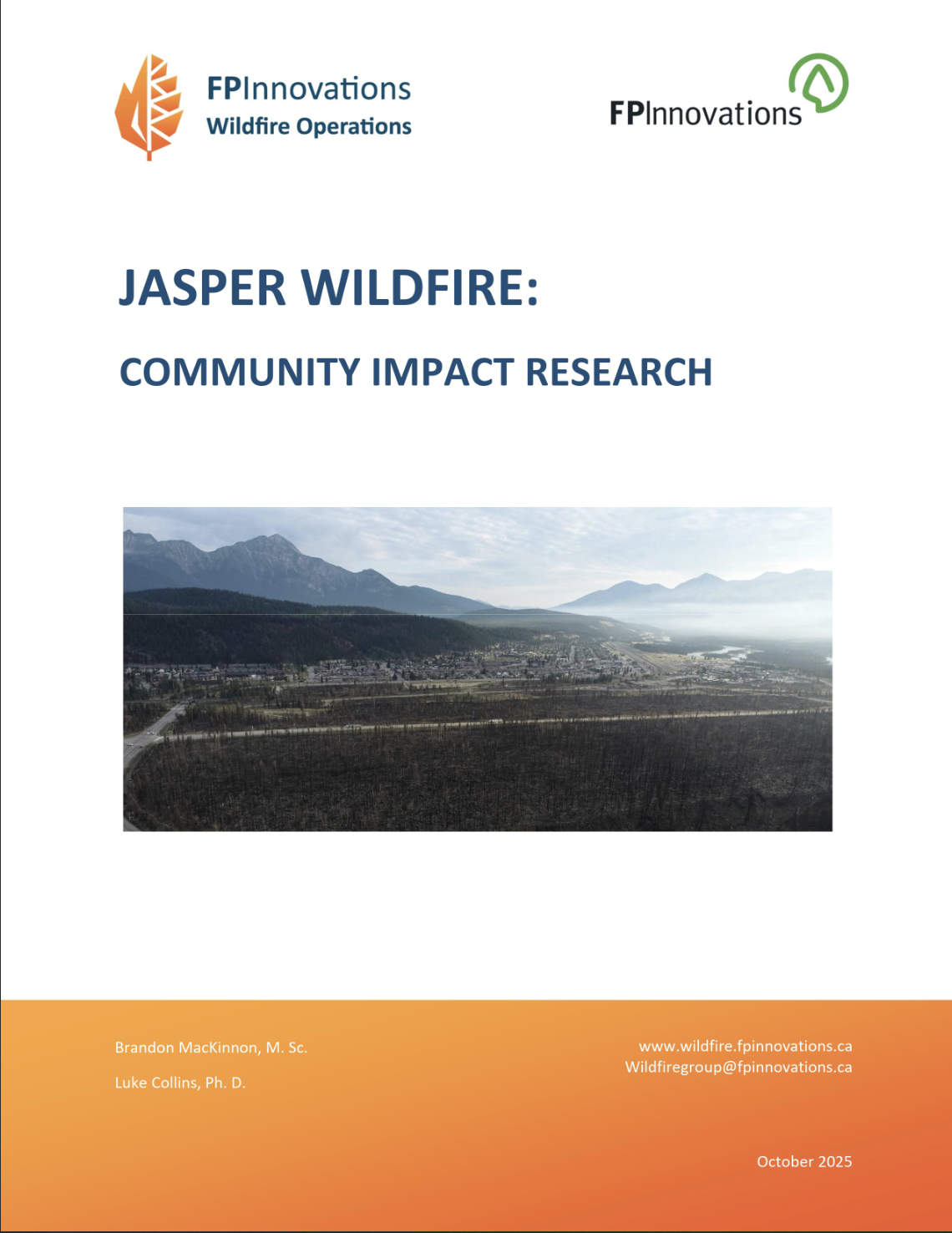
Jasper wildfire: Community impact research
The Municipality of Jasper and surrounding areas experienced a devastating wildfire that burned through the affected areas on July 24, 2024. Many structures were destroyed and the landscape of the National Park was drastically altered. The social and environmental impacts of the Jasper fire will be felt for many decades to come. Extreme and destructive events of this nature are becoming increasingly more common across North America (Higuera, et al. 2023). Learning from these events will be important for identifying and implementing actions that can increase the resilience of WUI communities to wildfire in the future. Key lessons were learned from the Jasper wildfire.
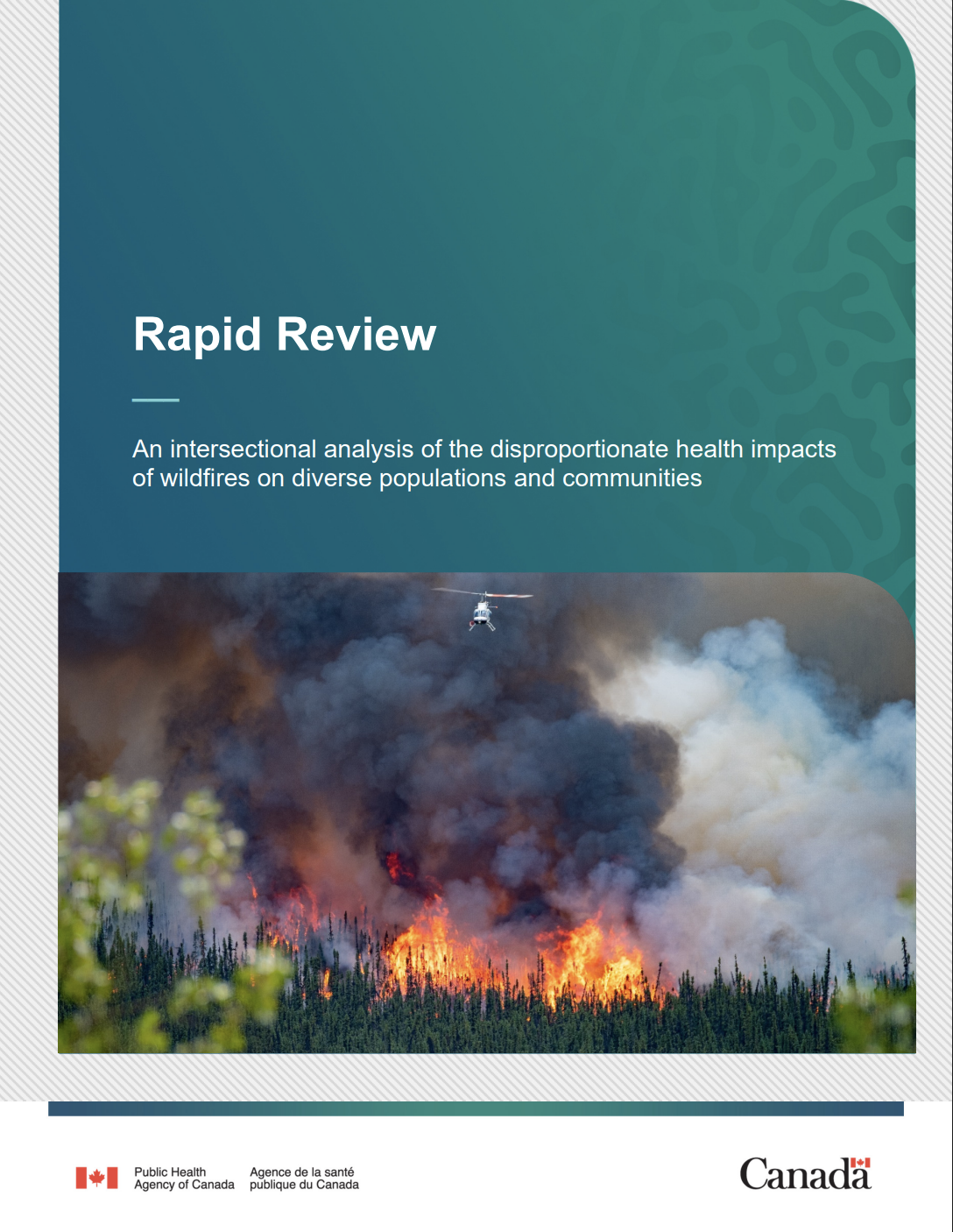
Rapid review: An intersectional analysis of the disproportionate health impacts of wildfires on diverse populations and communities
Wildfires are a key public health issue because they are widespread, the health impacts are severe, and inequitably distributed. In addition to their impact on the physical and mental health of populations, the impacts of wildfires are experienced differently across population groups based on their intersecting social determinants of health (SDOH) such as age, geography, gender, and income. By addressing societal inequities and vulnerabilities, public health outcomes can be improved for all.

The 2023 wildfire season in Québec: an overview of extreme conditions, impacts, lessons learned, and considerations for the future
The 2023 wildfire season in Québec set records due to extreme warm and dry conditions, burning 4.5 million hectares and indicating persistent and escalating impacts associated with climate change. This study reviews the unusual weather conditions that led to the fires, discussing their extensive impacts on the forest sector, fire management, boreal caribou habitats, and particularly the profound effects on First Nation communities. To mitigate future extreme wildfire seasons, the study suggests changes in forest management practices to increase forest resilience and resistance, adapting industrial structures to changes in wood type harvested, and enhancing fire suppression and risk management strategies. It calls for a comprehensive, unified approach to risk management that incorporates the lessons learned from the 2023 fire season and accounts for ongoing climate change. The study underscores the urgent need for detailed planning and proactive measures to reduce the growing risks and impacts of wildfires in a changing climate.
Wildfire experiences among Indigenous Peoples
Forest fires and wildfires are a regular occurrence in many areas of the country. These fires, while often driven by natural ecosystem processes, pose a threat to communities across the country and have particular impacts on First Nations people, Métis and Inuit. This descriptive analysis integrates results from the 2024 Survey Series on First Nations People off reserve, Métis and Inuit - Emergency Preparedness and Extreme Weather (SSFNPMI-EPEW) and the 2021 Census Indigenous population data, along with spatial data on forest fires, wildfires and air quality from 2023.
Wildfires in Canada: Toolkit for Public Health Authorities
The goal of this toolkit is to summarize information and bring together existing resources to support public health authorities in the mitigation, preparedness, response and recovery to human health risks associated with wildfires. Specific objectives are to: - Facilitate evidence-based and timely decision making by public health authorities - Synthesize existing resources in the form of evidence-based summaries of human health hazards and risks - Support the sharing of best practices and experiences - Apply a public health lens to the prevention and management of human health hazards and risks across the emergency management continuum