After Action Reports
After Action Reports (or After Action Reviews or Post-Incident Assessments) are season-encompassing projects that tell the story of a particular year in wildfire for a specific jurisdiction, usually Provincial or Territorial. They tend to be procured after an impactful wildfire season to explore what happened, how people experienced the season, and what can be done differently in the future. These reports can also discuss specific topics, wildfires, or timelines.
Resources in this collection
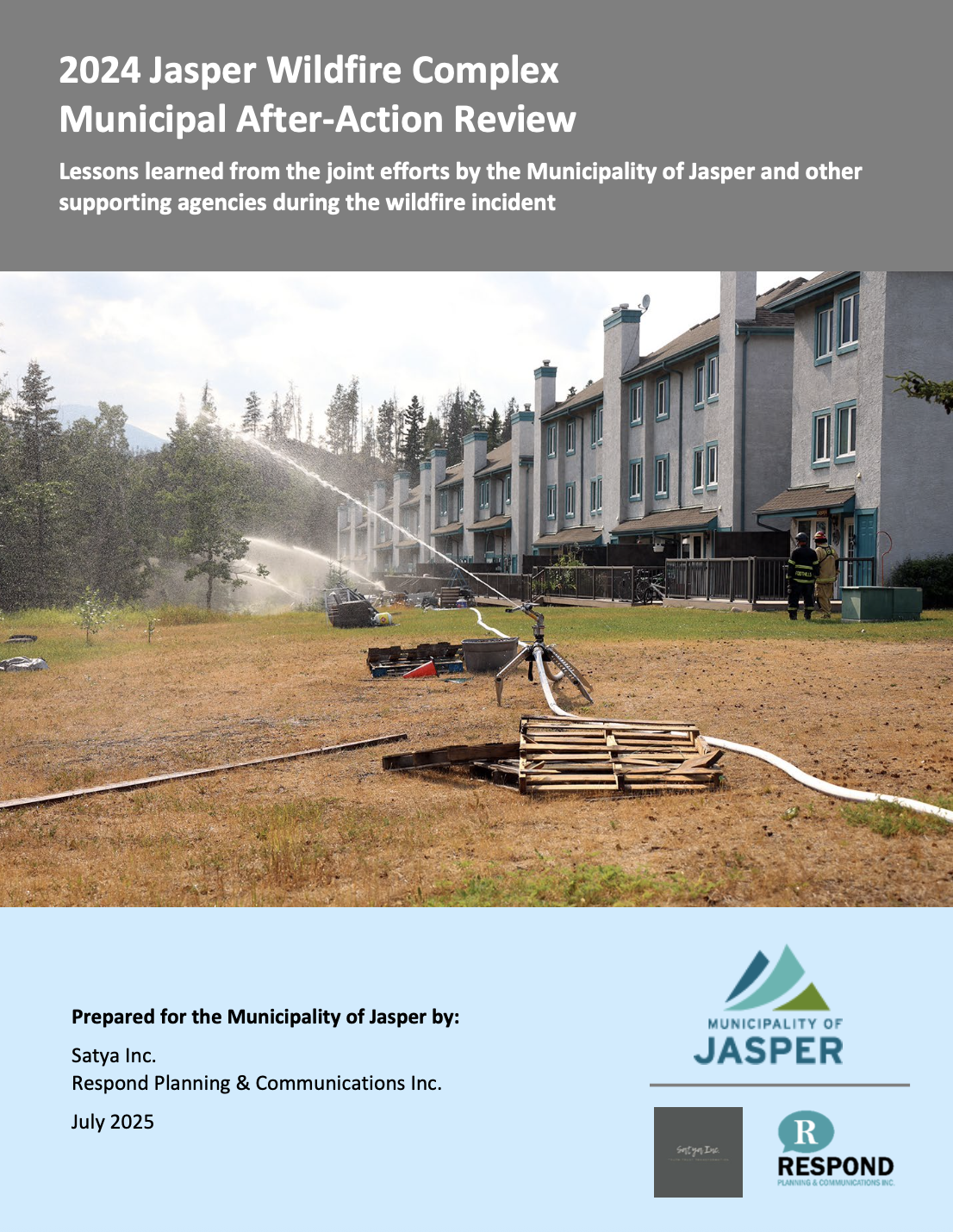
2024 Jasper Wildfire Complex Municipal After-Action Review
In the summer of 2024, Jasper National Park faced its most devastating wildfire in a century. The fire destroyed 32% of structures within the Municipality of Jasper, including over 800 housing units, and disrupted the lives of thousands of residents and visitors. The purpose of this After-Action Review is to evaluate the collective response to the 2024 Jasper Wildfire Complex, involving the Municipality of Jasper, Parks Canada, and other supporting agencies. The insights and recommendations focus on the performance of the entire Incident Management Team (IMT), ensuring that lessons learned benefit all participants. While the Municipality of Jasper should consider these findings, the recommendations and the emphasis is on their broader relevance to incoming agencies, other communities, province-wide systems, and supporting effective collaboration during future responses.
2025 Wildfire: Interim After Action Review
The Manitoba government has committed to conducting a comprehensive, provincial After Action Review (AAR) of the 2025 wildfire season to capture lessons learned and strengthen future preparedness, response, and recovery. This Interim Report, released in advance of the 2026 wildfire season, highlights early themes emerging from the provincial AAR process; concrete actions and improvements already implemented or underway to enhance readiness for the 2026 wildfire season; and Government’s initial investments, outlined in Budget 2026, to strengthen community protections against wildfires.
Addressing tthe New Normal: 21st Century Disaster Management in British Columbia
This strategic Review examines and assesses government response to flood and wildfire events of the 2017 season. In considering all aspects of the Province’s response to the floods and wildfires of 2017, the Review team engaged British Columbians directly in the process. This included consulting with individuals, Indigenous and non-Indigenous communities, organizations and other stakeholders to gain the widest possible cross-section of perspectives through sessions undertaken in or near affected communities. As outlined in greater detail in Section 4.0, engagement included submissions received in writing and conversations that took place with one or both co-chairs. For more detailed information on the Review team’s findings, see Section 5.0. For a detailed examination of our proposed recommendations, see Section 6.0.
Firestorm 2003: Provincial Review
At the time, the summer of 2003 was the worst ever for forest fires in British Columbia. Abnormally hot, dry weather resulted in over 2,500 wildfire starts over a vast area, mostly in the Interior of the province. Interface fires, which occur in places where wildland meets urban development, were at an all-time record high, destroying over 334 homes and many businesses, and forcing the evacuation of over 45,000 people. The total cost of the Firestorm is estimated at $700 million. The greatest cost of all was the loss of the lives of three pilots who died in the line of duty. The Firestorm 2003 Provincial Review was established by the provincial government to evaluate the overall response to the emergency and make recommendations for improvement in time for the next fire season. Our findings and recommendations cross all levels of government: federal, provincial, municipal and regional, and are also aimed at individuals.
May 2016 Wood Buffalo Wildfire: Post-Incident Assessment Report
KPMG LLP (KPMG) has been engaged by the Alberta Emergency Management Agency to conduct a Review of the Government of Alberta’s support to stakeholders, emergency social services, and community evacuations during the May 2016 Wood Buffalo Wildfire (also known as the Horse River Wildfire). This report is about (1) assessing whether continuous improvement resulted in the integration of lessons learned, and (2) identifying opportunities for improvement through post-incident analysis. The report is intended to assist the Province and its partners to be better prepared for future emergency events.
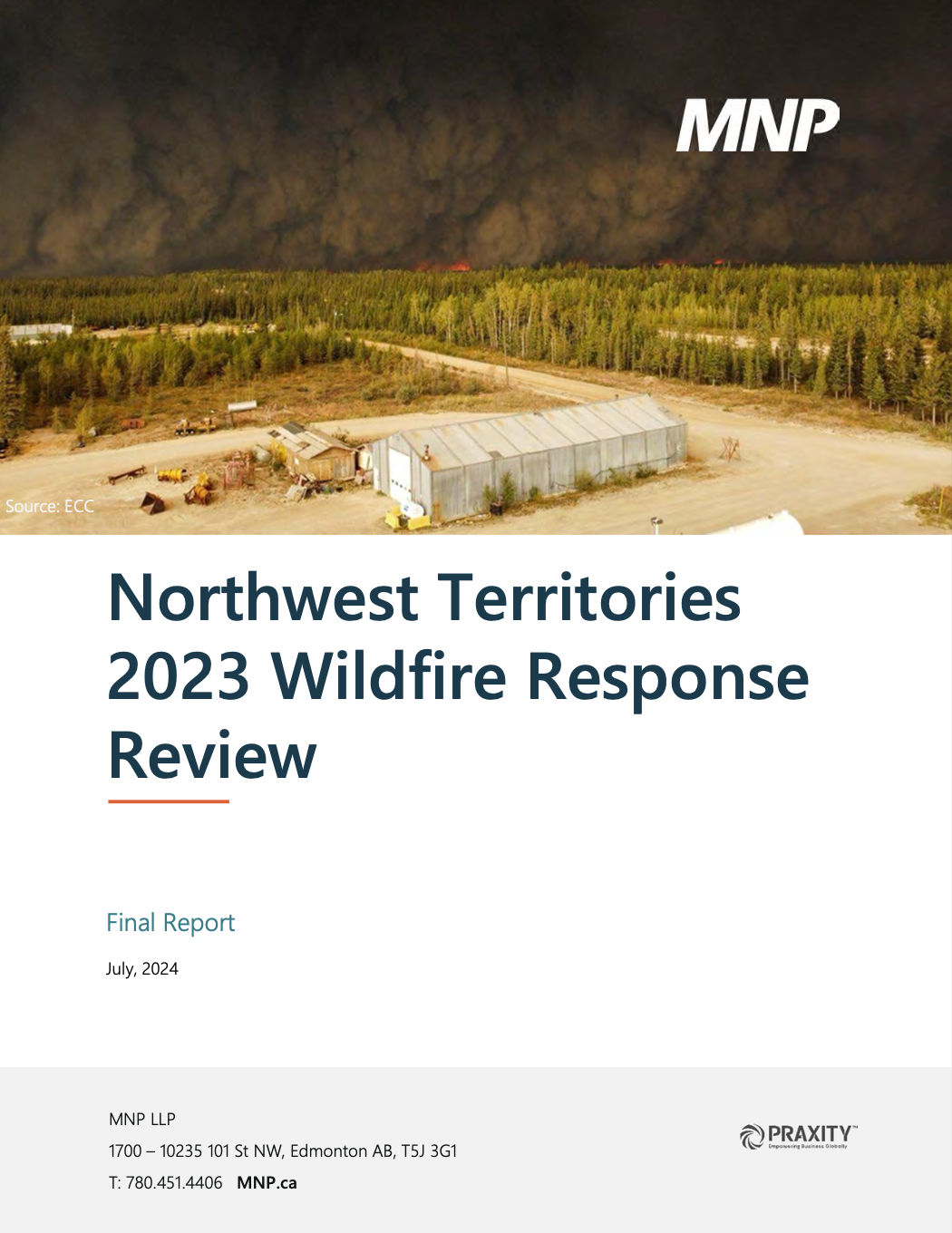
Northwest Territories 2023 Wildfire Response Review
This report contains the results of MNP LLP’s (MNP) third-party review of the Department of Environment and Climate Change and the Government of Northwest Territory’s preparedness for and response to the 2023 wildfire season. The report covers the following four topics: A description of the 2023 wildfire season across Canada to provide context, and a description of the 2023 wildfire season in the Northwest Territories that highlights key events, decisions and actions.; An evaluation of the effectiveness of Environment and Climate Changes' preparedness and response to the 2023 wildfire season.; Observations, conclusions, and key recommendations to assist the Government of Northwest Territories in improving the effectiveness of its Wildfire Management Program moving forward into future wildfire seasons.; A detailed review of actions taken on two specific wildfires, ZF015-23 (Behchokǫ̀/Yellowknife and SS052-23 (Enterprise/Hay River), to identify potential issues and opportunities for improvement.
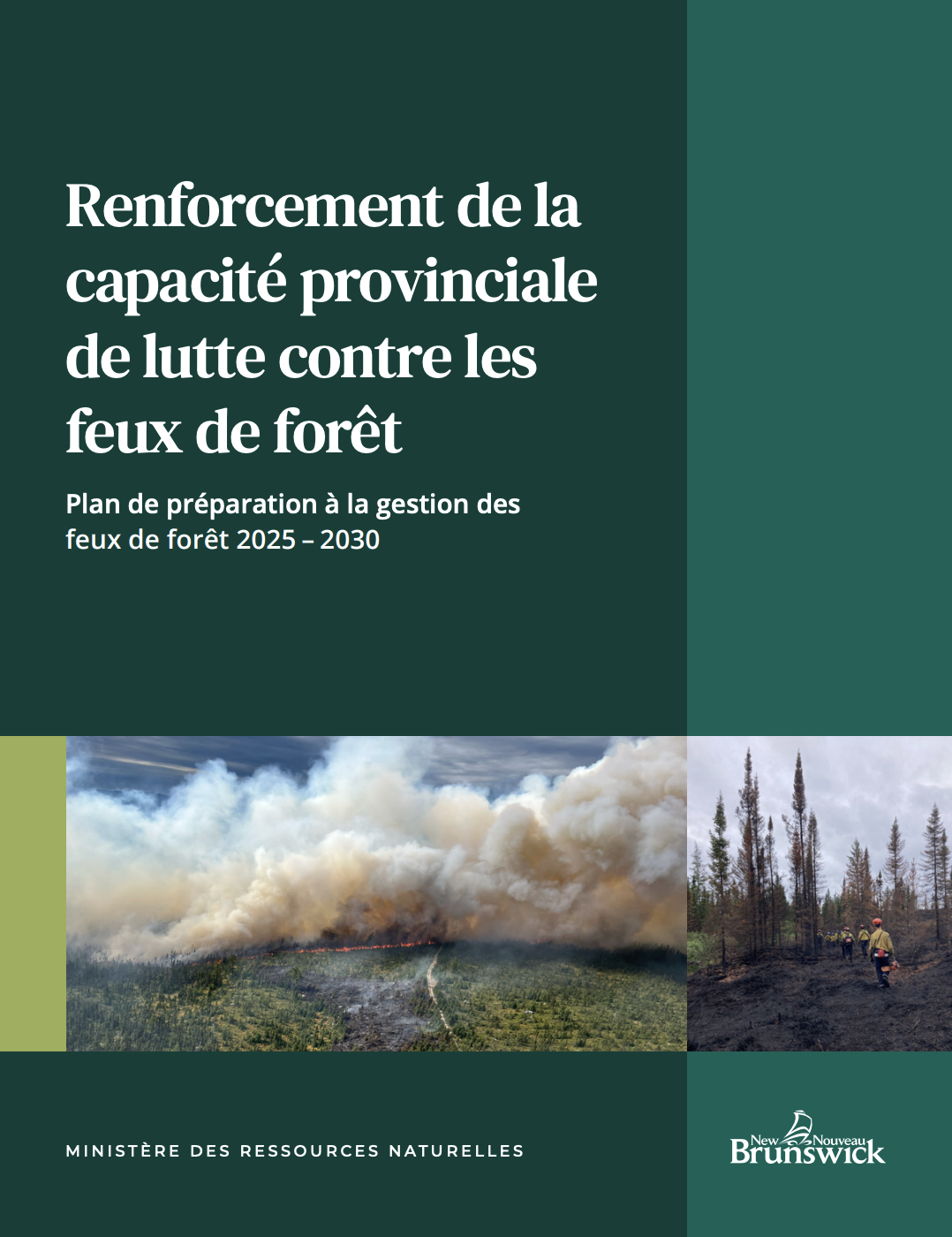
Renforcement de la capacité provinciale de lutte contre les feux de forêt : Plan de préparation à la gestion des feux de forêt 2025 – 2030
La saison des feux de forêt de 2025 a été l’une des plus difficiles de mémoire récente. Une sécheresse prolongée et les conditions d’incendie extrême ont imposé des contraintes exceptionnelles sur les personnes responsables de la protection de nos communautés, de nos paysages naturels et de nos infrastructures essentielles. Le présent rapport rend compte des leçons retenues de cette expérience et de la prise de conscience par le gouvernement de l’importance de mettre en place une approche de préparation aux situations d’urgence liées aux feux de forêt mobilisant l’ensemble de la société. Tout aussi important, ce plan est tourné vers l’avenir. Il propose des mesures concrètes visant à renforcer l’état de préparation, à améliorer la coordination et à faire en sorte que le Nouveau‑Brunswick soit mieux préparé aux futures saisons de feux de forêt.
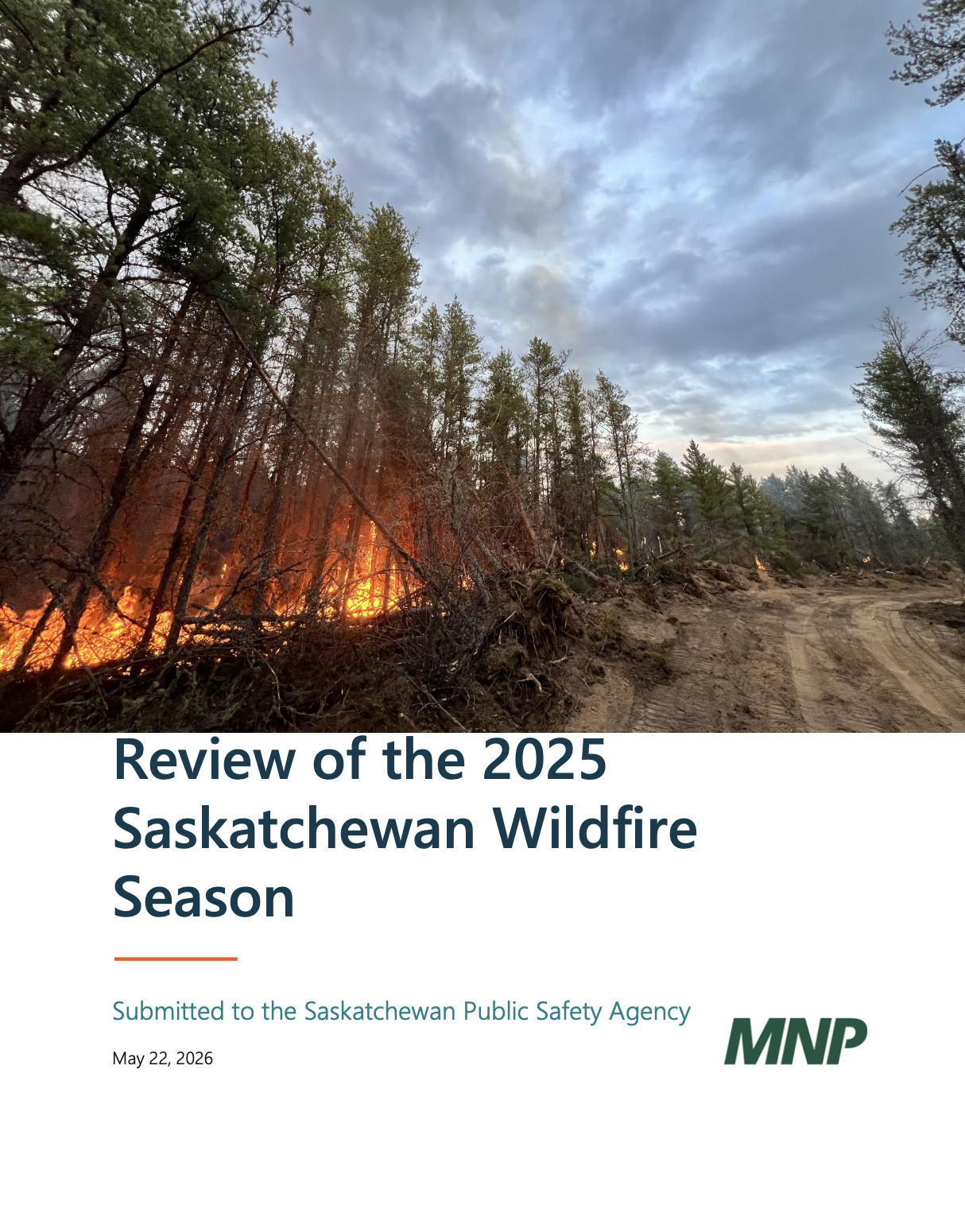
Review of the 2025 Saskatchewan Wildfire Season
The 2025 Wildfire Season was Canada’s second worst on record by area burned, with Saskatchewan experiencing an unprecedented operational environment: 514 wildfires burned approximately 2.9 million hectares, and more than 10,000 people were evacuated. In response, the Saskatchewan Public Safety Agency (SPSA) engaged MNP LLP (MNP) to conduct an independent external review to better understand what occurred, identify lessons learned to strengthen future wildfire and emergency management, and support public accountability. This report is not a forensic audit and is not intended to assign fault.
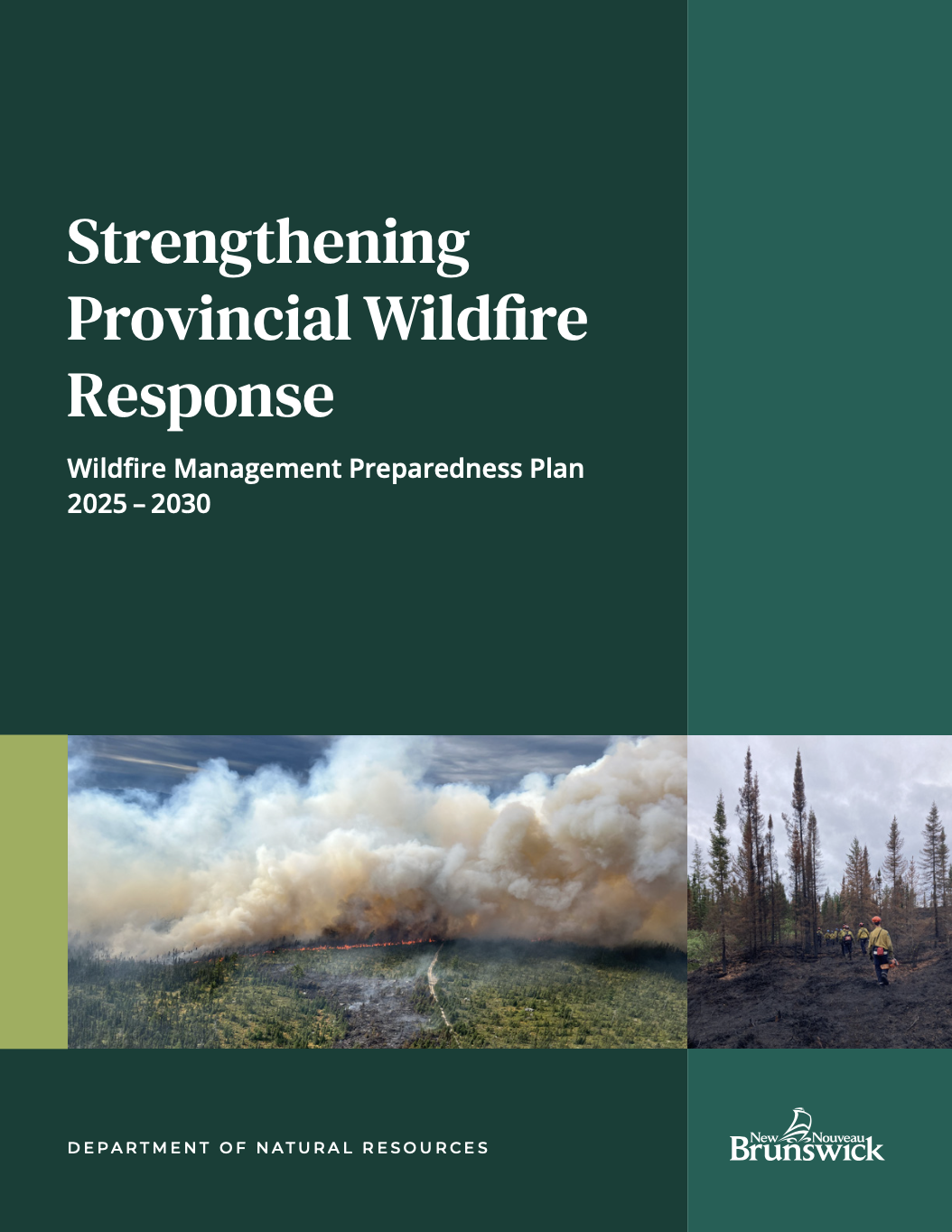
Strengthening Provincial Wildfire Response: Wildfire Management Preparedness Plan 2025 – 2030
The 2025 wildfire season was one of the most challenging in recent memory. Prolonged drought and extreme fire conditions placed extraordinary demands on those responsible for protecting our communities, natural landscapes, and critical infrastructure. This report reflects the lessons learned from that experience and government’s recognition of the importance of building a whole-of-society approach for wildfire emergency preparedness. Just as importantly, this plan looks ahead. It outlines practical steps to strengthen readiness, improve coordination, and ensure that New Brunswick is better prepared for future wildfire seasons. It also underscores the role that all New Brunswickers play in reducing wildfire risk through safe outdoor practices and shared responsibility.

The 2023 wildfire season in Québec: an overview of extreme conditions, impacts, lessons learned, and considerations for the future
The 2023 wildfire season in Québec set records due to extreme warm and dry conditions, burning 4.5 million hectares and indicating persistent and escalating impacts associated with climate change. This study reviews the unusual weather conditions that led to the fires, discussing their extensive impacts on the forest sector, fire management, boreal caribou habitats, and particularly the profound effects on First Nation communities. To mitigate future extreme wildfire seasons, the study suggests changes in forest management practices to increase forest resilience and resistance, adapting industrial structures to changes in wood type harvested, and enhancing fire suppression and risk management strategies. It calls for a comprehensive, unified approach to risk management that incorporates the lessons learned from the 2023 fire season and accounts for ongoing climate change. The study underscores the urgent need for detailed planning and proactive measures to reduce the growing risks and impacts of wildfires in a changing climate.